September marks the start of a new exhibition season as well as the third anniversary of this magazine. The former brings a particularly rich harvest of shows, while the latter is a personal milestone for which I am grateful to the community for its continual interest. On the topic of milestones, the first international edition of the Trois Crayons Drawings Hub, On Paper: Drawings from the Renaissance to the Modern Day, will take place in the form of an expanded, multi-city selling exhibition held in the United States next month. The 2026 Drawings Hub will be held in galleries in Houston (9–13 October), Dallas Fort Worth (22–29 October) and Austin (4–8 November). More information on the exhibitors and artworks will be available in next month’s magazine.
Among the month’s exhibition highlights (see What’s On section for full listings), several shows are particularly noteworthy for their drawings, including Drawing Inspiration (1 September – 26 November) at the Burrell Collection in Glasgow, which brings together thirteen fine drawings by the likes of Ingres, Manet and Millet. In Paris, the Musée Jacquemart-André has assembled some forty paintings and graphic works by Tintoretto for Eternal Tintoretto (11 September – 24 January). For a more modern show, Andy Warhol. Line and Image (16 September – 10 January) has approximately 150 Warhol drawings on display at the Musée du Luxembourg in Paris. At the Harvard Art Museums in Cambridge, Massachusetts, some 140 sketches, watercolours, and pastels by artists ranging from Turner and Constable to Cézanne and Van Gogh will go on display in On Location: Drawing the Outdoors (18 September – 17 January). In Cleveland, the Cleveland Museum of Art presents nearly seventy-five works from the estate of Andrew Wyeth, most of which have never been on public view, for Spectacular Freedom: Andrew Wyeth and the Modern American Watercolor (20 September – 18 January). Finally, two monographic exhibitions place women artists of the Impressionist movement at centre stage: Mary Cassatt: After Impressionism (6 September – 3 January) at the Art Institute of Chicago, featuring over seventy-five paintings, pastels, and prints, and Eva Gonzalès: A Free-Spirited Artist (15 September – 24 January) at the Petit Palais in Paris, which contains nearly a hundred paintings, pastels, and prints.
In the arts market, Fine Art Paris (19–23 September) returns to the Grand Palais, while BIAF (Biennale Interazionale dell’Antiquariato di Firenze) (26 September – 4 October) convenes at Palazzo Corsini in Florence. In the academic world, several symposiums invite attention this month: Drawing as Knowledge: Practice, Theory and History (16–17 September) at the Warburg Institute in London; Tarot! Renaissance Symbols, Modern Visions (18 September) at the Morgan Library & Museum in New York; and Marking Completion: The Status and Circulation of Drawings from the 15th Century to Today (22–23 September), co-hosted by the Kunsthistorisches Institut in Florenz and the Medici Archive Project in Florence.
Inside this month’s magazine, we have news headlines, gallery listings, museum announcements, and calls for papers. There is also news of a new director of Graphic Arts at the Musée du Louvre and an overview of recent institutional acquisitions. For our Drawing of the Month, Britany Salsbury, curator of Spectacular Freedom: Andrew Wyeth and the Modern American Watercolor at the Cleveland Museum of Art, shares a personal highlight from the exhibition. After the month’s exhibition listings and the Real or Fake quiz, the issue concludes with our customary trio of audio, video and literary recommendations.
For next month’s edition, please direct any recommendations, news stories, feedback or event listings to tom@troiscrayons.art.
IN GALLERY, ART FAIR AND AUCTION NEWS
2 September – 24 October 2026: Surrealism (on paper) at Nagas (New York).
7 September – 3 October: Orientalist Works of Art at Darnley Fine Art (London). In collaboration with Touchstone Rochdale Museums.
7 September – 17 November: Out of the Sand: Ancient Egypt Rediscovered at Colnaghi (London).
11 September – 7 November: André Derain - Model for Painting at Michael Werner Gallery (Berlin).
11 September – 14 November: Maurice Denis: La première période de ma peinture, c'est l'amour…at Pavec (Paris).
17 September – 31 October: Medieval & Renaissance: Fragments of an Enchanting Past at La Gabrielle Fine Arts (Geneva; by appointment) and Château de Prangins (Prangins).
17 September – 27 November: Souvenirs d'Italie & l’Art du Portrait at Galerie Alexis Bordes (Paris).
18 September – 3 October: Evelyn Williams (1929–2012): Master Drawings 1974–1979at Abbott and Holder (London).
18 September – 31 October: Louis Fratino at David Zwirner (London).
19–23 September: Fine Arts Paris at the Grand Palais (Paris).
23–25 September: Art Reference Books and Catalogues Sale at Stephen Ongpin Fine Art (London).
23 September – 7 October: 18th and 19th Centuries British Drawings and Watercolours at Guy Peppiatt Fine Art (London).
23 September: Graziella Patiño de Ortiz Linares Collection - Evening sale at Christie’s (Paris). 16:00 CEST.
24–27 September: Brussels Art Square at various venues (Brussels).
24–27 September: British Art Fair at Saatchi Gallery (London).
24 September – 10 October: In Their Nature: Modern Landscape Painting around Guillaume Vogels at Thomas Deprez Fine Arts (Brussels).
24 September – 12 December: This Is Still Not a Pipe: The Afterlife of Magritte at Gagosian, Grosvenor Hill (London).
26 September – 4 October: BIAF at Palazzo Corsini (Florence).
28 September – 31 October 2026: David Breuer-Weil | The Coviad and related drawings at Härb Nuti (London; by appointment).
1–4 October: ArtonPaper at The Sheds, Tour & Taxis (Brussels).
IN LECTURE AND EVENT NEWS
16–17 September – Conference: Drawing as Knowledge: Practice, Theory and History at the Warburg Institute (London). 09:30; 09:15 BST. Free; advance registration required. A collaboration between the Paul Mellon Centre for Studies in British Art and the Warburg Institute, London.
18 September – Symposium: Tarot! Renaissance Symbols, Modern Visions at the Morgan Library & Museum (New York). 14:30 EDT. Free with museum admission; advance registration required (waitlist). This program is presented with support from The Drawing Foundation and The Institute of Fine Arts, New York University.
22–23 September – Workshop: Marking Completion: The Status and Circulation of Drawings from the 15th Century to Today at the Kunsthistorisches Institut in Florenz – Max Planck Institute and the Medici Archive Project (Florence and online). 09:30; 10:00 CEST. Free; advance registration required for online viewing. Organised by the Lise Meitner Group "Coded Objects", Karina Pawlow and Rebecca I. Arnheim.
4 October – Lecture: Seen/Unseen: A Closer Look at Odilon Redon Drawings at the Getty Center (Los Angeles and online). 16:00 PDT. Speakers: Danielle Canter, Michelle Sullivan. Free; advance registration required. Presented in collaboration with The Drawing Foundation.
16–17 October – Symposium: Drawn and printed – New approaches to the graphic work of Lucas Cranach at Technische Hochschule Köln (Cologne). 09:00 CEST. Free; advance registration required before 16 September. Organised by TH Köln.
Call for papers – Symposium: Rembrandt’s Material Worlds International Northern Baroque Bader Colloquia at Bader College, Herstmonceux Castle (East Sussex). Application deadline: 15 November. Event dates: 3–6 June 2027.
Call for papers – Symposium: Scholars’ Day Beyond the Exception: Reframing Judith Leyster at the Frans Hals Museum (Haarlem). Deadline: 1 November. Event dates: 10 May 2027.
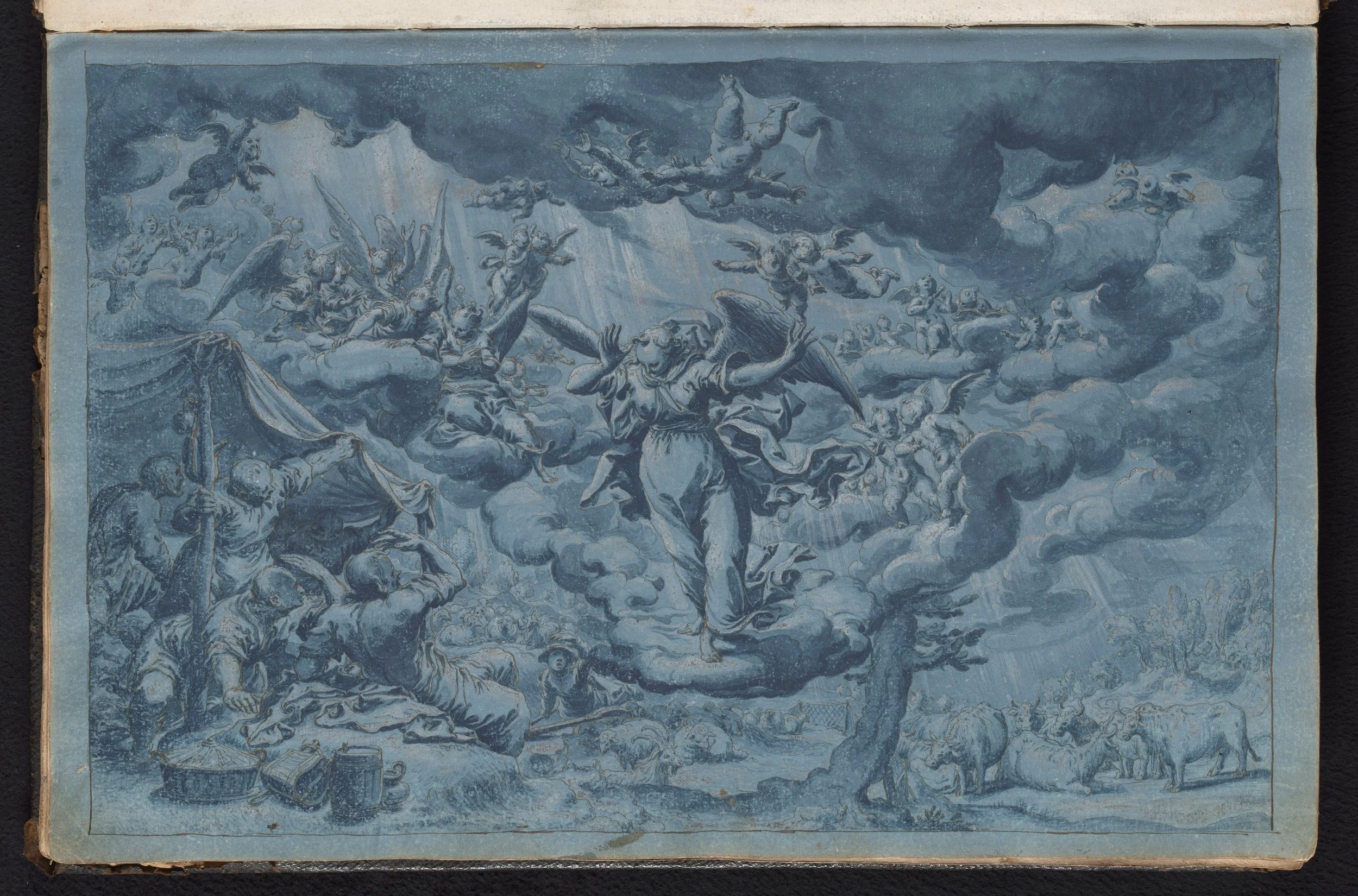
Attributed to Rombout Uylenburgh and Workshop (1580/85–1627/28), Konst boeck voor Reyer Claessoon, c. 1600–1635. Gift of the heirs of Mr C.P. van Eeghen (1921–2014). Rijksmuseum, Amsterdam, inv. RP-T-2025-120-6
IN LITERARY, MUSEUM AND ACADEMIC NEWS
In Memoriam: Marjorie Shelley passed away peacefully on 24 August 2026. A pioneering paper conservator, scholar, and author, Shelley’s distinguished career at The Metropolitan Museum of Art spanned more than five decades (via @metpaperconversation).
New appointment: The Musée du Louvre has announced Ketty Gottardo as the new director of the Graphic Arts department. Her tenure is due to commence on 1 October.
Renovation: The Uffizi has announced plans for a €50 million renovation. The upgrades will be staggered across the next two years and will include the main gallery, the Palazzo Pitti, and the Boboli Gardens.
New publication: On Location: Drawing the Outdoors edited by Joachim Homann. Harvard Art Museums. Distributed by Yale University Press. $45.
New publication: The autumn issue of Master Drawings (Vol. 64, No. 3) is out now.
Job opportunity: YCBA Senior Curatorial Assistant in Prints & Drawings at the Yale Center for British Art, New Haven. Application deadline: unspecified.
IN ACQUISITION NEWS
Georg Pencz (c. 1500–1550), Design for the Frame of an Altarpiece for the Tomicki Chapel in Wawel Cathedral, Kraków (Poland). Acquired by The Metropolitan Museum of Art, New York, from Benjamin Peronnet, Paris.
Attributed to Rombout Uylenburgh and Workshop (1580/85–1627/28), Konst boeck voor Reyer Claessoon (The Van Eeghen Drawing Book). Gift to the Rijksmuseum, Amsterdam, from the heirs of Mr C.P. van Eeghen (1921–2014).
Hermann Weyer (1596 – after 1621), Virtue or Fortitude Vanquishing Ignorance before the Allegory of the Arts. Acquired by the J. Paul Getty Museum, Los Angeles, from Marty de Cambiaire, Paris.
Theodoor van Thulden (1606–1669), The Return of Odysseus to Ithaca. Acquired by the Château de Fontainebleau, Fontainebleau, from Galerie Lowet de Wotrenge, Antwerp.
Jakob Philipp Hackert (1737–1807), Plant Specimen. Gift to the Hamburger Kunsthalle, Kupferstichkabinett (Museum of Prints and Drawings), from Helga Wormsbächer, Hamburg.
Wilhelmina van Pruisen (1751–1820), Portrait of Peeter Stevens (c. 1590–1668). Acquired by The Mauritshuis, The Hague.
Elisabeth Louise Vigée Le Brun (1755–1842), Mountain Torrent. Acquired by The Metropolitan Museum of Art, New York, from Artcurial, Paris (sale: 25 March 2026).
Peder Balke (1804–1887), North Cape. Acquired by the J. Paul Getty Museum, Los Angeles, from Agnew’s SRL, Brussels.
Pietro Gagliardi (1809–1890), Rest During the Flight into Egypt, c. 1854. Acquired by the Hamburger Kunsthalle, Kupferstichkabinett (Museum of Prints and Drawings) from Artcurial, Paris (sale: 25 March 2026).
Jules Eugène Lenepveu (1819–1898), Study for the Auditorium Ceiling in the Opéra de Paris. Gift to the Courtauld Gallery, London, from Donato Esposito.
Paul Sérusier (1864–1927), L’Onction à Béthanie. Acquired by the Musée Sérusier, Châteauneuf-du-Faou, from Le Cloître de l’Art, Paris.
Dirk Hidde Nijland (1881–1955), Construction of the Quay at Hoek van Holland. Acquired by The Metropolitan Museum of Art, New York, from Perspective Fine Art, Vienna.
NEW AUTUMN/WINTER MERCHANDISE



Andrew Wyeth (1917–2009)
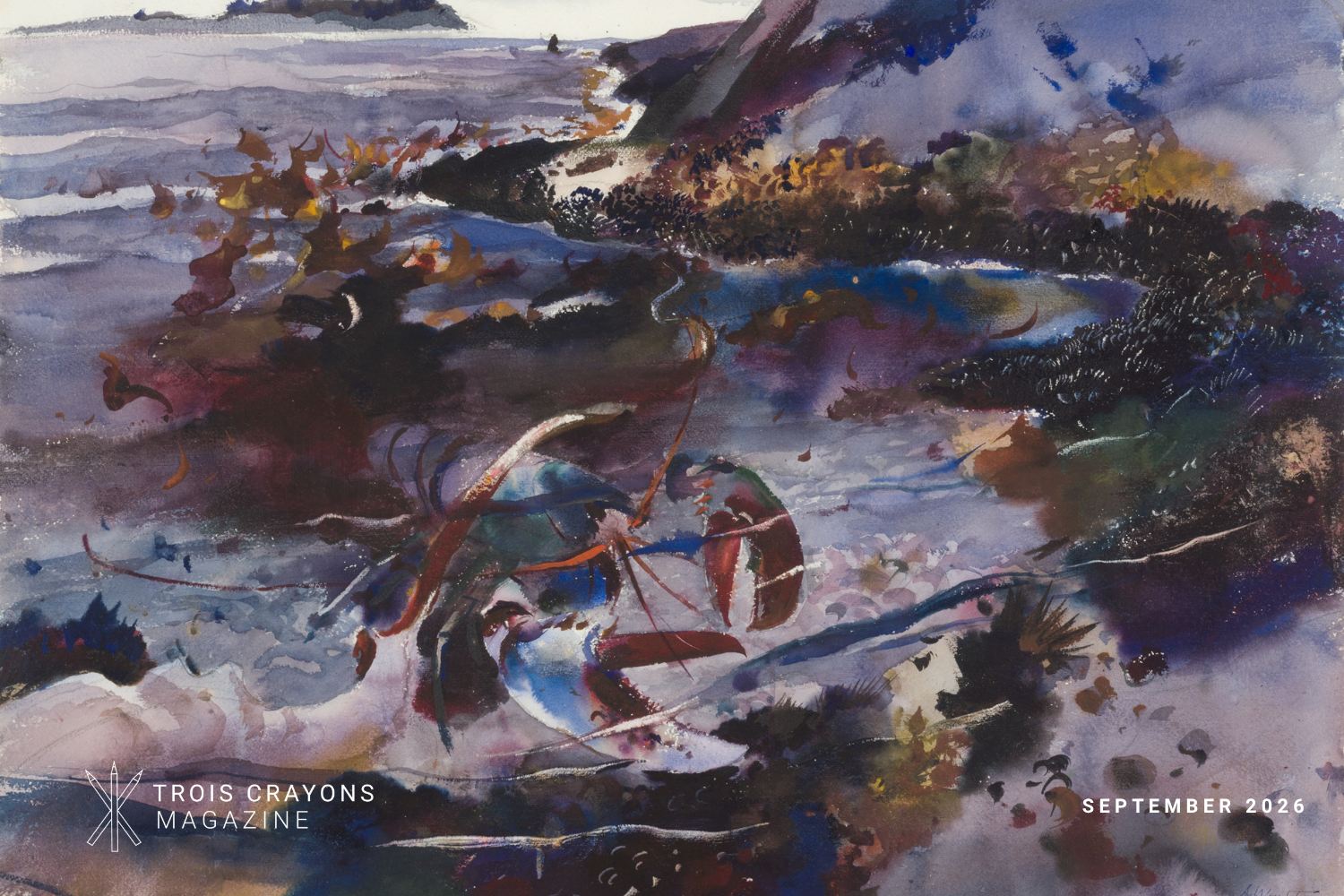
Lobster #7, 1940
Watercolour on paper, 54.6 x 74.63 cm. Wyeth Foundation for American Art Collection, M1035. © 2026 Wyeth Foundation for American Art / Artists Rights Society (ARS), New York
Andrew Wyeth (1917–2009), Lobster #7, 1940. Wyeth Foundation for American Art Collection, M1035. © 2026 Wyeth Foundation for American Art / Artists Rights Society (ARS), New York
Britany Salsbury, Curator of Prints and Drawings, Cleveland Museum of Art, has kindly chosen our drawing of the month.
One of the aspects that draws me most to Andrew Wyeth’s work is his ability to highlight unnoticed, uncanny, or unusual aspects of the everyday. Wyeth’s wife and creative partner, Betsy, once referred to this practice as ‘the emergence of something more’—a description that especially applies to his watercolours. Wyeth drew endlessly, using his drawings and watercolours to both define and shift his perspective. This especially stood out to me throughout the process of studying hundreds of works on paper from his estate collection in preparation for the Cleveland Museum of Art’s exhibition Spectacular Freedom: Andrew Wyeth and the Modern American Watercolor, opening this month, and it is my hope that others in our field will feel the same.
Among the extensive holdings of the Wyeth Foundation of American Art collection, Lobster #7 became and remained one of my favourites from the exhibition checklist. In layers of wash, we see a lobster nearly camouflaged in a shallow pool in Midcoast Maine, where Wyeth summered throughout his entire life. Both the creature and its surroundings are rendered in the blue and purple tones that the artist used almost exclusively for such works during the 1930s and ‘40s, highlighted by unexpected areas of deep gold tone. Wyeth allowed watercolour to pool and bleed around the sheet, evoking the visual effects of seeing both the lobster and the surrounding plants and rocks through a layer of cloudy seawater.
Lobster #7 belongs to a series of thirteen versions of the same composition—four of which will be on view at the CMA—throughout which the lobster and his environs move between realism and abstraction. For me, the seventh lobster occupies a fascinating space between representation and pure form—a quality that is significant given Wyeth’s reputation. For much of his career, the artist was known far better for his exactly rendered tempera paintings (think Christina’s World) than his watercolours. This is due in large part to the fact that
most remained in his own holdings—today the Wyeth Foundation for American Art collection—throughout his lifetime and were exhibited infrequently. It was only in the past half-decade that these works have become accessible for exhibition through a partnership between the Foundation, and both the Brandywine Museum of Art and the Farnsworth Art Museum. Spectacular Freedom will be the first product of this collaboration and will reveal just how much of Wyeth’s career was spent thinking about and working on paper.
This focus on watercolour is important, because the medium established Wyeth’s reputation around the time Lobster #7 was created. In 1937, the artist opened his first New York solo exhibition of works on paper at Macbeth Gallery, famously selling everything on view within days of opening. Then, as now, his images of the Maine coast immediately called to mind Winslow Homer, and the CMA exhibition highlights the ways in which Wyeth deliberately situated himself and his work within an explosion of interest in watercolour beginning with the elder artist and lasting through the following century. Created outdoors, directly from nature, sheets like Lobster #7 were meant to evoke the freedom and accessibility that watercolour offered artists, and the ways in which these qualities led them to be seen by critics and collectors as distinctly American.
Perhaps most notably to me, however, Lobster #7 overturns the expectations that any viewer familiar with Wyeth is likely to have of his work. The loose, quickly applied brushstrokes directly counter the exacting precision of his tempera paintings, and layers of gestural marks recall the postwar abstraction with which he was consistently said to be at odds. Taken together, the drawing shows that it is possible to rethink an artist about whom so much has already been said.
Spectacular Freedom: Andrew Wyeth and the Modern American Watercolor will be on view at the Cleveland Museum of Art from 20 September 2026 through 18 January 2027, before travelling to the de Young Museum, San Francisco. The accompanying publication is available through Yale University Press.
SEPTEMBER HIGHLIGHTS
Vincent van Gogh (1853–1890), Peasant of the Camargue, Harvard Art Museums/Fogg Museum, Bequest of Grenville L. Winthrop, inv. 1943.515. Photo © President and Fellows of Harvard College
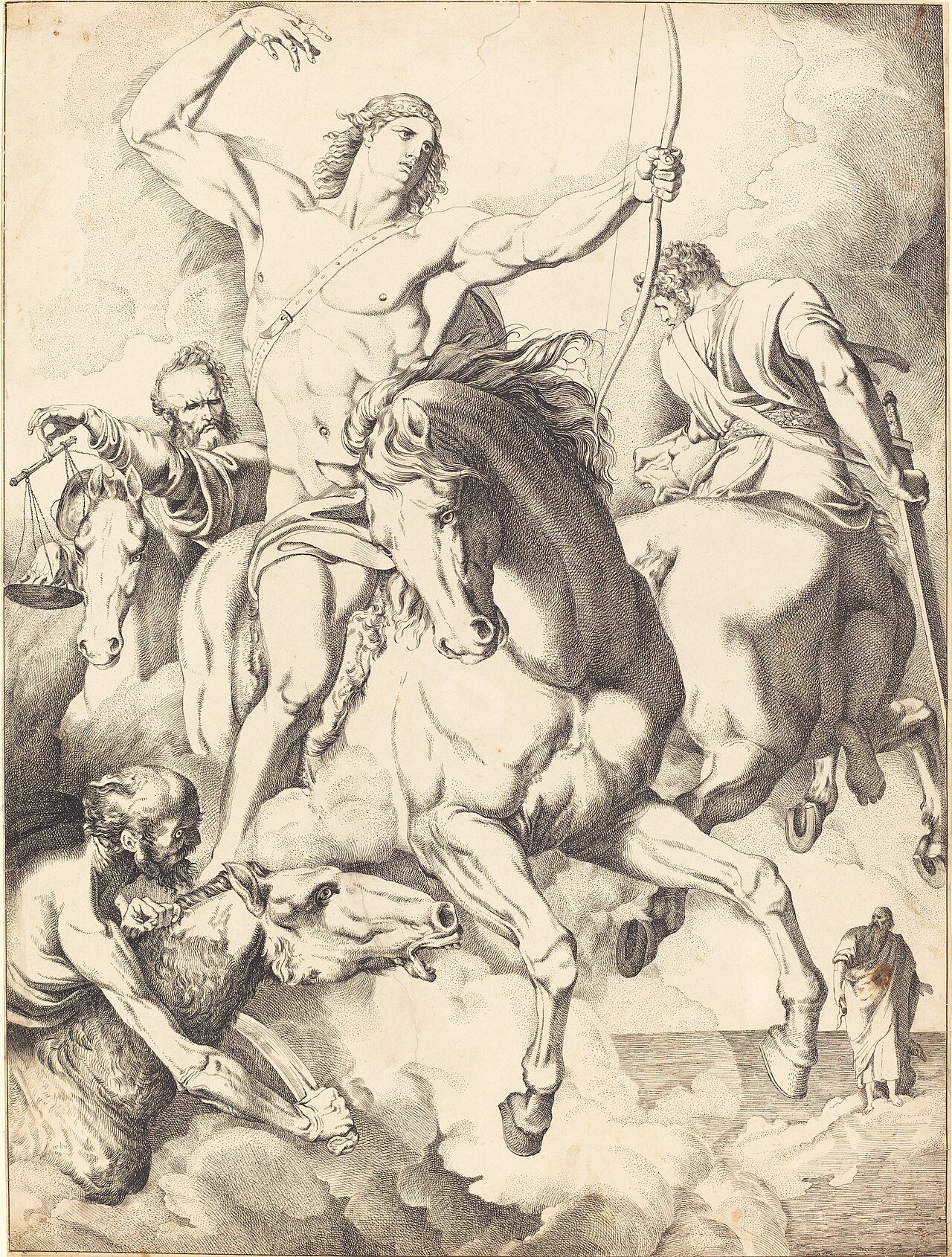
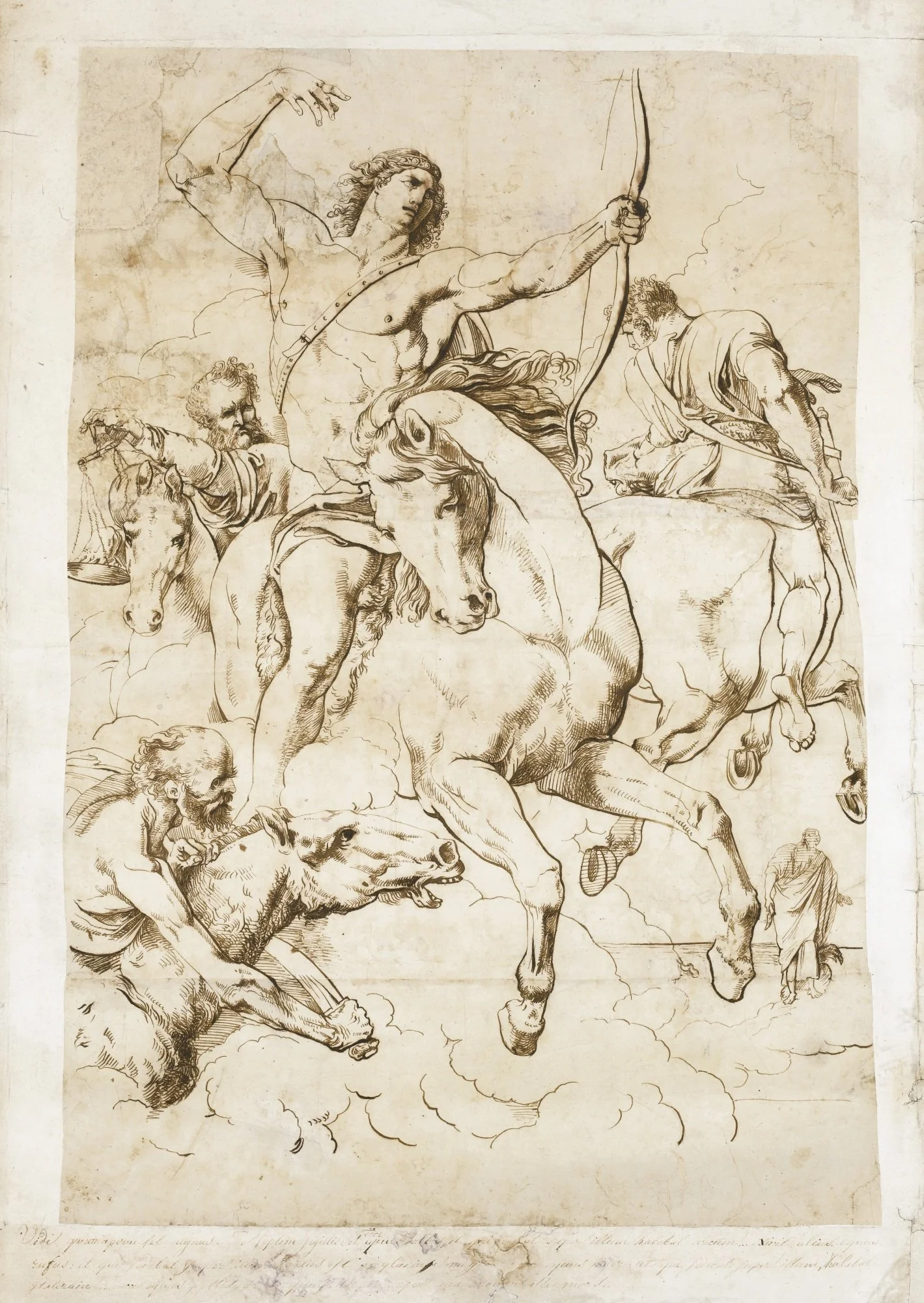
One of these drawings is a modello for the Italian Neoclassical painter and engraver Luigi Sabatelli’s series of etchings illustrating The Apocalypse of St. John. The other is a copy after that print by an anonymous artist. But which drawing is Sabatelli's original model, and which is the copy?
-
The original is the lower image.
Upper (left) Image: after Luigi Sabatelli (1772–1850), Vidi, quod aperuisset agnus... (The Four Horsemen of the Apocalypse), National Gallery of Art, Washington, inv. 2010.40.1
Lower (right) Image: Luigi Sabatelli (1772–1850), Vidi, quod aperuisset agnus... (The Four Horsemen of the Apocalypse), formerly Sotheby’s, New York, 29 January 2014, lot 77
Although both sheets are close in size and finish, and are executed in the same direction as the final print, it is the upper image that is the copy. Executed with great precision, it meticulously mimics the engraved lines and stippling of the finished etching. By contrast, the lower drawing is Sabatelli’s modello. As a preparatory study, it leaves certain areas open for the artist to refine directly on the copper plate.
Sabatelli executed the series in Milan between 1809 and 1810. It was one of his major printmaking projects, conceived while he was still in Florence, most likely at the suggestion of Tommaso Puccini (1749–1811), director of the Reale Galleria Fiorentina and secretary of the Florentine Accademia di Belle Arti.
John Berger transformed the way generations thought about art, politics and the act of looking. Best known for Ways of Seeing, his work ranged across migration, capitalism, war and mortality, always asking how culture can help us understand the world around us. Shahidha Bari speaks with Tom Overton about his new book, John Berger: From Life. An intriguing conversation that revisits a classic and explores how Berger’s politics shape his writing on art, migration and power.
To Watch
The Standard Of Living
On the stage, at Theatre Royal Haymarket in London, The Standard Of Living tells the story of rebel economist and Bloomsbury Group member John Maynard Keynes (21 September – 12 December). Written by James Graham, the production features Rory Kinnear, Natalia Osipova and Thomas Flynn.
On screen, The Big Deal with Steph McGovern, a six-part series dubbed “The Apprentice for the art world”, is currently broadcasting on the BBC. The show pits aspiring art dealers against one another. While it provides somegamified exposure to the mechanics of the art market, the show distinguishes collecting and dealing in art from actually learning about it, and so if it is enlightenment that you seek on topics such as history or provenance, you may be better served with Fake or Fortune?.
The Amsterdam Van Eeghen family has donated an extremely rare early seventeenth-century drawing book to the Rijksmuseum. In the family’s possession for more than three centuries, the artist of the drawings was unknown until around 20 years ago when a link was established with Rombout Uylenburgh, a Dutch painter who worked at the Polish royal court in Kraków and whose family had links to Rembrandt. A presentation centered around the book can be seen in room 2.7 of the Rijksmuseum until 29 November.