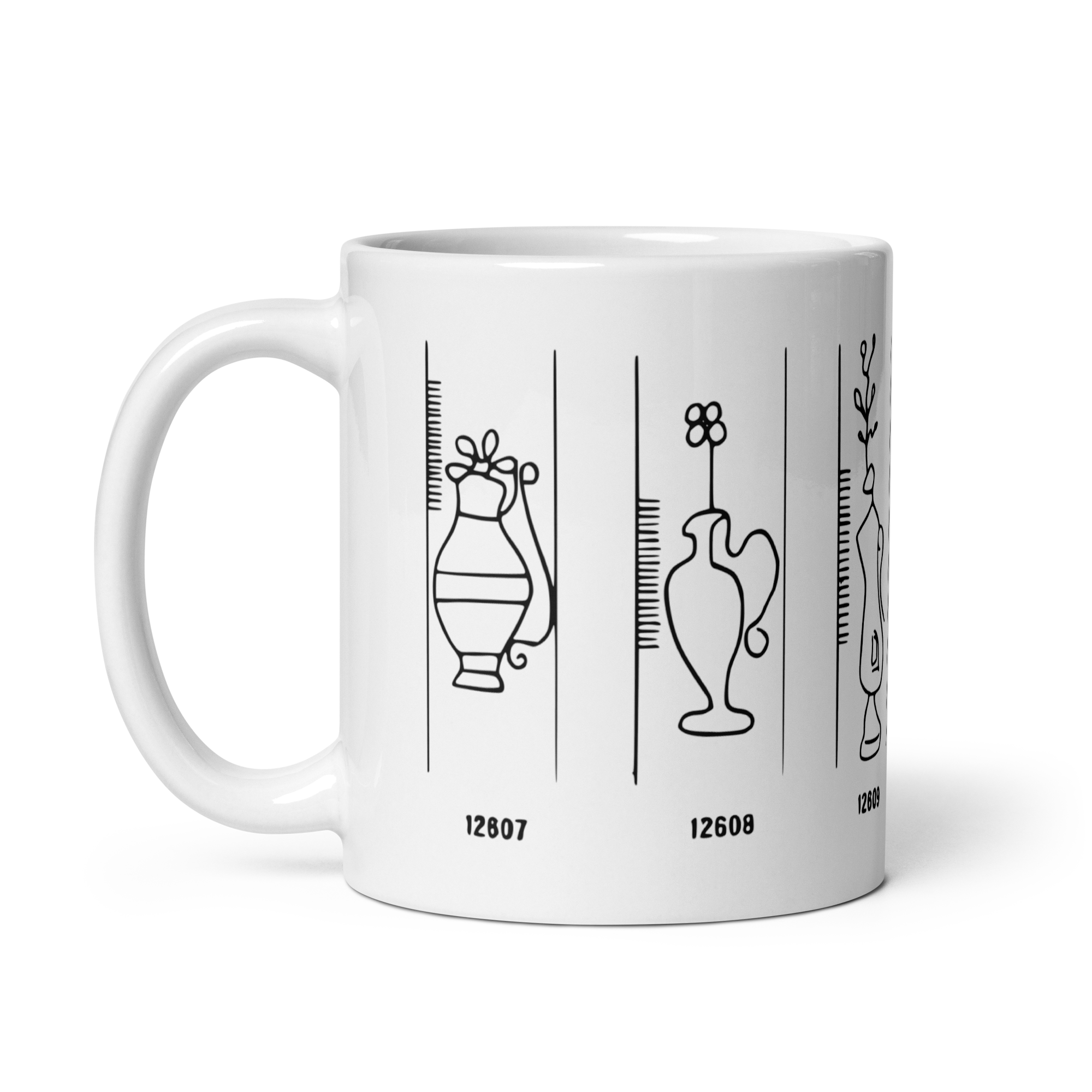
Following the launch of our revitalised website in March, the Trois Crayons Store was introduced last week with a new range of limited edition merchandise inspired by our love for works on paper. The collection includes T-shirts, caps, mugs and tote bags inspired by watermarks from Charles-Moïse Briquet's celebrated compendium, Les Filigranes. But who was Briquet, what is a watermark, and what drew us to these particular marks?
Born in Geneva in 1839, Briquet was the son of a paper manufacturer. After early apprenticeships, he joined the family firm, Briquet & Fils, and spent the first half of his career as a paper merchant. Following his retirement in 1878, however, he embarked on a second career, devoting himself to the history of paper, paper mills, and watermarks. In 1907, he published the results of thirty years of research in the much-anticipated Les Filigranes, a door-stopping four-volume compendium cataloguing 16,112 watermarks from the Middle Ages to the early modern period. The publication quickly became an essential reference for the study of paper and remains an indispensable tool to this day. Watermarks – translucent impressions left in sheets of paper by the wire papermaking moulds used in their production – take a wide variety of formats and styles, from fantastical creatures to coats of arms and geometric motifs, and serve as key indicators of a sheet’s origin, maker, and approximate date.
Today, the watermarks recorded in Les Filigranes also possess a distinct aesthetic appeal. Seen in isolation, they are striking visual traces of a distant world, tangible reminders of the ‘vatmen’ and papermakers who produced the paper by hand. Each item in the Trois Crayons collection is inspired by a watermark selected as much for its visual charm as for its symbolic resonance. The sun in splendour (13934, Paris, 1401) radiates light and has associations with the divine; the flower (6362, Verona, 1328/34), and the one-handled pot with a flower (12592, Naples, 1436) have myriad symbolic interpretations, though we favour those of growth; the pair of scissors (3731, Genoa, 1512) are the honest tools of the craftsman; and the pots (mostly France, 1495–1596) suggest abundance and domestic utility. The collection is available now.
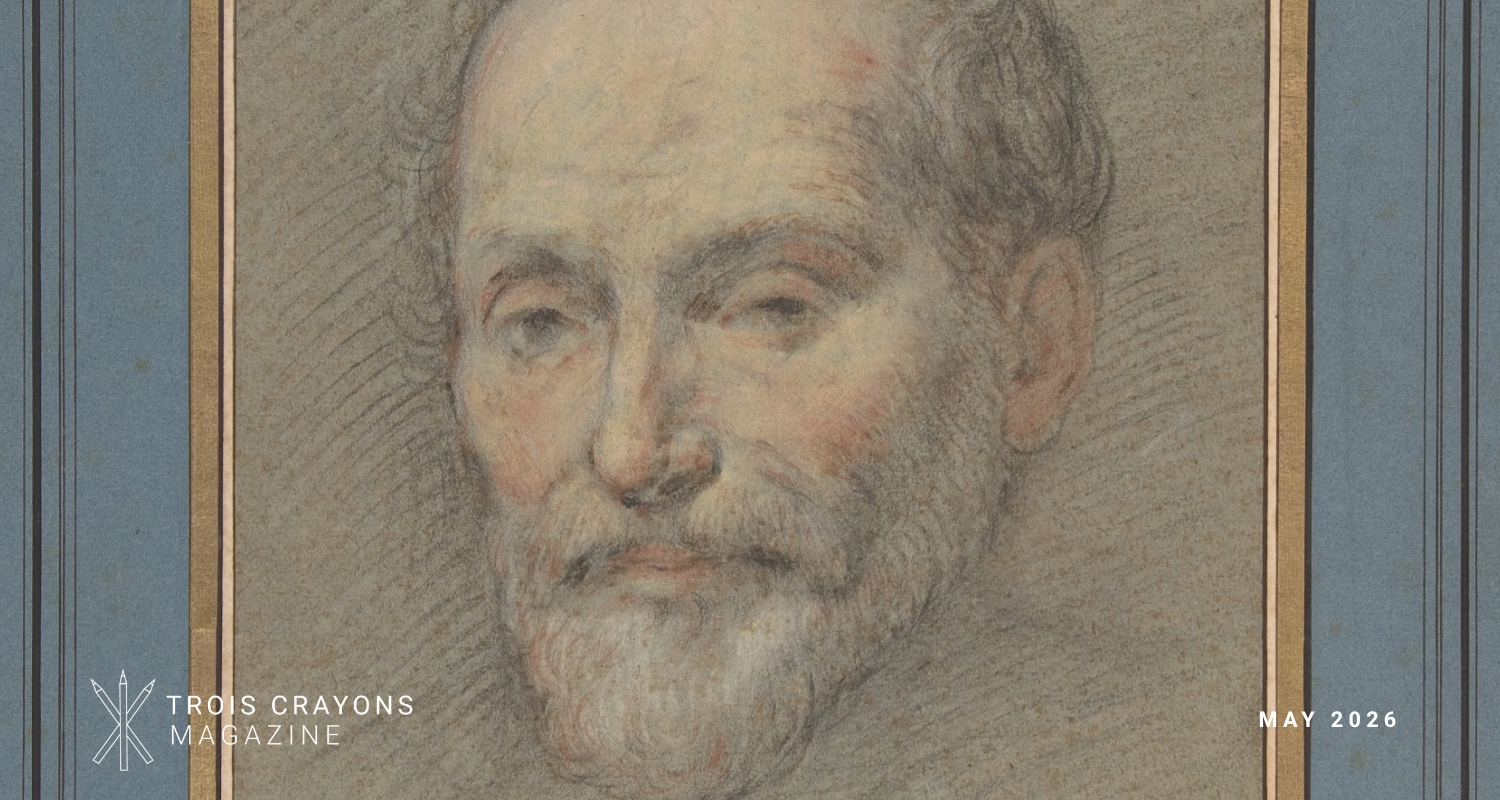
In this month’s magazine, we have news headlines, gallery listings, announcements, events and an overview of recent institutional acquisitions. For our Drawing of the Month, Charlotte Roosen discusses the sole known drawing by Michaelina Wautier, whose work is currently being celebrated at the Royal Academy of Arts in London. For this month’s Demystifying Drawings feature, Daniel Lowe returns for the third instalment of ‘Collector Portraits’, looking into the life and collection of Pierre-Jean Mariette, one of the key figures in the history of drawings collecting. In the Review section, Jasmine Clark visits Lucian Freud: Drawing into Painting at the National Portrait Gallery. After the month’s exhibition listings and the Real or Fake quiz, the issue concludes with a trio of audio, video and literary recommendations.
For next month’s edition, please direct any recommendations, news stories or feedback to tom@troiscrayons.art, and submit any event listings via the submission form.






IN GALLERY, ART FAIR AND AUCTION NEWS
8 May – 15 July: Sylvia Sleigh: The Bridge at Daniel Malarkey (London).
12 May – 27 May: Joseph Southall - A Late Romantic at Moore Gwyn Fine Art (London). Organised in association with Sarah Colegrave Fine Art.
13 May – 26 June: Leonor Fini: A Practice of Transformation at Colnaghi (New York).
14 May – 10 July: Elizabeth I: Queen and Court at Philip Mould & Company (London).
Opening 14 May: Carel de Nerée tot Babberich at Emanuel von Baeyer Gallery, 18 Cecil Court (London).
14–17 May: London Original Print Fair at Somerset House (London).
15–19 May: TEFAF New York at the Park Avenue Armory (New York).
Open until 17 May: Festival du Dessin 2026 at various locations (Arles).
21 May – 20 June: In David’s Wake: Neoclassicism and its Belgian Lineage at Thomas Deprez Fine Arts (Brussels).
Open until 22 May: Josef Karl Rädler: The Laughing Philosopher at Richard Nagy Ltd. (London).
Open until 23 May: Paula Rego: Story Line at Victoria Miro (London).
Open until 23 May: The Adventure of Domenico Gnoli at Lévy Gorvy Dayan (New York).
Open until 29 May: Beyond the Threshold: Revisiting Orientalism II at Colnaghi (London).
Open until 4 July: Desire at Vendelmans (London).

Albrecht Dürer, Stag Beetle. The J. Paul Getty Museum, Los Angeles, inv.83.GC.214
IN LECTURE AND EVENT NEWS
13–14 May – Conference: The History of Drawings Conservation and its Ethics (online). 08:00 PT; 17:00 CEST. Free; advance registration required. Organised by the J. Paul Getty Museum and the Rijksmuseum.
13–15 May – Conference: Framing the Drawing – Drawing the Frame at Bibliotheca Hertziana – Max Planck Institute for Art History (Rome). 14:00; 10:00; 10:00 CEST. Free. In-person and on Vimeo. Gernsheim Study Days.
14 May – Talk: Fear, Desire, and the Deep Darkness: Intellectual Discovery of the Underworld from Leonardo to Kircher at the Courtauld Institute, Vernon Square (London). Speaker: Professor Monica Azzolini. Free; advance registration required. Organised by Dr Robert Brennan, Lecturer in Italian Art 1300-1500, and the Leonardo da Vinci Society.
14–17 May – Event series: London Original Print Fair at Somerset House (London). Various times. Free; fair ticket required.
18 May – Talk: Raphael et alia at the Courtauld Institute, Vernon Square (London). Speaker: Professor Lisa Pon. 18:00 BST. Free; advance registration required. Organised by Dr Robert Brennan, Lecturer in Italian Art 1300-1500, as part of the Italian Renaissance Seminar series.
18 May – Talk and tour: Gerard van Honthorst at Centraal Museum (Utrecht). 13:15 CEST. €25. CODARTfocus.
19 May – Talk: Drawing out the Gothic: A Curator Conversation at Bard Graduate Center (New York). Speakers: Barry Bergdoll, Femke Speelberg, Basile Baudez. 18:00 EDT. $15. Organised by The Drawing Foundation, Bard Graduate Center, and the Metropolitan Museum of Art.
21–22 May – Symposium: Unforgettable at Museum voor Schone Kunsten Gent (Ghent). 09:30; 09:00 CEST. €140; €70 for students. Organised in collaboration with the University of Antwerp.
26 May – Talk: Translucent Papers Ante Litteram. Etienne Du Pérac's Drawings for the Engraved Series Vestiges of the Antiquities of Rome at Istituto Centrale per la Grafica (Rome). Speaker: Gabriella Pace. 10:30 CEST.
28–29 May – Conference: Leonora Carrington: Navigating a World Down Below at the Freud Museum, 28 May, and The Courtauld, Vernon Square Campus, 29 May (London). 18:00; 10:30 BST. £45. Organised by Cecilia Brandon-Cross, Ana Karime Sierra, Han Lu Tao and Sarah Vidalin as part of The Courtauld’s MA Curating programme.
29 May – Conference: Marble and Flesh. Johan Tobias Sergel and His Times at Nationalmuseum (Stockholm). 11:15 CEST. Free. Organised in collaboration with the Royal Swedish Academy of Letters, History and Antiquities and Nationalmuseum.
9–10 June – Conference: Howard Burns Seminar Series on Architectural Drawings: Architectural Drawings in the Renaissance: Anonymous Artists, Copyists, Architects at KHI (Florence). Free, subject to availability. Organised by Guido Beltramini and Bianca de Divitiis, in collaboration with the GDSU.
Call for papers: Drawn and printed – new approaches to the graphic work of Lucas Cranach the Elder and his Sons at Technische Hochschule Köln (Cologne). Submit proposal title and abstract to: daniel.goerres@th-koeln.de. Submission deadline: 30 May. Conference dates: 16–17 October.
Call for papers: New Research on Venetian Art (Online). Submit proposal title and abstract to: venetianahg@gmail.com. Submission deadline: 30 June. Conference date: 24 October. Organised by the Venetian Art History Research Group (VAHRG).
Call for papers: Travel Drawing. Islands in Travel Writing at Split City Museum (Split, Croatia). Submit abstract to: discoveringdalmatia@gmail.com. Submission deadline: 1 July. Conference dates: 12–14 November.
IN LITERARY, MUSEUM AND ACADEMIC NEWS
New publication: Pietro Faccini (Bologna, 1562-1602) by Mario di Giampaolo, edited by Donatela Cingottini and Nicolas Schwed. Editori Paparo. €102.
New publication: Alessandro Rosi La bella pittura «di gran macchia, e rilievo» by Elisa Acanfora. Mandragora. €150.
New publication: Gabriel François Doyen (1726-1806) by Benjamin Salama. Arthena. €85.
Job opportunity: Scientific Museum Assistant in Training at the Kupferstichkabinett (Museum of Prints and Drawings), Staatlichen Museen zu Berlin, Berlin. Application deadline: 17 May.
Job opportunity: Curatorial Assistant in the department of Prints, Drawings, and Photography at the Cleveland Museum of Art, Cleveland. Application deadline: 31 May.
Fellowship opportunity: Emanuela and Silvano Merlatti Research Fellowship 2026 at the Fondazione Federico Zeri. Application Deadline: 13 May.
Summer course: Collecting Prints and Drawings from the 16th to the 20th Century in Florence: Techniques, Papers, and Conservation, organised by the Fondazione Roberto Longhi at the Villa Il Tasso (Florence). €3,000. Application deadline: 28 May. Course dates: 22 June – 3 July.
Museum re-opening: LACMA’s David Geffen Galleries in Los Angeles, have just reopened following a $724 million building project.
Museum opening: Quentin Blake Centre for Illustration in Camberwell, London, is due to open on 5 June.
Museum opening: V&A East Museum in Stratford, London, has just opened following a £135 million building project.
Museum closing: Christ Church Picture Gallery in Oxford, closed to the public on 30 April and is due to undergo major renovation and expansion.
Event recordings: CODART 27 documents and event recordings are now online. The three-day congress was organised in collaboration with Museum of Fine Arts (MSK), Ghent, with the theme Telling Her Story: Female Creators, Collaborators and Collectors.
Event recordings: Drawings Week 2026 event recordings are now online. The Drawing Foundation’s events programme, in association with Master Drawings New York 2026, included our own partnership event, Considering Collections: New Curatorial Approaches to Northern Drawings.

Pierre Paul Prud'hon, The Sleep of Venus. The Metropolitan Museum of Art, New York, inv. 2026.136
IN ACQUISITION NEWS
Fernão Gomes (1548–1612), The Dispute between the Doctors (?). Acquired by the Museu Nacional de Arte Antiga, Lisbon, from Galerie Duponchel, Paris.
Abraham Diepenbeeck (1596–1675), Study for a Multi-Figure Composition (recto); A Letter to the Artist (verso). Acquired by the Frits Lugt Collection, Fondation Custodia, Paris, from Galerie Lowet de Wotrenge, Antwerp.
Pierre Paul Prud'hon (1758–1823), The Sleep of Venus. Acquired by The Metropolitan Museum of Art, New York, from Galerie de Bayser, Paris.
Louis-Léopold Boilly (1761–1845), Study of a Woman. Acquired by the Nationalmuseum, Stockholm (via @carl_johan_olsson).
Eugène Delacroix (1798–1863), Figures after The Martyrdom of Saint Lawrence by Rubens and fourteen other works. Donated to the Musée des Beaux-Arts, Orléans (via La Tribune de l’Art).
Xavier Mellery (1845–1921), A Columbrarium at Vigna Codini and seven further works. Acquired by The Royal Library of Belgium (KBR), Brussels, from Marcel Vosters, Antwerp.
József Rippl-Ronai (1861–1927), Portrait of Paul Gauguin in profile. Acquired by MFA Budapest, Budapest, from the auctioneers De Baecque et Associés, Paris (sale: 24 January 2026).
Cy Twombly (1928–2011). 21 drawings donated to the British Museum, London, by the Cy Twombly Foundation. (via @nicholascullinan).
Michaelina Wautier (c. 1614–1689)
Study of the Medici Ganymede Bust, c. 1640/50
Black chalk, enhanced with white and ochre-coloured chalk, on paper, 430 × 283 mm, signed on the verso with pen and ink, in italic script: ‘Michaelina Wautier fecit’, Private Collection
Michaelina Wautier (c. 1614–1689), Study of the Medici Ganymede Bust, c. 1640/50. Black chalk, enhanced with white and ochre-coloured chalk, on paper, 430 × 283 mm, signed on the verso with pen and ink, in italic script: ‘Michaelina Wautier fecit’, Private Collection
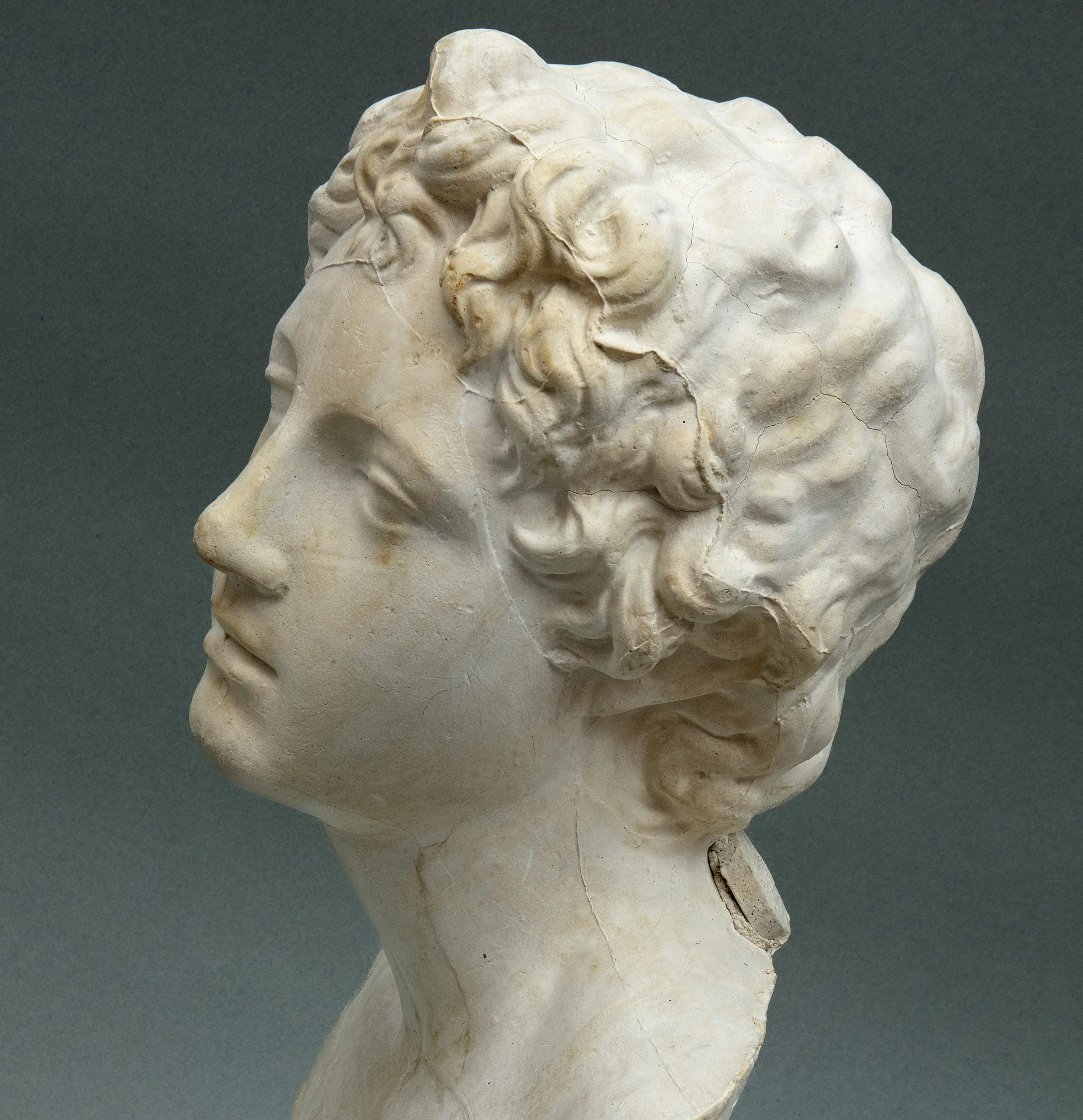
Anonymous, Plaster Cast of the Medici Ganymede Bust, c. 1779–1804. Museo de la Real Academia de Bellas Artes de San Fernando, Madrid, inv. V-086
Charlotte Roosen, Assistant Curator of the exhibition Michaelina Wautier, Painter at the Kunsthistorisches Museum, Vienna, has kindly chosen our drawing of the month.
A sense of everlasting youth and timeless beauty becomes vividly tangible in Michaelina Wautier’s drawing of an antique bust. Departing from the conventionally blank gaze of antique sculpture, she rendered the young man with open, sighted eyes and even a subtle suggestion of eyelashes, as if her act of drawing brought the idealised sculpted youth to life. Now on display at the Royal Academy of Arts in London, together with around thirty surviving paintings by Michaelina Wautier, the drawing sets the tone for a long-overdue reawakening of her artistic achievements. Active in Brussels around the middle of the seventeenth century, only scant details about her training as a painter have come down to us. Wautier’s sole known drawing most likely dates from the early phase of her career, when aspiring painters typically began by mastering the fundamental skill of drawing.
Although it was long believed to depict an ancient Roman bust, closer examination aimed at identifying the precise sculpture depicted by Wautier has shown that it does not derive from a genuinely antique prototype. The head in fact stems from a sixteenth-century restoration of the Roman sculpture group Ganymede and the Eagle that is now in the Uffizi Galleries in Florence but was housed in the Villa Medici in Rome during Wautier’s lifetime. The Trojan shepherd boy Ganymede is shown on the verge of being carried off to Mount Olympus by Zeus in the guise of an eagle. The myth is often read as an expression of Zeus’s desire for youthful beauty. Wautier’s drawing, with its focus on Ganymede’s affectionate expression, certainly goes beyond classical descriptions of him as ‘the most beautiful of mortals ever born.’
How Wautier gained access to this sculptural model remains speculative. She may have accompanied her slightly older brother, the painter Charles Wautier (1609–1703), on a trip to Italy, or Charles may have travelled south alone and brought a plaster copy of the sculpture back with him. Another possibility is that Michaelina saw a copy of the sculpture in an antiquities collection in the Southern Netherlands. The largest exhibition of Michaelina Wautier’s oeuvre to date, which was on show last fall at the Kunsthistorisches Museum in Vienna, allowed for an interesting comparison with an eighteenth-century plaster copy of the bust of the Medici Ganymede.
The drawing attests to Wautier’s technical virtuosity, particularly in her economical use of black chalk to define form, working in concert with the tone of the paper to achieve a refined rendering of the marble head. She further evokes texture and the play of light across the statue’s surface by delicately enhancing the face and flowing ringlets of hair in white and ochre chalk. To date, we do not know of any paintings that this drawing relates to and, therefore, it may have been made for its own sake as documentation or exercise. The highly finished character of the drawing, together with the presence of a signature, suggests that it was intended as an autonomous work of art. By copying well-known models, she demonstrated her artistic ambition in preparation for history scenes with life-sized figures.
As far as is known, Michaelina Wautier’s drawing constitutes the earliest surviving example of a female artist in Northern Europe working from an antique sculptural prototype. Without the signature on the verso ‘Michaelina Wautier fecit,’ written in italic script—the work would most likely never have been attributed to her. Yet when it appeared at auction about fifteen years ago under the name ‘Michaelina Nautier,’ in error, it only underscored the unfortunate obscurity to which she had been consigned for nearly four centuries after her death. Stamped at the bottom of the sheet is a ‘C,’ once mistaken for the collector’s mark of Pierre Crozat (1665–1740) and now identified as ‘Pseudo-Crozat,’ the Comte de Saint-Morys. One can only wonder whether its original owners were aware of Wautier’s extraordinary accomplishment in this study of the Medici Ganymede bust.
Michaelina Wautier is on view at the Royal Academy of Arts until 21 June. The exhibition is organised in collaboration with the Kunsthistorisches Museum, Vienna. The print catalogue and the digital supplement are available now.
Collector Portraits: Pierre-Jean Mariette’s (1694–1774) Mounts
Daniel Lowe, Contributing editor
If you and I, dear reader, are kindred spirits, then you will have no doubt spent a significant portion of the first quarter of the year crawling through art fairs and gallery weeks: jostling through huge crowds to look at tiny drawings, spending an inordinate amount of time in front of a sheet to perfectly time a long-desired introduction.
Whatever drawing you may have found yourself somewhat uncomfortably lingering over, there is a good chance that it was displayed in a mid-blue mount, sometimes embellished by a black line or a thin strip of gold. Why is this choice of display so widespread in the art market?
As any framer will tell you, this is partly an aesthetic decision. When dealing with aged paper – almost invariably yellowed, faded, or stained over the centuries – a middle tone mount can distract the eye from the ravages of time and make off-white paper appear more brilliant.
Beyond more terre-à-terre considerations, displaying drawings in a blue mount conjures up a host of positive historical associations, most conducive to giving an air of importance to any sheet.
In the public consciousness, blue mounts are indelibly associated with Pierre-Jean Mariette (1694–1774), one of the most significant collectors of works on paper of all time. His vast and wide-ranging collection fundamentally shaped the field of Old Master drawings, both in terms of display and methodology.
Born into a dynasty of Parisian print dealers, Mariette’s early life constituted a fertile environment for the development of a deep and enduring knowledge of the graphic arts. His constant exposure to prints in the family dealership was complemented by a classical education from the Jesuits, and a training in drawing and printmaking from the artist Jean Chaufourier.
In 1717, Mariette was sent to Vienna, where he was tasked with organising and cataloguing the impressive print collection of Prince Eugene of Savoy. He then embarked on a trip to the Italian peninsula, spending periods in Venice, Bologna, Florence, Rome, and Naples, amongst other cities. Whilst in Italy, Mariette forged important ties with artists and congnoscenti, including with the art critic Anton Maria Zanetti, the pastellist Rosalba Carriera, and the diplomat, painter and collector Francesco Maria Niccolò Gaburri.
Though by this point Mariette had developed an interest in a host of different art forms, including painting and intaglios, his taste for collecting drawings began to take centre stage upon his return to France in late 1719.
Back in Paris, Mariette began to frequent a salon held in the Hôtel particulier of the financier and collector Pierre Crozat, where he forged ties with some of the most important collectors of the time, not least with Crozat himself.
After Crozat’s death in 1740, Pierre-Jean was charged with compiling and publishing a catalogue of the financier’s collection of drawings and carved stones. Whilst the ensemble of the stones was bought by Louis, Duke of Orleans, Crozat’s collection of approximately 19,000 (!) drawings was dispersed at auction in 1741. Mariette was one of the principal buyers at the sale, acquiring (among many other items) exquisite drawings by Andrea del Sarto, Michelangelo, Annibale Carracci, Albrecht Dürer, and an album of views of Rome by Maarten van Heemskerck (thirty-two folios of which are currently on display at the Istituto Centrale per la Grafica in Rome). By 1750, he definitively abandoned the family business to dedicate himself more fully to the study and expansion of his holdings.
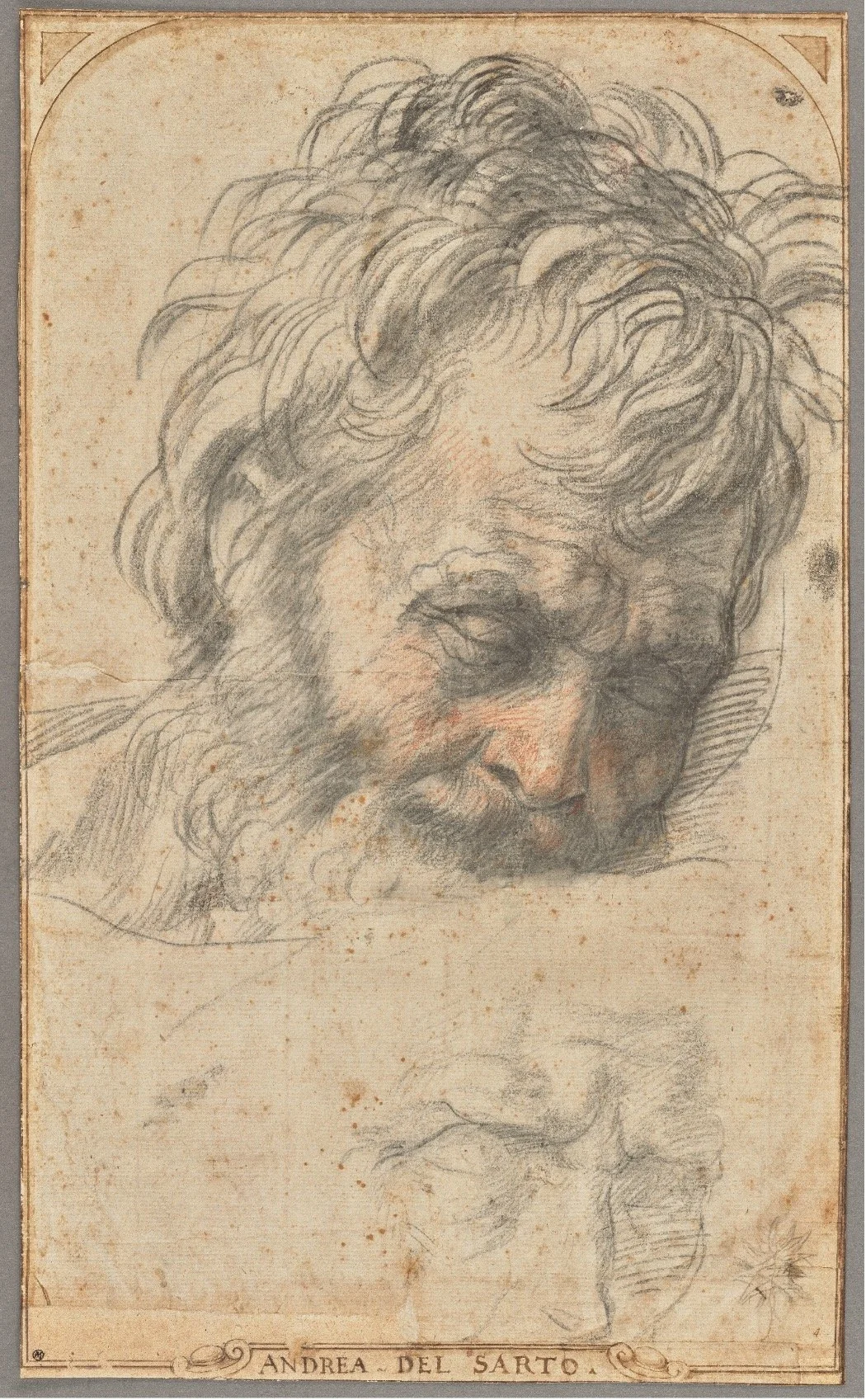
Andrea del Sarto, Study for the Head of Saint Joseph, c. 1526–1527. J. Paul Getty Museum, Los Angeles, inv. 2017.73 (formerly in the collections of Pierre Crozat and Pierre-Jean Mariette)
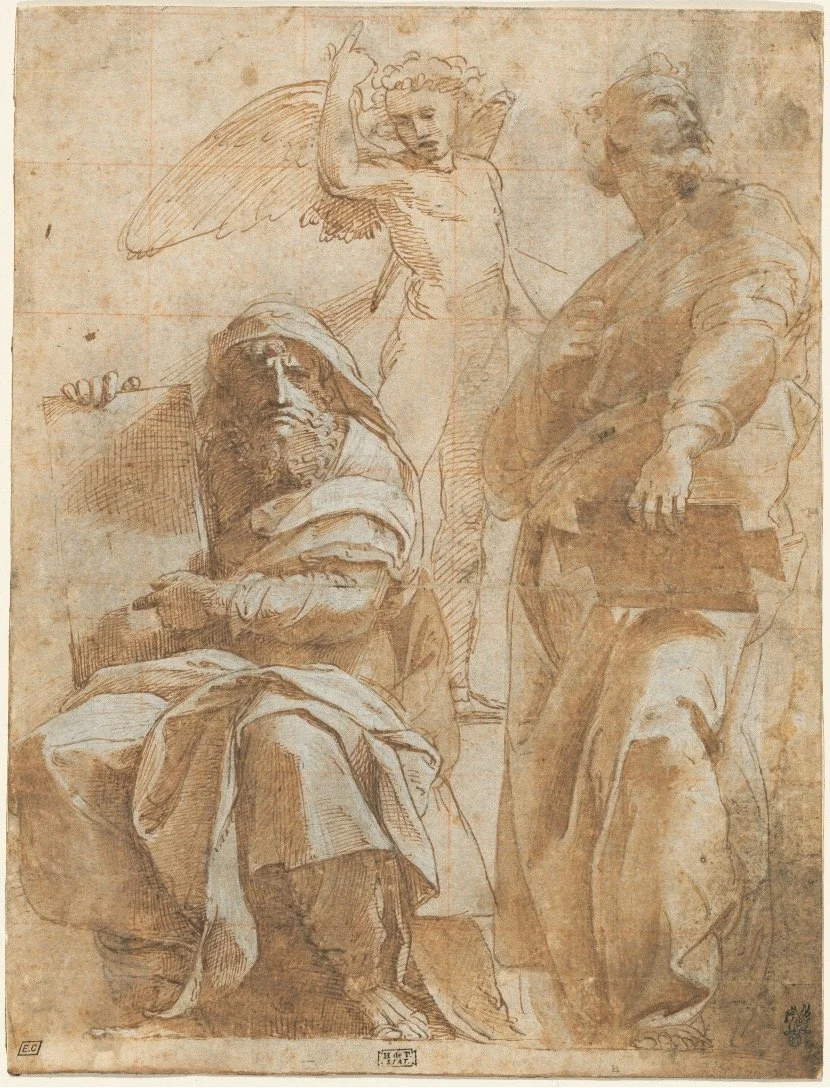
Raphael, The Prophets Hosea and Jonah, c. 1510. National Gallery of Art, Washington, DC, inv. 1991.217.4 (formerly in the collection of Pierre-Jean Mariette)
What was distinctive about Mariette’s collecting style? Whilst many of the drawings once in his possession are of superlative calibre – one need only think of the sublime Prophets Hosea and Jonah, now at the National Gallery of Art – Mariette’s approach to collecting was not limited solely to the big names. True to the Enlightenment spirit of his time, Pierre-Jean aimed to build an encyclopaedic, ‘complete’ holding of drawings, which meant acquiring more humble sheets by lesser-known artists in the attempt to make his collection representative of the entire breadth of European art history, not just a single school or period.
This ‘scientific posture’ also affected the way Mariette conserved and displayed his drawings. The collector kept his sheets in uniformly sized boxes, which could only accommodate mounted drawings measuring up to 20 x 15 pouces (540 x 405 mm). When compared to the more traditional system of keeping drawings in a bound volume or album, individually mounting drawings allowed for optimal study conditions: sheets could be easily retrieved, compared, and reclassified. Indeed, the fact that nearly all modern print rooms follow a similar storage and display system to that employed by Mariette (individually mounted drawings kept in boxes, perhaps with a few different standard sizes as opposed to just one) is a sign of its efficacy.
How can one spot a former Mariette drawing in the wild? There are two main elements to look out for. The first is a small collector’s mark – a circle inscribed either with the letter ‘M’ (L. 1852) or the monogram ‘PIM’ (L. 2097 and L. 2098) – usually applied to the lower edge of the drawing. The second is the distinctive and oft-imitated blue mount. Though the exact type of decoration employed on these mounts varies considerably, they are usually adorned with an inner gold frame, black ink framing lines, and an attribution encased in an elaborate cartouche (see the example mount below, created for a drawing by Domenico Fetti).
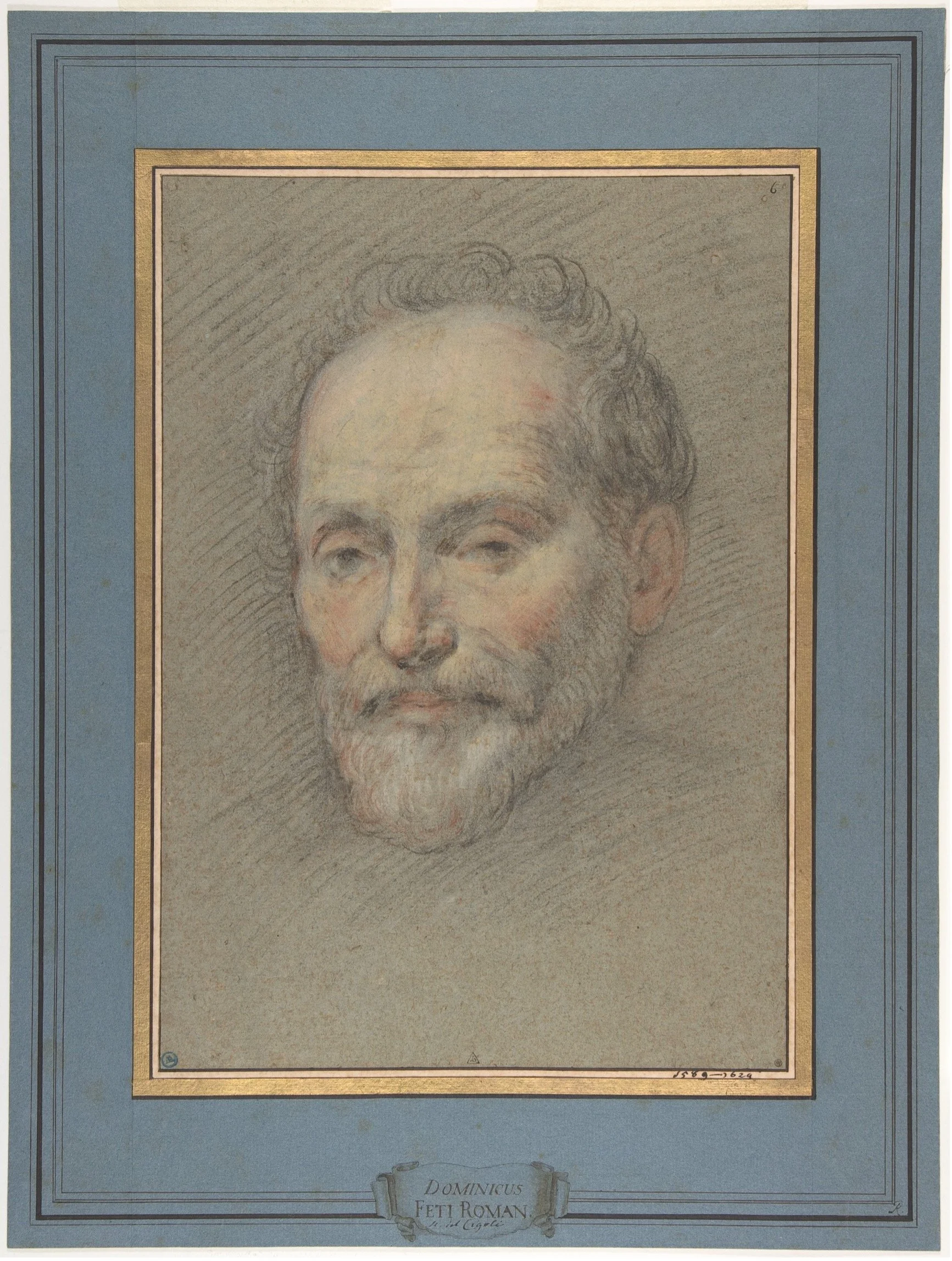
Domenico Fetti, Head of a Bearded Man. Metropolitan Museum of Art, New York, inv. 1981.394 (formerly in the collection of Pierre-Jean Mariette, bears his mount)
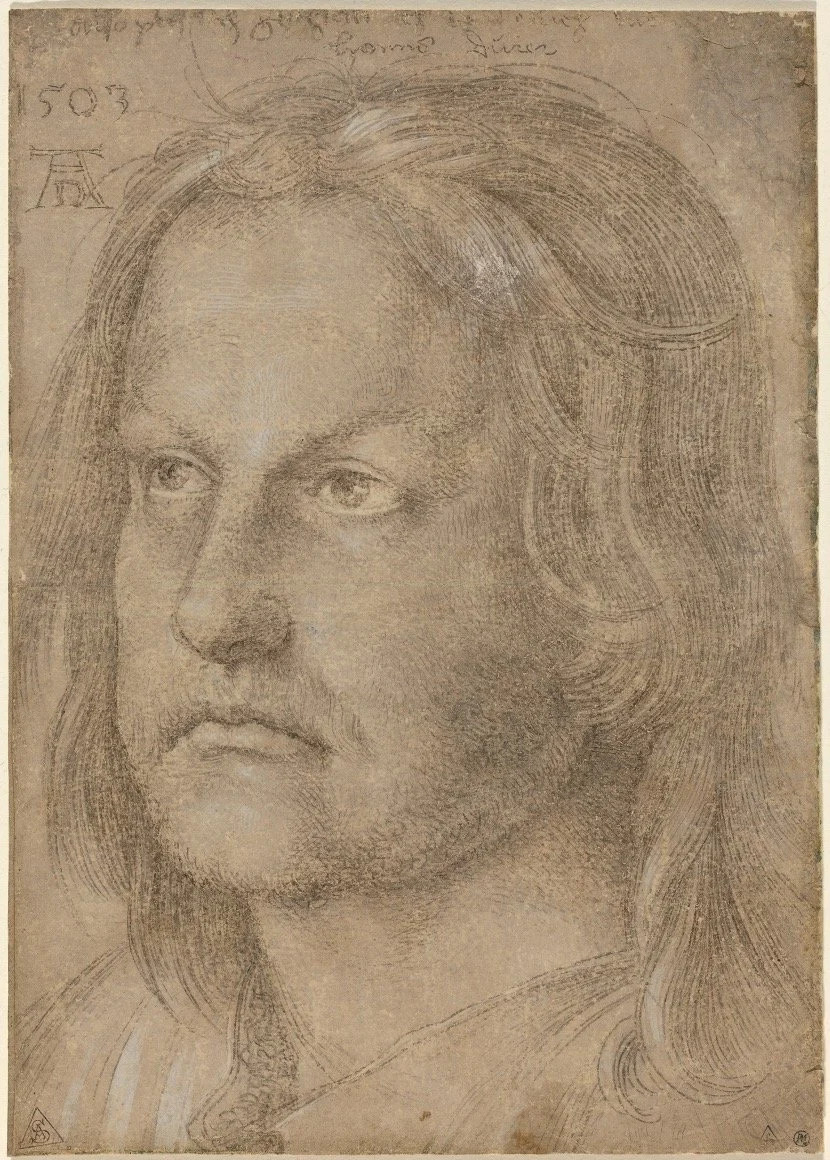
Albrecht Dürer, Head of a Man, probably 1510. National Gallery of Art, Washington, DC, inv. 1943.3.3699 (formerly in the collection of Pierre-Jean Mariette)
By his death in 1774, Mariette’s collection had grown to more than nine thousand drawings, which were dispersed at auction between November 1775 and January 1776.
Mercifully, through various annotated auction catalogues, Pierre Rosenberg has been able to produce a multi-volume, monumental catalogue of former Mariette sheets, organised by nationality and school. Many of these are now preserved in museums and important private collections across the world, with a significant nucleus of former Mariette sheets being housed at the Musée du Louvre in Paris.
Though Pierre-Jean Mariette’s fabled collection may be dispersed, the comparative, systematic, and connoisseurial method of study it fostered is still very much intact. His carefully amassed and thoughtfully presented holdings show that a collection of drawings can be so much more than the sum of its parts, and that questions of display invariably impact the way one approaches any work on paper. Food for thought for your next art fair stroll.
This article is the third in the ‘Collector Portraits’ series. For portraits of John Bouverie and Giorgio Vasari, see the February 2026 and December 2025 issues.
Lucian Freud: Drawing into Painting
The National Portrait Gallery, London
12 February – 4 May 2026
Dr Jasmine Clark
It is clear from the outset of Lucian Freud: Drawing into Painting at The National Portrait Gallery that Lucian Freud (1922–2011) was an intensely restless artist whose daily practice echoed his uncompromising character. Entering the exhibition, a monumental image of Freud’s studio – where streaks of paint violently explode up the walls and piles of artistic detritus litter every surface – sets the stage for a small self-portrait (1985). Rapid smudges of charcoal roughly mark out the composition of the unfinished piece, an example of Freud’s repeated attempts to capture his own likeness.
Curated by Sarah Howgate, in collaboration with the Lucian Freud Archive, the exhibition offers an alternative perspective into Freud’s unflinching observations of character through the centrality of drawing in his process. Over 170 drawings, etchings, and paintings chronicle the artist’s lifelong obsession with portraiture. “Everything is autobiographical and everything is a portrait,” said Freud, “even if it’s a chair,” a sentiment that is tangible in the exhibition’s first section. Freud pays equal attention to people, plants, objects, and animals in these early pieces, humanising the inhuman. His unexpected colour placement in Botanical gardens (landscape with Scillonian Pine) (1945) and Self Portrait with a Hyacinth (1947-8) anticipates his work in oil, using instead a mixture of subtle conté crayons, coloured chalks, and pen and ink.
A selection of Freud’s childhood drawings and letters, which the artist’s mother Lucie preserved when the family emigrated from Nazi Germany to London in 1933, points to an early appreciation of his surroundings. During these formative years, Cedric Morris, a tutor at the East Anglian School of Painting and Drawing, encouraged Freud’s creativity; in a portrait of his tutor made in 1940, the artist played with texture by mixing sand into paint. His art-school friend David Kentish and the poet Stephen Spender further stimulated Freud. In the bleak January of 1940, the group stayed in an isolated cottage in Capel Curig, Snowdonia; pages of a rare sketchbook belonging to this pivotal trip, known as ‘The Freud-Schuster Book’, are on display, filled with Freud’s expressive line drawings.

Lucian Freud, Portrait of a Young Man, 1944 © The Lucian Freud Archive. All Rights Reserved 2025. Bridgeman Images, Private Collection.
Freud began his career as a relentlessly precise yet stylish draughtsman. A decade of some of his finest draughtsmanship can be seen in this section, titled Beginnings. “I would have thought I did 200 drawings to every painting in those early days. I very much prided myself on my drawing,” recalled Freud. After attending Goldsmiths College in London, his social circle expanded to include the bohemian and aristocracy alike. He started sitting uncomfortably close to his sitters. We are brought almost nose-to-nose with his friends in portraits of John Craxton (1944) and Christian Bérard (1948). His first wife and artist Kitty Garman, who appears abundantly in this section, described sitting for Freud as “like being arranged”. There is a meticulous linearity to Freud’s early work, a common thread of forensic attention to detail that transcends medium.
We are subsequently met by the face of Caroline Blackwood, the writer and Guinness heiress who had a short-lived marriage to Freud in the 1950s. His paintings of her, Girl in Bed (1952) and Hotel Bedroom (1954), exude with both tenderness and a disconcerting scrutiny; her diverted gaze undeniably self-assured yet the artist lays bare every freckle and vein for us to inspect. Accompanying pages from a sketchbook show his dynamic compositional workings. Freud claimed that Hotel Bedroom was the last painting he made from a seated position, insisting “when I stood up I never sat down again”. It was a crucial turning point in his career, and in the exhibition.

Lucian Freud, Girl in Bed, 1952 © The Lucian Freud Archive. All Rights Reserved 2025. Bridgeman Images.
What follows is a room of endings – visual meditations on his aging parents, relationship breakdowns, and a startling self-portrait made using a coarse hog-hair brush titled Reflection (1985). After the death of her husband in 1970, his mother Lucie fell into a deep and isolating depression. The artist began creating daily paintings, drawings, and etchings of his mother between 1972 and 1989 as a way to reconnect, a small group of which are sympathetically displayed here.

Lucian Freud, Bella in her Pluto T-Shirt (etching), 1995 © The Lucian Freud Archive. All Rights Reserved 2025. Bridgeman Images.
A notably formidable Freud emerges as we head towards the last rooms in the exhibition. Now in the late 1980s and 1990s, he became obsessed with the authenticity, strength, and vulnerability of the naked human body. “I want to observe them and paint them as they are and feel,” Freud once said. A plethora of sketches and etchings are exhibited alongside his big-hitter paintings, like the impressively confronting Sleeping by the Lion Carpet (1996) and Naked Man on a Bed (1989–90). Etching was a practice Freud returned to with vigour in this decade after 34 years. Often made in tandem, his etchings and paintings share an affinity in style and approach.
The artist seems tantalisingly close to the visitor in a section that explores his responses to Old Masters, where we find his splattered palette, hog-hair brushes, and paint tubes squeezed right to the last drop. Freud left the materials at the National Gallery after spending countless nights poring over paintings by Jean-Siméon Chardin, John Constable, J.M.W. Turner, and Jean-Antoine Watteau. It is his responses to Watteau’s exquisite Pierrot Content (c. 1712) that disclose this practice not as a slavish act of copying, but rather a way for Freud to digest and metamorphose these works through his own idiosyncratic lens; subverting the typical order, his paintings frequently prompted further drawings in a reciprocal exchange of problem-solving.
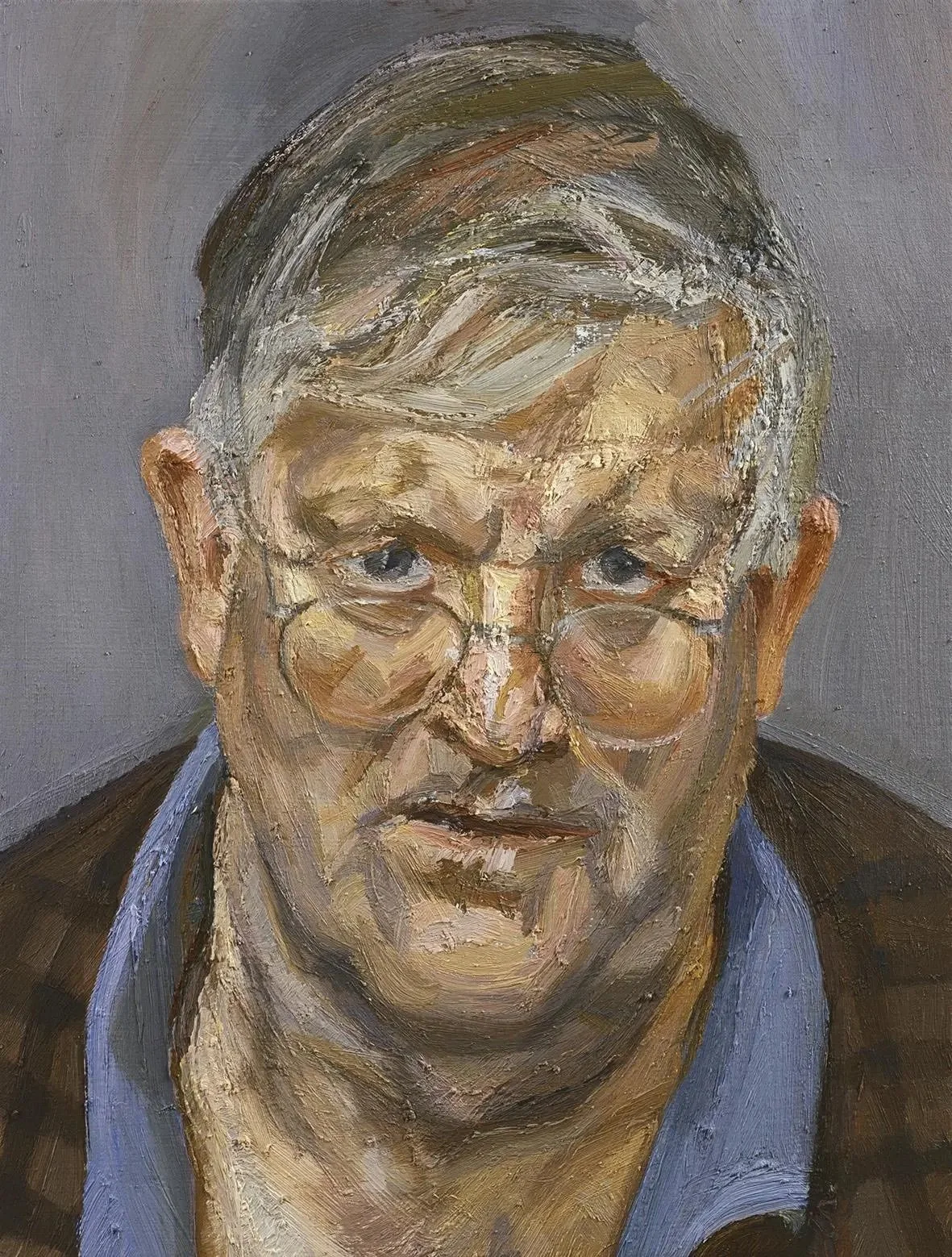
Lucian Freud, David Hockney, 2002 © The Lucian Freud Archive. All Rights Reserved 2025. Bridgeman Images. Private Collection.
In the final room, aptly titled Drawing into Painting and Painting into Drawing, hang some of Freud’s last great portraits. From his fellow artists David Hockney and Frank Paul to Queen Elizabeth II, these works expose to varying degrees Freud’s preference for capturing familiar sitters over a prolonged period. He continued etching until the end of his life, sometimes after painting his sitter and often for himself. Perhaps it was his time spent amongst the Old Masters that instilled in him a fondness for the historic medium. A copper etching plate of the restaurateur Jeremy King (2008–11) glows under the exhibition lighting, illuminating a feverish network of scratched lines made by Freud’s still-energetic hand in the final year before his passing.
Lucian Freud was, and remains, a looming titan who boldly dares us to confront his urgent, anarchic brushstrokes. At the same time, he could be an intensely insular man, obsessively exploring the world he had constructed for himself through his etchings and drawings. The exhibition allows both identities to breathe, presenting an artist who never ceased to push the boundaries of the human form, of taboo, and of artistic mediums.
Lucian Freud: Drawing into Painting at The National Portrait Gallery in London ran from 12 February to 4 May 2026.
James McNeill Whistler, Nocturne Black and Gold - The Fire Wheel. 1875–7. Tate
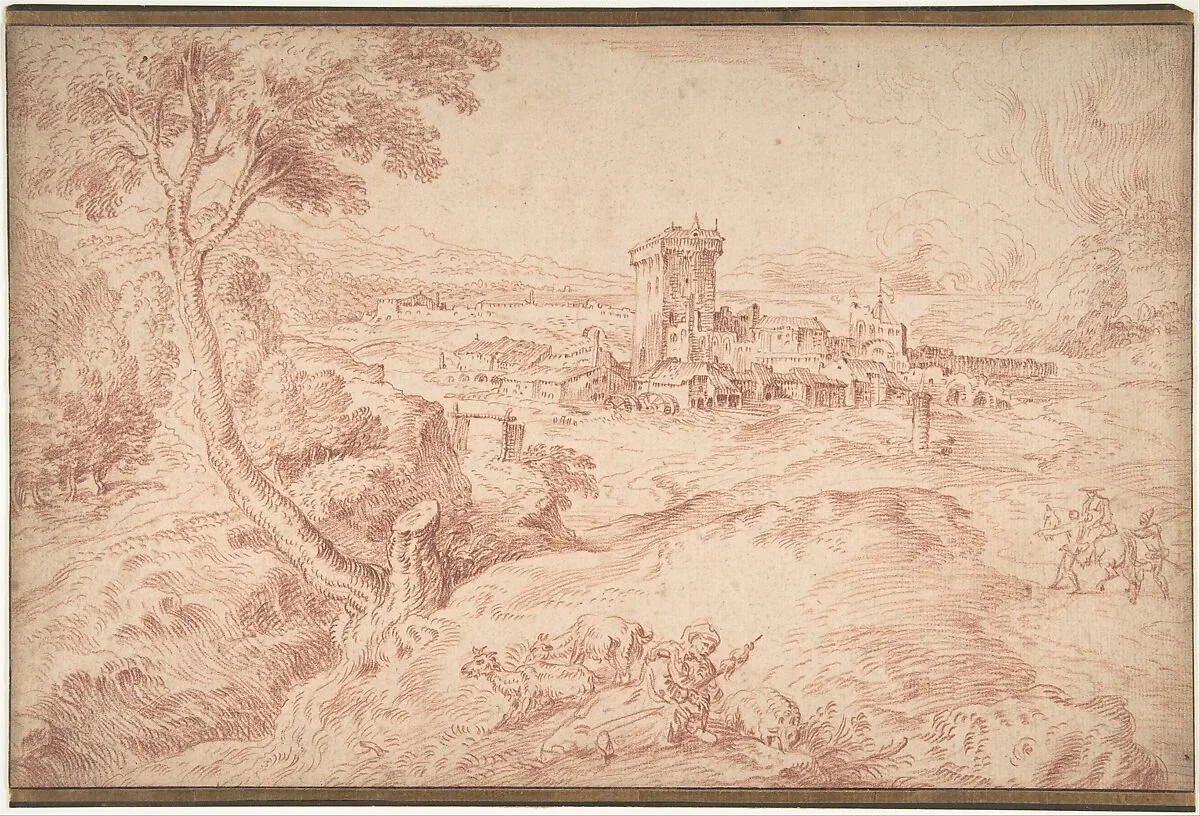
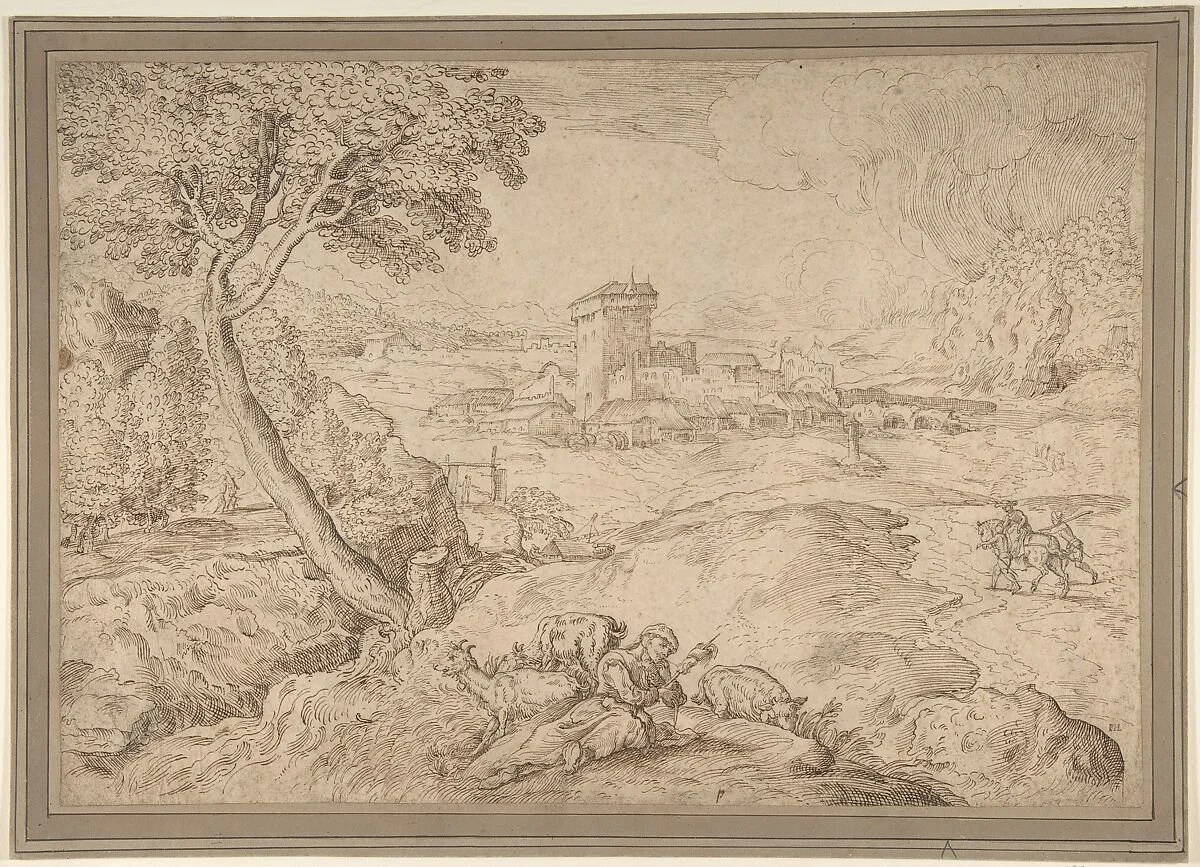
One of these artists was an early pioneer of the drawn landscape, and among the first artists to produce drawings for the market, while the other is credited with the invention of the fête galante, a form of painting which depicted amorous figures in ball dress or masquerade costumes in parkland settings. The drawing is not a fake intended to deceive but an intentional copy, produced in admiration nearly 200 years later. Which is which, and can you name the two artists?
-
The original is the right (lower) image.Left (upper) Image: Antoine Watteau (1684–1721) after Domenico Campagnola, Landscape with an Old Woman Holding a Spindle, The Metropolitan Museum of Art, New York, inv. no.: 1972.118.237
Right (lower) Image: Domenico Campagnola (1500–1564), Landscape with an Old Woman Holding a Spindle, The Metropolitan Museum of Art, New York, inv. no.: 1972.118.243Pierre Crozat (1661–1740), a wealthy Parisian banker, was one of the foremost collectors of drawings in the eighteenth century. He befriended the artist Antoine Watteau and offered him commissions, housing, and access to his collection of drawings. Watteau was entranced with the sixteenth-century Venetian landscape drawings in Crozat’s collection and copied many of them. In this case, the original drawing by Domenico Campagnola and Watteau’s copy have both ended up in the collection of the Metropolitan Museum. Although Watteau has remained faithful to Campagnola's composition, he has substituted for the Venetian artist's pen and brown ink his own preferred medium of red chalk.
In this The History of the Muse episode, Ruth Millington explores the history of British portraits from the perspective of the artist’s muse, with a particular focus on the portraits created by the Pre-Raphaelite brotherhood. Speaking to art and literature historian, researcher, writer and freelance curator, Hannah Squire, this episode delves into the relationships that models have held with the artists who immortalised them, exposes the influential and active part models have played and deconstructs reductive stereotypes, reframing the muse as a momentous and empowered agent of art history.
To Watch
The Clouet Drawings at Chantilly
In this brief extra from Waldemar Januszczak’s Sky series Art's Wildest Movement: Mannerism, Januszczak visits the Musée Condé at the Château de Chantilly to look at the portrait drawings of François and Jean Clouet. The visit is guided by the museum’s Director Matthieu Deldicque.
For a longer watch, the streaming platform Marquee TV has released a new documentary film Caravaggio.
For those intrigued by our new watermark merchandise and keen to learn more about the subject, this 2021 article from the Harvard Art Museum’s Index series offers the ideal follow up. In the article, paper conservation fellow Leonie Müller discusses watermarks, the material qualities of paper and how its structures reveal the process of how it’s made.
For specialist readers keen to read about recent developments in watermark research, and ‘computational’ art history, please see this 2021 article by C. Richard Johnson Jr., William A. Sethares and Margaret Holben Ellis published in the Journal of Historians of Netherlandish Art, or our recent interview with Dr Robert Fucci.
TROIS CRAYONS RECOMMENDS
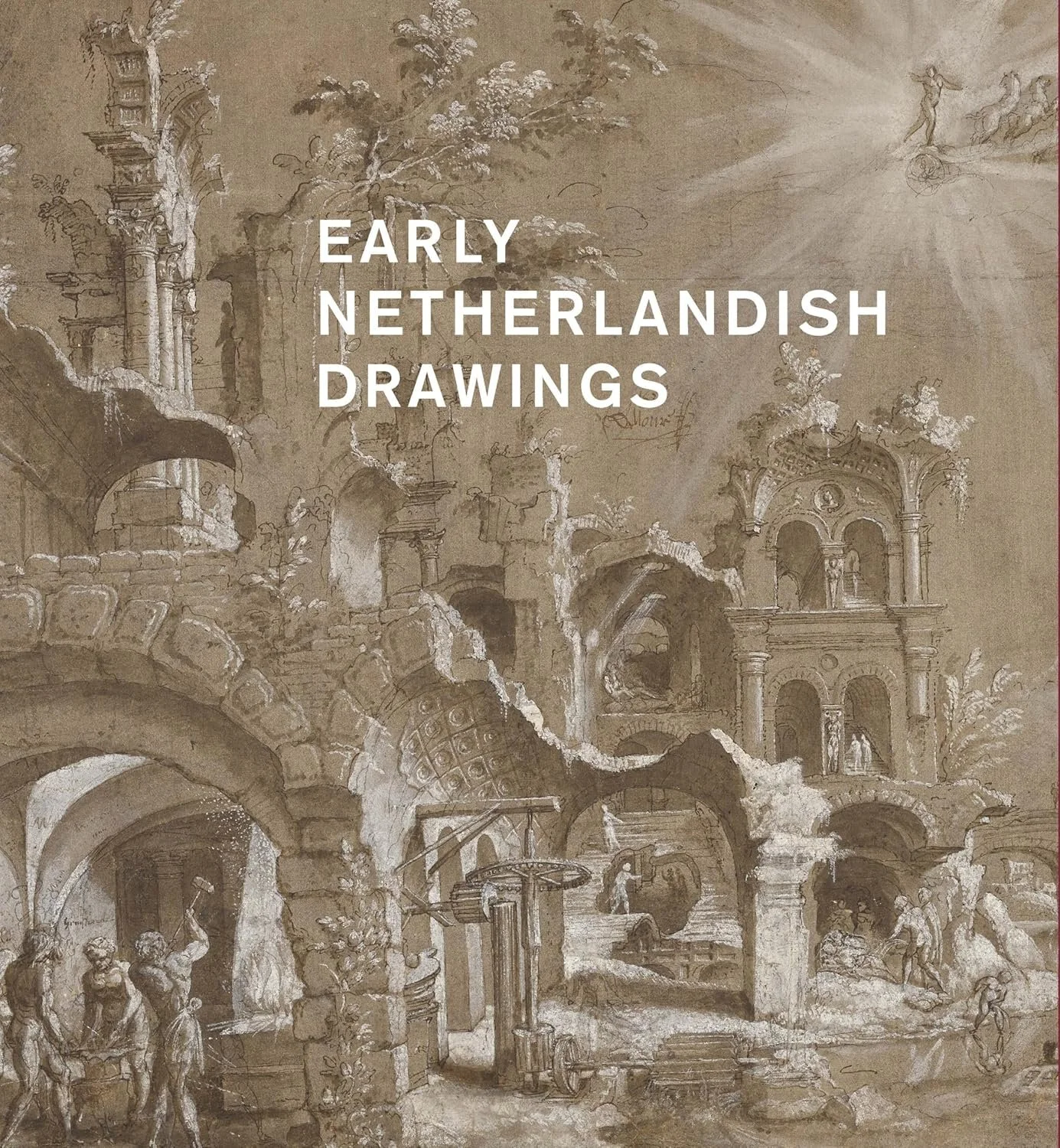
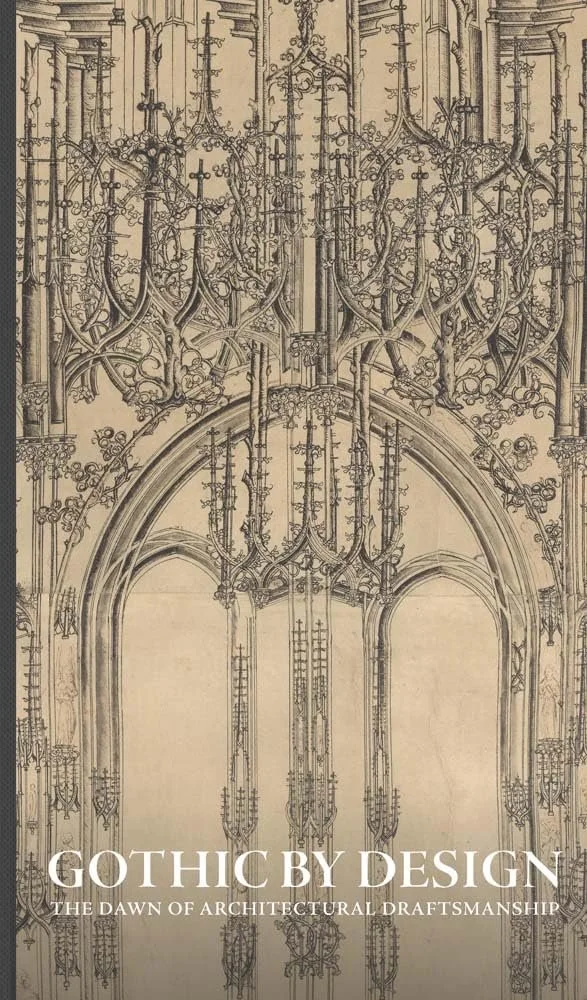

*As an Amazon Associate we earn from qualifying purchases