Michaelina Wautier (c. 1614–1689), Study of the Medici Ganymede Bust, c. 1640/50
Trois Crayons Magazine, May 2026
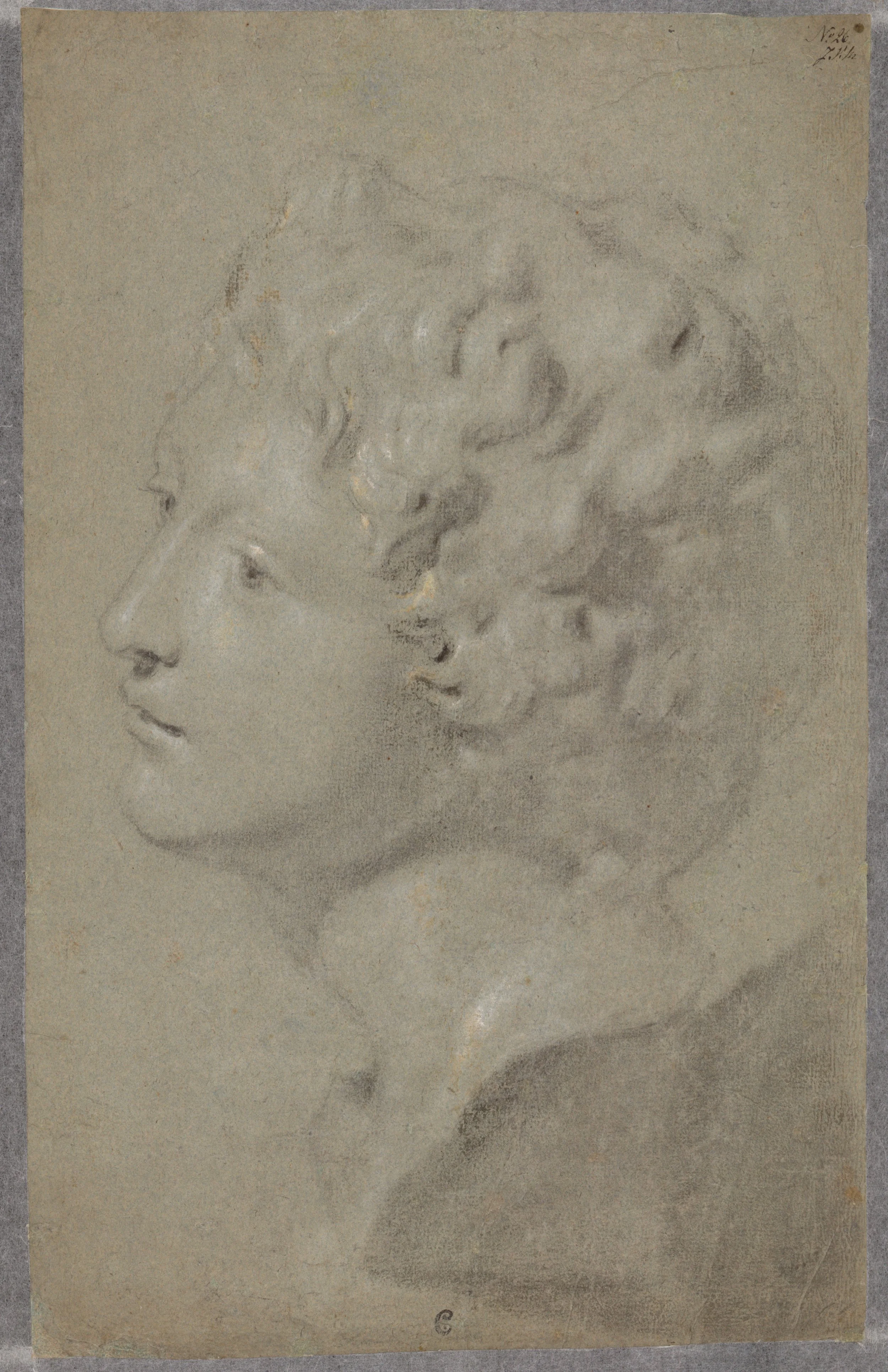
Michaelina Wautier (c. 1614–1689), Study of the Medici Ganymede Bust, c. 1640/50. Black chalk, enhanced with white and ochre-coloured chalk, on paper, 430 × 283 mm, signed on the verso with pen and ink, in italic script: ‘Michaelina Wautier fecit’, Private Collection
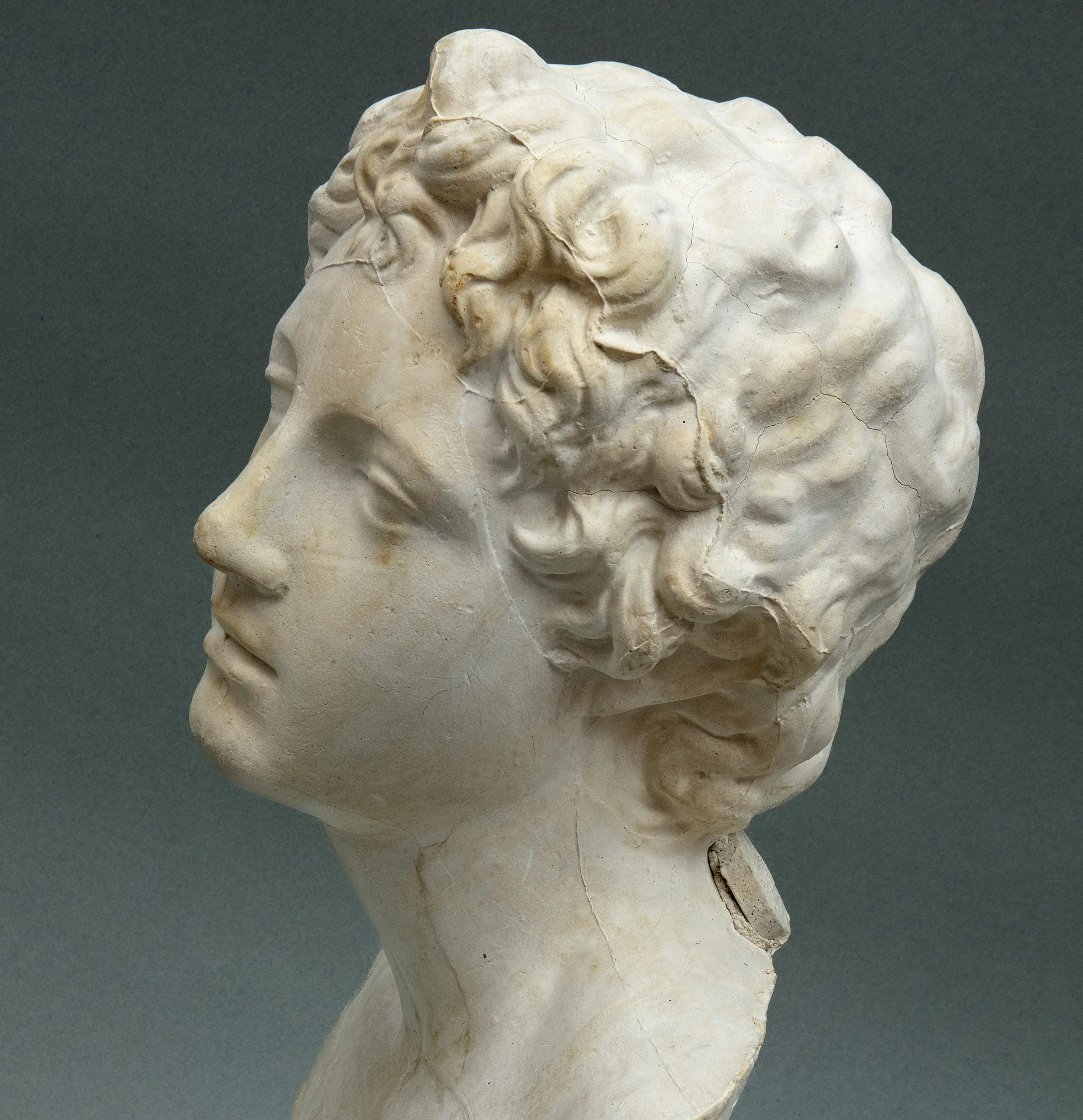
Anonymous, Plaster Cast of the Medici Ganymede Bust, c. 1779–1804. Museo de la Real Academia de Bellas Artes de San Fernando, Madrid, inv. V-086
Charlotte Roosen, Assistant Curator of the exhibition Michaelina Wautier, Painter at the Kunsthistorisches Museum, Vienna, has kindly chosen our drawing of the month.
Study of the Medici Ganymede Bust, c. 1640/50
Black chalk, enhanced with white and ochre-coloured chalk, on paper, 430 × 283 mm, signed on the verso with pen and ink, in italic script: ‘Michaelina Wautier fecit’, Private Collection
A sense of everlasting youth and timeless beauty becomes vividly tangible in Michaelina Wautier’s drawing of an antique bust. Departing from the conventionally blank gaze of antique sculpture, she rendered the young man with open, sighted eyes and even a subtle suggestion of eyelashes, as if her act of drawing brought the idealised sculpted youth to life. Now on display at the Royal Academy of Arts in London, together with around thirty surviving paintings by Michaelina Wautier, the drawing sets the tone for a long-overdue reawakening of her artistic achievements. Active in Brussels around the middle of the seventeenth century, only scant details about her training as a painter have come down to us. Wautier’s sole known drawing most likely dates from the early phase of her career, when aspiring painters typically began by mastering the fundamental skill of drawing.
Although it was long believed to depict an ancient Roman bust, closer examination aimed at identifying the precise sculpture depicted by Wautier has shown that it does not derive from a genuinely antique prototype. The head in fact stems from a sixteenth-century restoration of the Roman sculpture group Ganymede and the Eagle that is now in the Uffizi Galleries in Florence but was housed in the Villa Medici in Rome during Wautier’s lifetime. The Trojan shepherd boy Ganymede is shown on the verge of being carried off to Mount Olympus by Zeus in the guise of an eagle. The myth is often read as an expression of Zeus’s desire for youthful beauty. Wautier’s drawing, with its focus on Ganymede’s affectionate expression, certainly goes beyond classical descriptions of him as ‘the most beautiful of mortals ever born.’
How Wautier gained access to this sculptural model remains speculative. She may have accompanied her slightly older brother, the painter Charles Wautier (1609–1703), on a trip to Italy, or Charles may have travelled south alone and brought a plaster copy of the sculpture back with him. Another possibility is that Michaelina saw a copy of the sculpture in an antiquities collection in the Southern Netherlands. The largest exhibition of Michaelina Wautier’s oeuvre to date, which was on show last fall at the Kunsthistorisches Museum in Vienna, allowed for an interesting comparison with an eighteenth-century plaster copy of the bust of the Medici Ganymede.
The drawing attests to Wautier’s technical virtuosity, particularly in her economical use of black chalk to define form, working in concert with the tone of the paper to achieve a refined rendering of the marble head. She further evokes texture and the play of light across the statue’s surface by delicately enhancing the face and flowing ringlets of hair in white and ochre chalk. To date, we do not know of any paintings that this drawing relates to and, therefore, it may have been made for its own sake as documentation or exercise. The highly finished character of the drawing, together with the presence of a signature, suggests that it was intended as an autonomous work of art. By copying well-known models, she demonstrated her artistic ambition in preparation for history scenes with life-sized figures.
As far as is known, Michaelina Wautier’s drawing constitutes the earliest surviving example of a female artist in Northern Europe working from an antique sculptural prototype. Without the signature on the verso ‘Michaelina Wautier fecit,’ written in italic script—the work would most likely never have been attributed to her. Yet when it appeared at auction about fifteen years ago under the name ‘Michaelina Nautier,’ in error, it only underscored the unfortunate obscurity to which she had been consigned for nearly four centuries after her death. Stamped at the bottom of the sheet is a ‘C,’ once mistaken for the collector’s mark of Pierre Crozat (1665–1740) and now identified as ‘Pseudo-Crozat,’ the Comte de Saint-Morys. One can only wonder whether its original owners were aware of Wautier’s extraordinary accomplishment in this study of the Medici Ganymede bust.
Michaelina Wautier is on view at the Royal Academy of Arts until 21 June. The exhibition is organised in collaboration with the Kunsthistorisches Museum, Vienna. The print catalogue and the digital supplement are available now.