Dealer Portraits: Hans Calmann (1899–1982)
Trois Crayons Magazine, June 2026
Emma Ricci, Stephen Ongpin Fine Art
Hans Maximilian Calmann (1899–1982) was born into Hamburg’s Jewish banking elite. After doctoral studies in political science, he joined the family business - against his better instincts - as a stockbroker, while beginning to collect ethnographic objects. In 1937, he fled Nazi Germany with his wife Gerta, four children and a Roman bronze head packed in a wooden crate. He arrived in London with no connections, no English and no money, yet he opened a single-room gallery in St James’s for £150 a year. He was not, in any obvious sense, prepared for this. What he had was an eye for quality and the confidence to act on it.
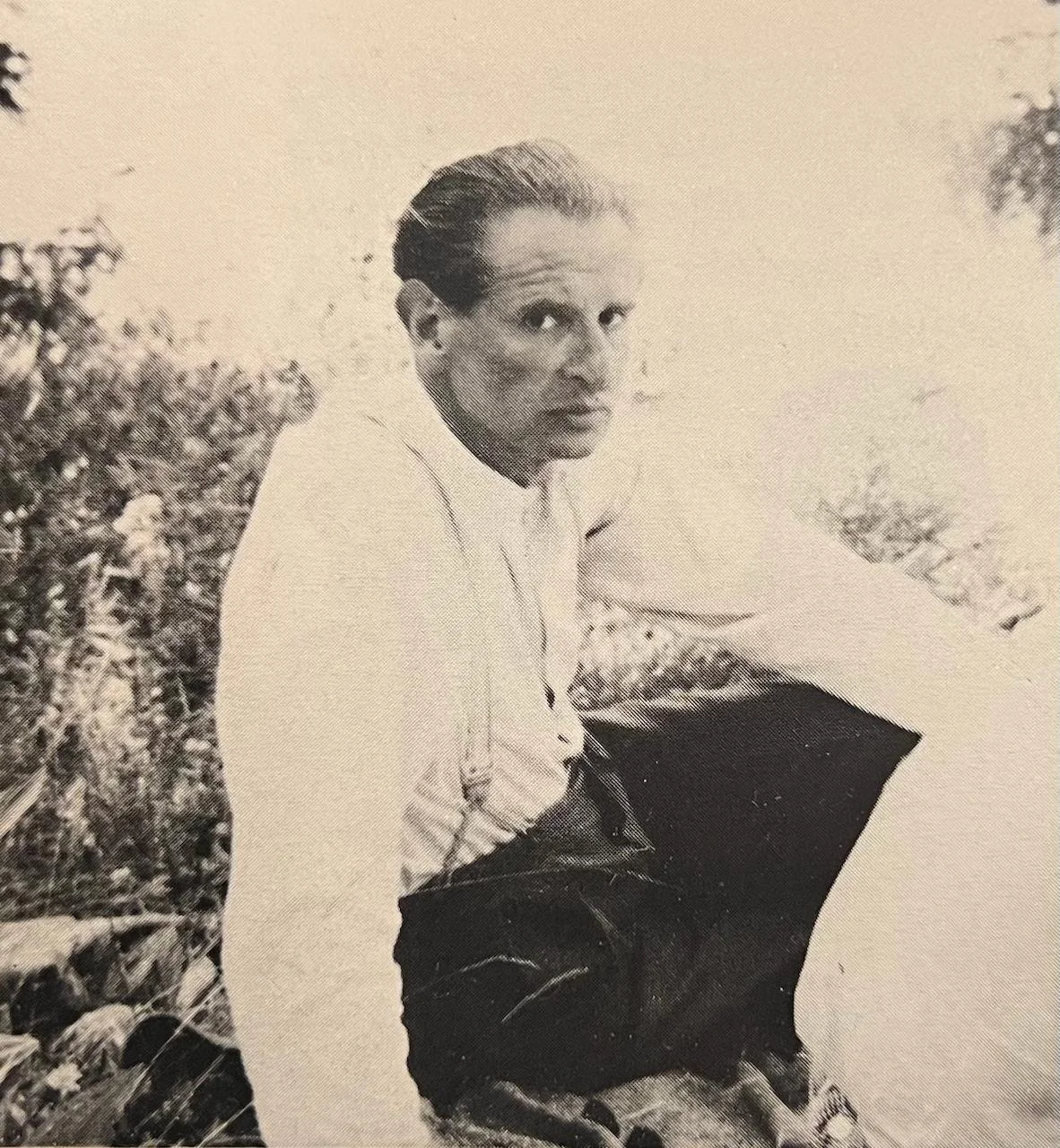
Hans Calmann, c. 1959. Calmann Family Estate
He started exploring the London scene with exhibitions covering various themes, from Balinese sculpture to British modernism. He then decided, after a few years, to focus decisively on Old Master drawings, a market he saw as wide open. The spectacular 1936 sale of the Henry Oppenheimer collection at Christie’s had already demonstrated that exceptional material could command exceptional prices. What did not yet exist, however, was a stable market for good quality, mid-market sheets, the Baroccis, Castigliones and Claudes, that would become Calmann’s daily bread. He saw that gap clearly and stepped into it.
It was a Liotard drawing that marked Calmann’s proper debut as a dealer in drawings in 1938. Preparatory for one of the artist’s final pastels depicting his daughter playing chess with an abbot, Calmann bought the drawing from Liotard’s descendants for £80. He sat with it for three months before selling it to the Basel collector Christoph Bernoulli for £150. By the 1950s, he was selling to major institutions across Europe and North America, such as the Morgan Library, the Ashmolean Museum, the Harvard / Fogg Art Museum and the British Museum. Loyal private clients included Robert Landolt, Marie-Louise Metz, Princesse de Cröy, Frits Lugt and Sir Robert Witt. By 1960 he had become, alongside Colnaghi’s, one of the two most powerful players in the field.
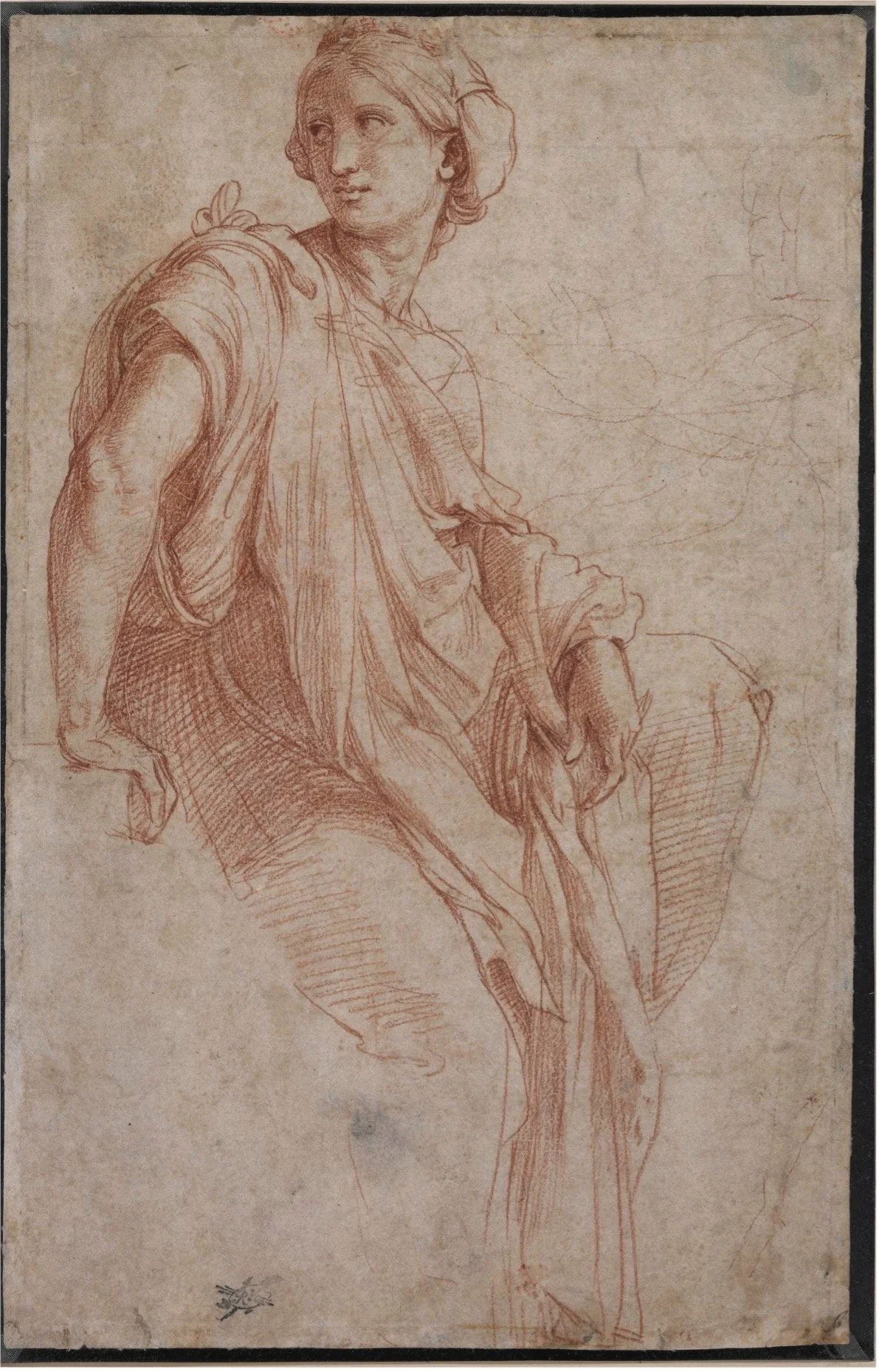
Raphael, The Phrygian Sibyl, c. 1511. British Museum, London, inv. 1953,1010.1 © The Trustees of the British Museum
A major highlight of Calmann’s career occurred in 1952, when he walked into Wildenstein on Bond Street and found, buried among a lot of nondescript drawings, a superb red chalk study of a sibyl. He bought the entire group for £1,300. Immediately, he took the red chalk sheet to A. E. Popham, Keeper of Prints and Drawings at the British Museum, who identified it as a study by Raphael for the Phrygian Sibyl in the Chigi Chapel fresco at Santa Maria della Pace in Rome. The drawing had been incorrectly attributed for thirty years after an American scholarly authority had dismissed it as inauthentic. The British Museum acquired it for £2,000. Not only was it good profit, this sale was a noteworthy achievement as Calmann had bought something overlooked by Wildenstein, a “maison” which represented the art market establishment. This story also revealed one of Calmann’s methods: he could identify the quality of the drawing, but it was Popham’s attribution that could make the sale. Indeed, throughout his career, Calmann cultivated a small circle of trusted scholars, including Popham, Philip Pouncey and Frits Lugt, as the network that gave his judgment institutional credibility.
Calmann’s great rival was James Byam Shaw of Colnaghi’s. Byam Shaw was his antithesis: Oxford-educated, deeply scholarly, and marked by English gentlemanly ease. Calmann instead was famously blunt and not always easy company. His obituary in The Times noted that “by habit, Calmann was neither soft spoken nor soft thinking. He lived by his wits and his wit - English as well as German - and he loved jokes”. Despite their differences, both Byam Shaw and Calmann were powerful enough in the salesroom that their bidding could move market prices. One of their famous collisions was over Pieter Bruegel the Elder’s Calumny of Apelles, now in the British Museum, which both dealers had spotted in a Sotheby’s bundle in 1959. Calmann claimed that Byam Shaw had hired a porter to secretly bid on Colnaghi’s behalf, resulting in Calmann losing the lot despite his aggressive bidding.
Another story revealing Calmann’s attitude in the rooms occurred when the Boston collector George S. Abrams was spotted browsing some lots at Sotheby’s in the 1960s. Calmann, with much self-assurance, famously told him: “Gentlemen do not bid at auction”. This was both a joke and a power play that encapsulated his philosophy. Keeping collectors and museums out of the salesroom was the architecture of Calmann’s business model. This allowed him to remain one of the few gatekeepers of the market, controlling its demand and its supply. He was, however, known to be generous to younger dealers and helped many of the following generation to distinguish a worthy drawing from a mediocre one.
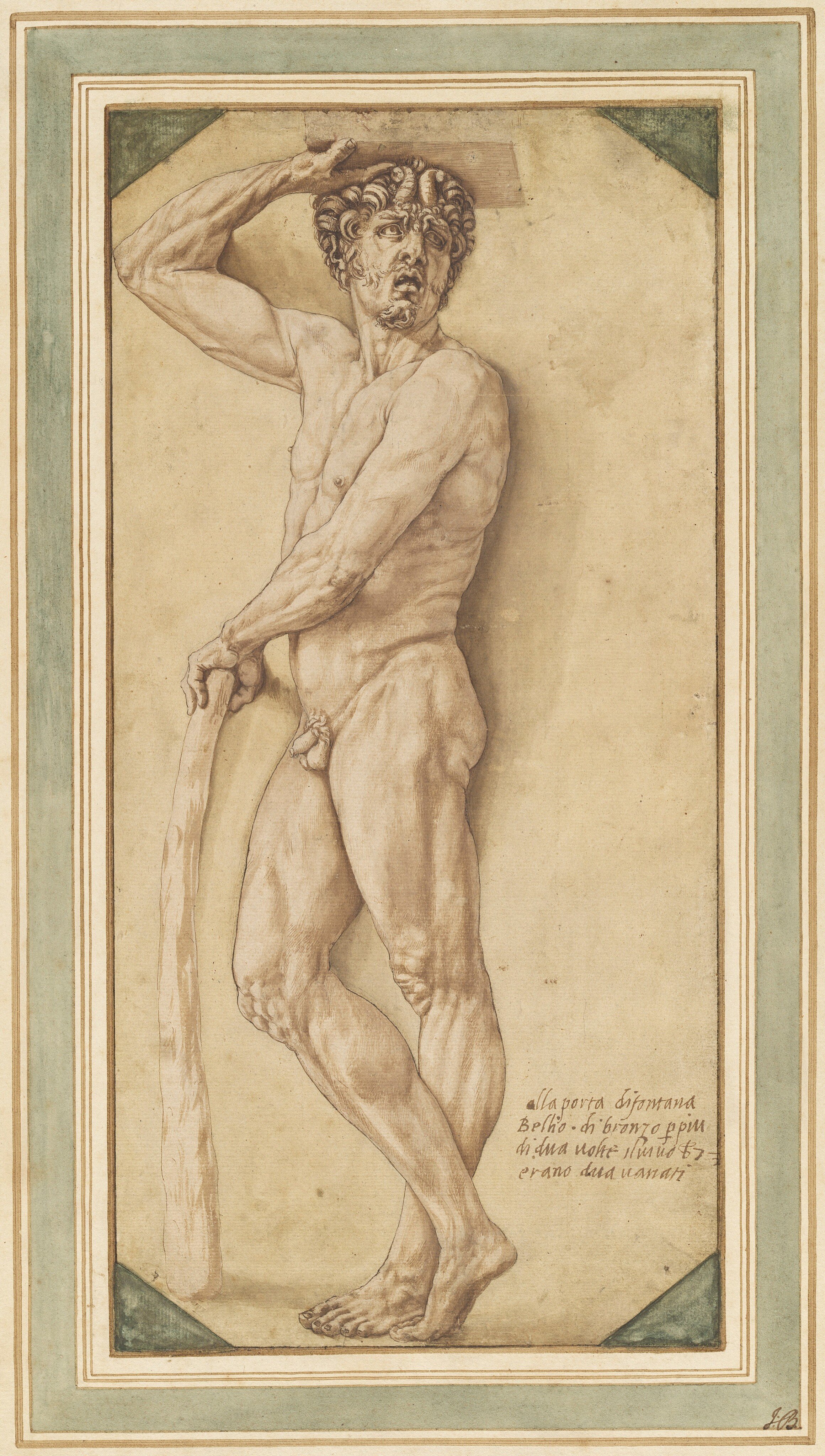
Benvenuto Cellini, A Satyr, 1544–45. National Gallery of Art Washington, Woodner Collection Patrons’ Permanent Fund, inv. 1991.190.2
One of Calmann’s greatest discoveries happened in February 1958, when he bought a lot of three drawings at Christie’s, catalogued as “Mantegna”. One of these was a pen and brown ink study of a standing satyr with a puzzling Italian inscription at the bottom: alla porta di fontana Bellio (a la porta di Fontana Belio). Nobody could explain it. Philip Pouncey was baffled. Other scholars were too. Years passed and the drawing remained in Calmann’s drawers, until Giuliano Briganti, the Roman art historian, came into the gallery and looked at the drawing. He pointed out, amused, that Fontana Belio is simply Italian for Fontainebleau. The satyr was actually Benvenuto Cellini’s preparatory drawing for a bronze figure intended to flank the Porte Dorée at the Château de Fontainebleau. Calmann sold it to the American collector Ian Woodner via the New York dealer William H. Schab, a fellow refugee. It is now in the National Gallery of Art in Washington. Calmann had uncovered this beautiful sheet, buying it simply on the strength of draughtsmanship, without knowing the name, without understanding the inscription, without scholarly backing. The act of seeing came first. That, more than anything, was Calmann’s creed.