Collector Portraits: Pierre-Jean Mariette’s (1694–1774) Mounts
Trois Crayons Magazine, May 2026
Daniel Lowe, Contributing editor
If you and I, dear reader, are kindred spirits, then you will have no doubt spent a significant portion of the first quarter of the year crawling through art fairs and gallery weeks: jostling through huge crowds to look at tiny drawings, spending an inordinate amount of time in front of a sheet to perfectly time a long-desired introduction.
Whatever drawing you may have found yourself somewhat uncomfortably lingering over, there is a good chance that it was displayed in a mid-blue mount, sometimes embellished by a black line or a thin strip of gold. Why is this choice of display so widespread in the art market?
As any framer will tell you, this is partly an aesthetic decision. When dealing with aged paper – almost invariably yellowed, faded, or stained over the centuries – a middle tone mount can distract the eye from the ravages of time and make off-white paper appear more brilliant.
Beyond more terre-à-terre considerations, displaying drawings in a blue mount conjures up a host of positive historical associations, most conducive to giving an air of importance to any sheet.
In the public consciousness, blue mounts are indelibly associated with Pierre-Jean Mariette (1694–1774), one of the most significant collectors of works on paper of all time. His vast and wide-ranging collection fundamentally shaped the field of Old Master drawings, both in terms of display and methodology.
Born into a dynasty of Parisian print dealers, Mariette’s early life constituted a fertile environment for the development of a deep and enduring knowledge of the graphic arts. His constant exposure to prints in the family dealership was complemented by a classical education from the Jesuits, and a training in drawing and printmaking from the artist Jean Chaufourier.
In 1717, Mariette was sent to Vienna, where he was tasked with organising and cataloguing the impressive print collection of Prince Eugene of Savoy. He then embarked on a trip to the Italian peninsula, spending periods in Venice, Bologna, Florence, Rome, and Naples, amongst other cities. Whilst in Italy, Mariette forged important ties with artists and congnoscenti, including with the art critic Anton Maria Zanetti, the pastellist Rosalba Carriera, and the diplomat, painter and collector Francesco Maria Niccolò Gaburri.
Though by this point Mariette had developed an interest in a host of different art forms, including painting and intaglios, his taste for collecting drawings began to take centre stage upon his return to France in late 1719.
Back in Paris, Mariette began to frequent a salon held in the Hôtel particulier of the financier and collector Pierre Crozat, where he forged ties with some of the most important collectors of the time, not least with Crozat himself.
After Crozat’s death in 1740, Pierre-Jean was charged with compiling and publishing a catalogue of the financier’s collection of drawings and carved stones. Whilst the ensemble of the stones was bought by Louis, Duke of Orleans, Crozat’s collection of approximately 19,000 (!) drawings was dispersed at auction in 1741. Mariette was one of the principal buyers at the sale, acquiring (among many other items) exquisite drawings by Andrea del Sarto, Michelangelo, Annibale Carracci, Albrecht Dürer, and an album of views of Rome by Maarten van Heemskerck (thirty-two folios of which are currently on display at the Istituto Centrale per la Grafica in Rome). By 1750, he definitively abandoned the family business to dedicate himself more fully to the study and expansion of his holdings.
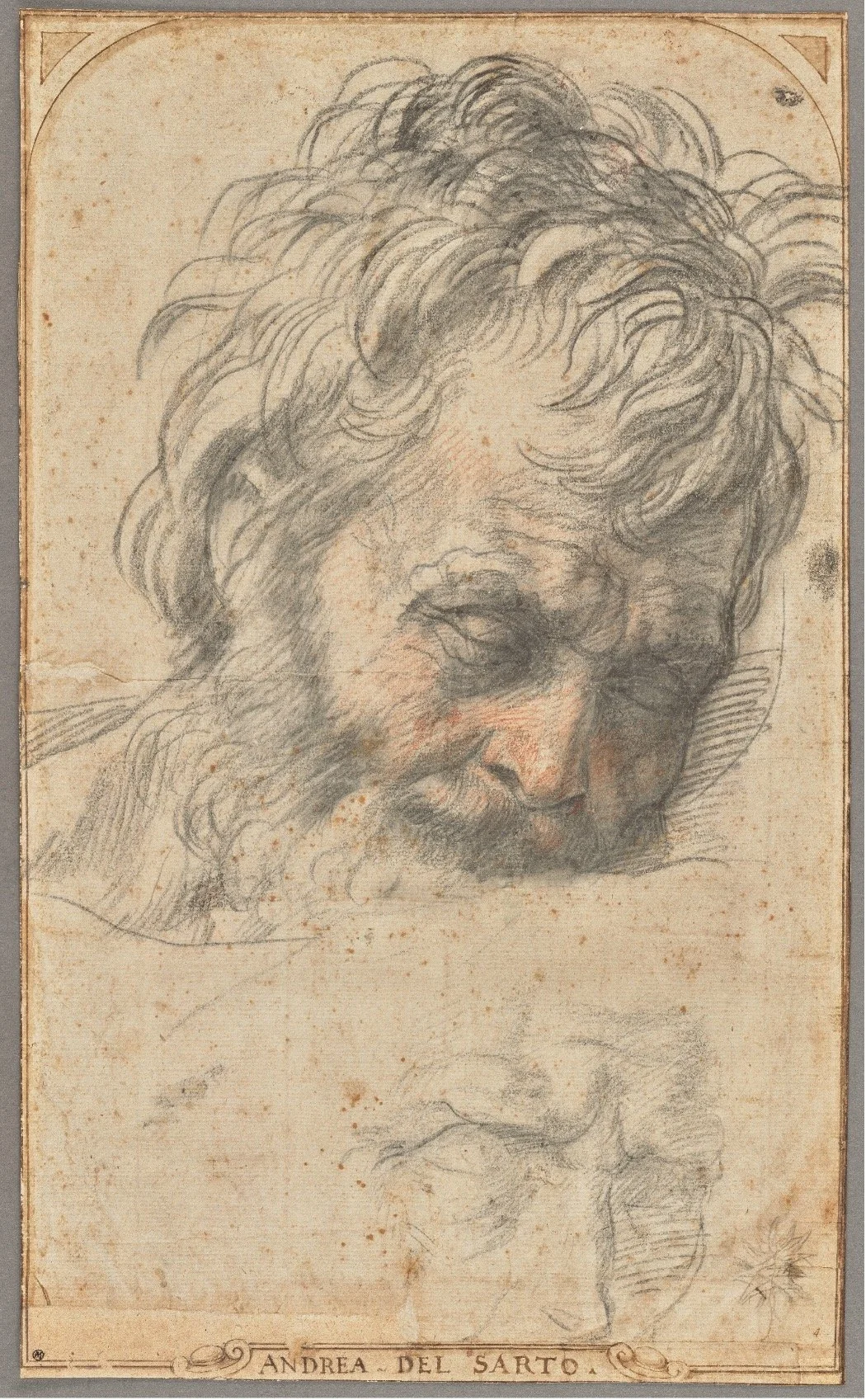
Andrea del Sarto, Study for the Head of Saint Joseph, c. 1526–1527. The J. Paul Getty Museum, Los Angeles, inv. 2017.73 (formerly in the collections of Pierre Crozat and Pierre-Jean Mariette)
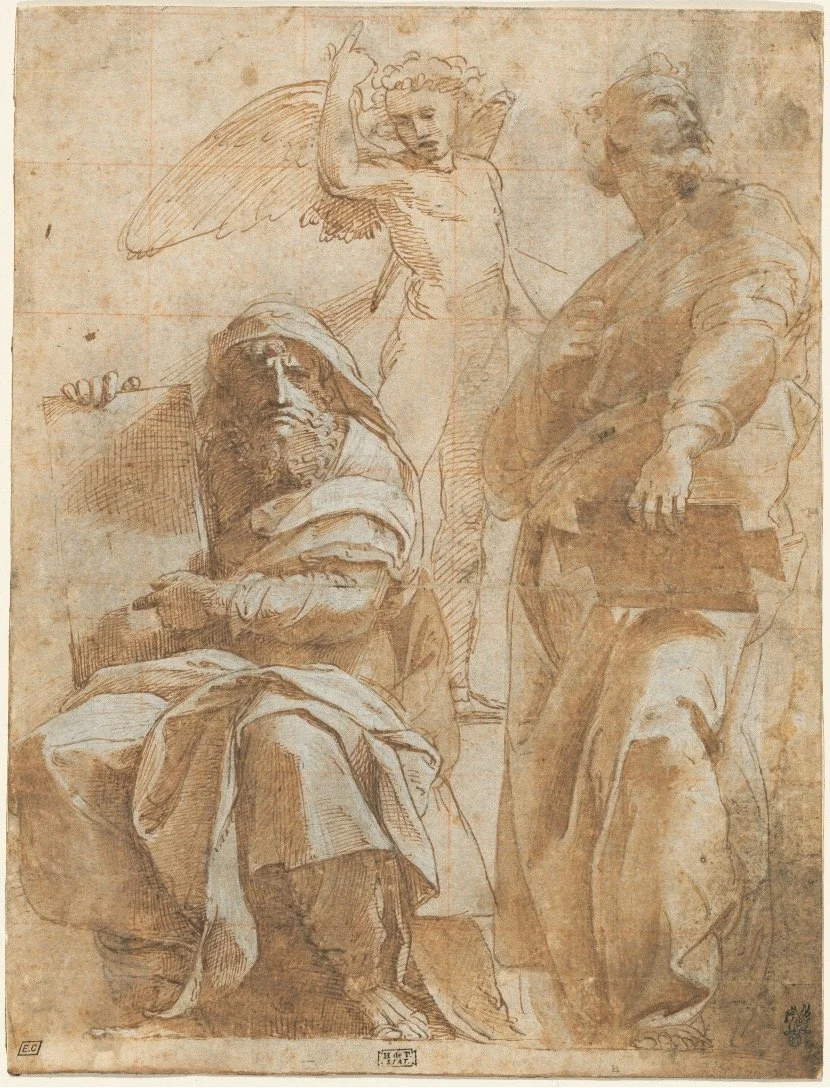
Raphael, The Prophets Hosea and Jonah, c. 1510. National Gallery of Art, Washington, DC, inv. 1991.217.4 (formerly in the collection of Pierre-Jean Mariette)
What was distinctive about Mariette’s collecting style? Whilst many of the drawings once in his possession are of superlative calibre – one need only think of the sublime Prophets Hosea and Jonah, now at the National Gallery of Art – Mariette’s approach to collecting was not limited solely to the big names. True to the Enlightenment spirit of his time, Pierre-Jean aimed to build an encyclopaedic, ‘complete’ holding of drawings, which meant acquiring more humble sheets by lesser-known artists in the attempt to make his collection representative of the entire breadth of European art history, not just a single school or period.
This ‘scientific posture’ also affected the way Mariette conserved and displayed his drawings. The collector kept his sheets in uniformly sized boxes, which could only accommodate mounted drawings measuring up to 20 x 15 pouces (540 x 405 mm). When compared to the more traditional system of keeping drawings in a bound volume or album, individually mounting drawings allowed for optimal study conditions: sheets could be easily retrieved, compared, and reclassified. Indeed, the fact that nearly all modern print rooms follow a similar storage and display system to that employed by Mariette (individually mounted drawings kept in boxes, perhaps with a few different standard sizes as opposed to just one) is a sign of its efficacy.
How can one spot a former Mariette drawing in the wild? There are two main elements to look out for. The first is a small collector’s mark – a circle inscribed either with the letter ‘M’ (L. 1852) or the monogram ‘PIM’ (L. 2097 and L. 2098) – usually applied to the lower edge of the drawing. The second is the distinctive and oft-imitated blue mount. Though the exact type of decoration employed on these mounts varies considerably, they are usually adorned with an inner gold frame, black ink framing lines, and an attribution encased in an elaborate cartouche (see the example mount below, created for a drawing by Domenico Fetti).
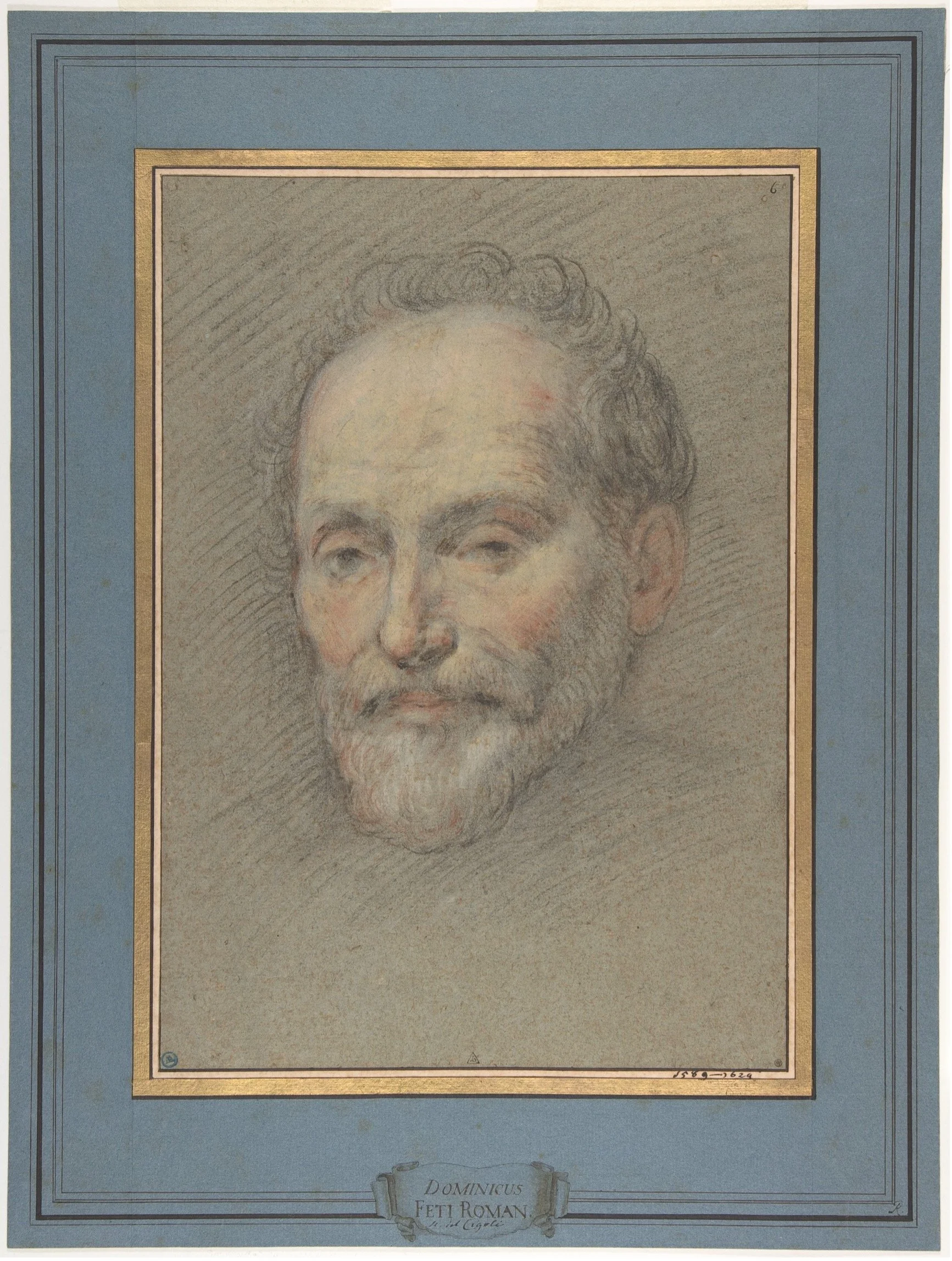
Domenico Fetti, Head of a Bearded Man. Metropolitan Museum of Art, New York, inv. 1981.394 (formerly in the collection of Pierre-Jean Mariette, bears his mount)
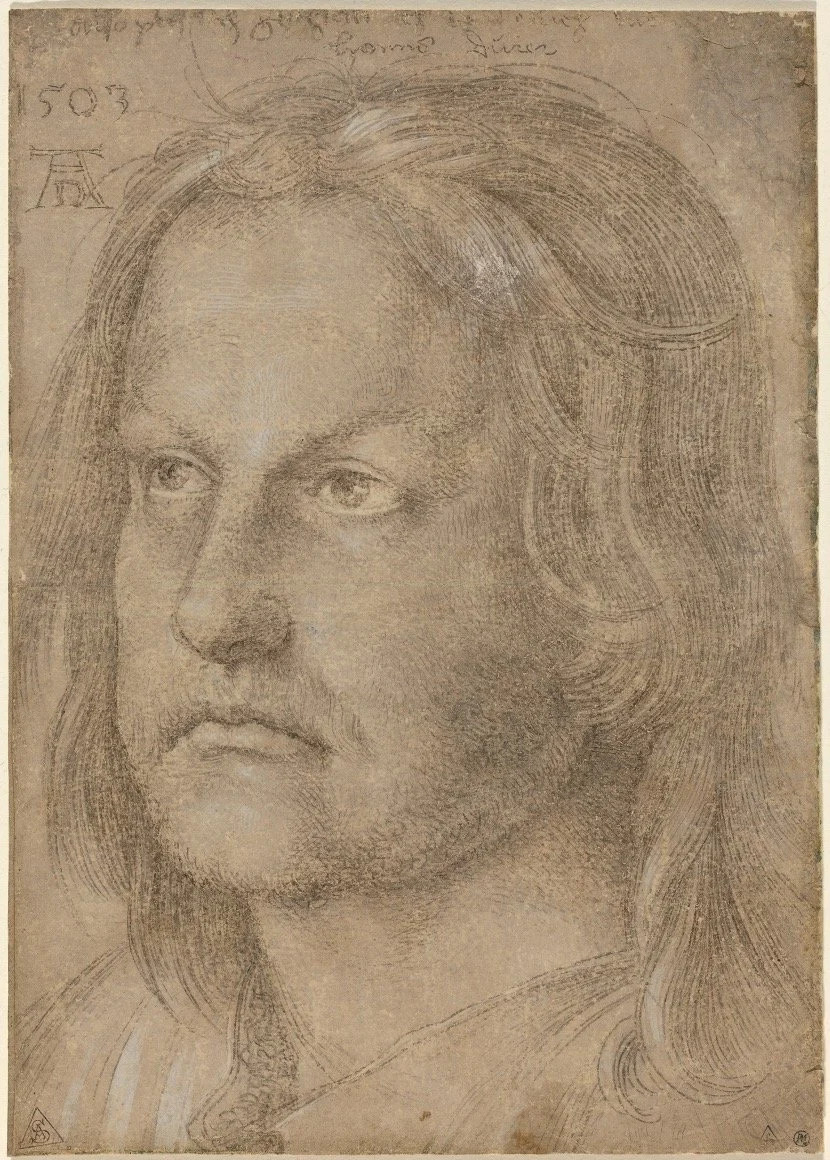
Albrecht Dürer, Head of a Man, probably 1510. National Gallery of Art, Washington, DC, inv. 1943.3.3699 (formerly in the collection of Pierre-Jean Mariette)
By his death in 1774, Mariette’s collection had grown to more than nine thousand drawings, which were dispersed at auction between November 1775 and January 1776.
Mercifully, through various annotated auction catalogues, Pierre Rosenberg has been able to produce a multi-volume, monumental catalogue of former Mariette sheets, organised by nationality and school. Many of these are now preserved in museums and important private collections across the world, with a significant nucleus of former Mariette sheets being housed at the Musée du Louvre in Paris.
Though Pierre-Jean Mariette’s fabled collection may be dispersed, the comparative, systematic, and connoisseurial method of study it fostered is still very much intact. His carefully amassed and thoughtfully presented holdings show that a collection of drawings can be so much more than the sum of its parts, and that questions of display invariably impact the way one approaches any work on paper. Food for thought for your next art fair stroll.
This article is the third in the ‘Collector Portraits’ series. For portraits of John Bouverie and Giorgio Vasari, see the February 2026 and December 2025 issues.