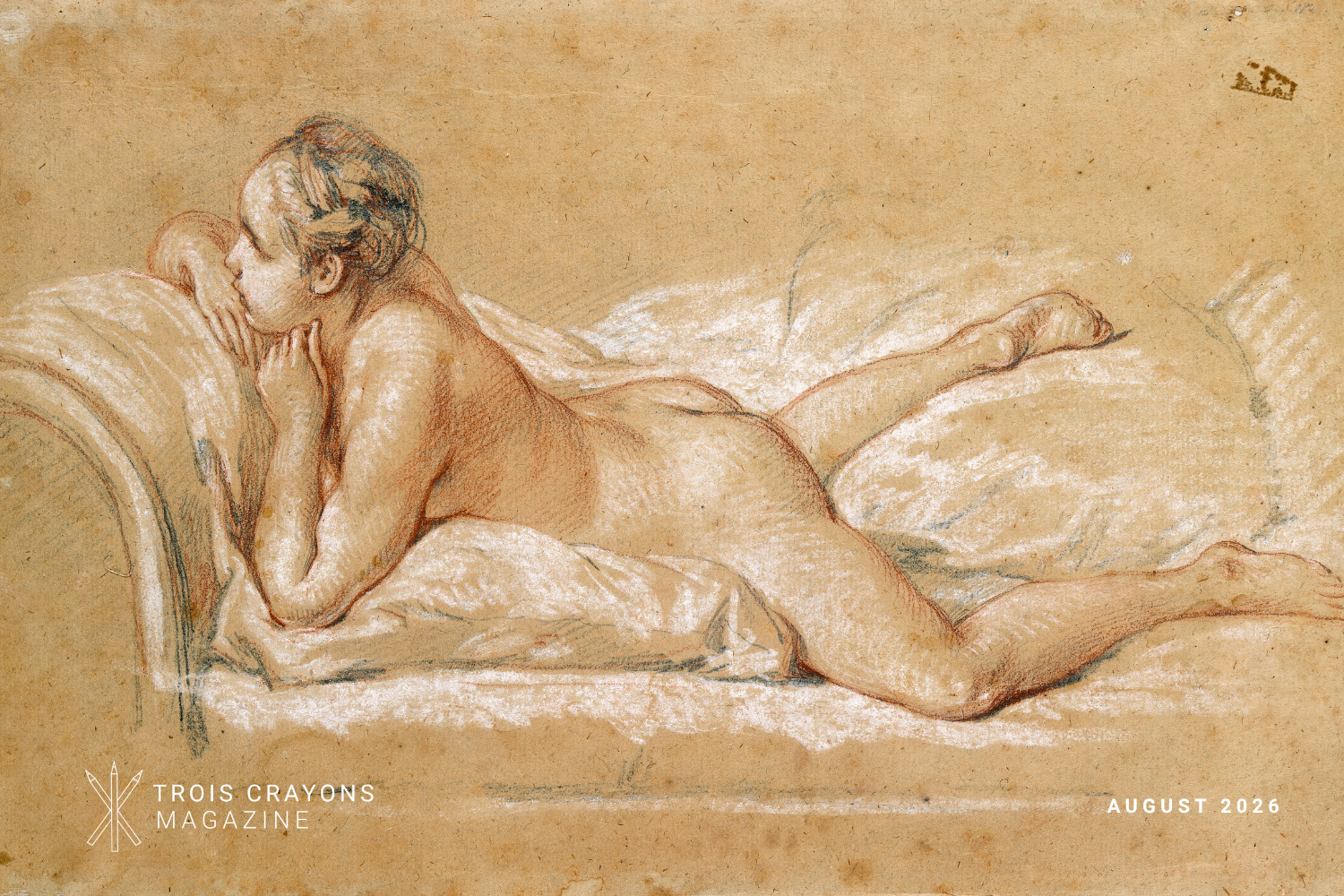
“What dreadful hot weather we have! It keeps one in a continual state of inelegance” wrote Jane Austen to her sister Cassandra in 1796 – a sentiment which feels equally apt for the summer of 2026 in London. Austen would have been relieved to learn that this general state of inelegance coincides with a pause in the drawings calendar. As the aoûtiens head for the respite of the coast, regular service of exhibition openings, auctions and live events eases up this month. Fortunately, there is plenty to read in this month’s magazine, and much to look forward to in the months ahead (beyond the British Museum’s historic loan of the Bayeux Tapestry, that is). From the forthcoming season’s announced exhibitions, here are ten drawings shows worth marking the diary for:
Drawing Inspiration at the Burrell Collection, Glasgow (1 September – 26 November)
On Location: Drawing the Outdoors at the Harvard Art Museums, Cambridge, Massachusetts (18 September – 17 January 2027)
Spectacular Freedom: Andrew Wyeth and the Modern American Watercolor at the Cleveland Museum of Art, Cleveland, Ohio (20 September – 18 January 2027)
Pontormo at the Scuderie del Quirinale, Rome (9 October – 7 February 2027)
Rubens, Jordaens, van Dyck: Flemish Master Drawings at the Kupferstichkabinett, Berlin (10 October – 31 January 2027)
‘Mes Chers Amis’. Drawings in the Collections of 19th-Century French Artists at the Fondation Custodia, Paris (17 October – 17 January 2027)
Fantasy and Reality: The Art of Johan Tobias Sergel at the Morgan Library & Museum, New York (30 October – 31 January 2027)
Magic and Mess: The Artist's Studio Revealed at Leighton House, London (31 October – 21 March 2027)
Of Light and Air: Winslow Homer from the Museum of Fine Arts, Boston at the Museum of Fine Arts, Houston (1 November – 7 February 2027)
Anatomical Lessons from Dijon's Collections: An Anatomy Lesson at the Musée des Beaux-Arts, Dijon (4 December – 29 March 2027)
Inside this month’s magazine, we feature a call for information from the Saint Louis Art Museum concerning a group of Guercino drawings. There is also news of a vacancy at the Courtauld Gallery and an overview of recent institutional acquisitions. For our Drawing of the Month, Niamh MacNally, curator of Rembrandt to Matisse – A Celebration of European Works on Paper at the National Gallery of Ireland, shares a personal highlight from the exhibition drawn “à trois crayons” – a close examination of a François Boucher nude and its Irish model. For the Demystifying Drawings feature, our “Dealer Portraits” series, which commenced with Emma Ricci’s feature on Hans Calmann, returns with a pen portrait of his principal rival, James Byam Shaw. After the month’s exhibition listings and the Real or Fake quiz, the issue concludes with our customary trio of audio, video and literary recommendations. I wish you all an enjoyable read and a restful summer.
For next month’s edition, please direct any recommendations, news stories, feedback or event listings to tom@troiscrayons.art.
LAST CHANCE TO SHOP







IN GALLERY, ART FAIR AND AUCTION NEWS
5–28 August: Alexandre-Louis Leloir at Charles Ede (Online).
Open until 14 August: Leon Spilliaert: Through Half–Open Doors at Patrick Derom Gallery (Brussels).
Open until 19 August: The Finest Legs: A Group of 18th-19th Century Drawings In Dialogue with Joyce Chonghui Wu at SALON188 (Amsterdam). In collaboration with Den Otter Fine Art.
IN LECTURE AND EVENT NEWS
Call for papers – Symposium: Practices of Drawing in Johann Wolfgang von Goethe at Goethe-Nationalmuseum (Weimar). Application deadline: 23 August. Conference dates: 10–12 March 2027. Organised by Klassik Stiftung Weimar, Directorate of Museums in cooperation with the professorship for Modern Art History, Friedrich-Schiller-University Jena.
Call for papers – Conference: Historians of Netherlandish Art Conference 2027 at Boston University and the Center for Netherlandish Art, Museum of Fine Arts, Boston (Boston, Massachusetts). Proposal deadline: 15 September. Conference dates: 14–17 July 2027.
Conference panel: Drawings as Records of Ideas: New Approaches and Techniques. Chairs: Caitlin Condell, Head Curator, Drawings, Prints & Graphic Design, and Jamie Kwan, Assistant Curator, Drawings, Prints & Graphic Design.
Conference panel: Nature Observed: Drawings and Early-Modern Science. Chair: Dr. Robert L. Fucci, Universiteit van Amsterdam.
Guercino, The Prodigal Son as a Swineherd, Sotheby’s, London, 23 March 1978, lot 159
IN LITERARY, MUSEUM AND ACADEMIC NEWS
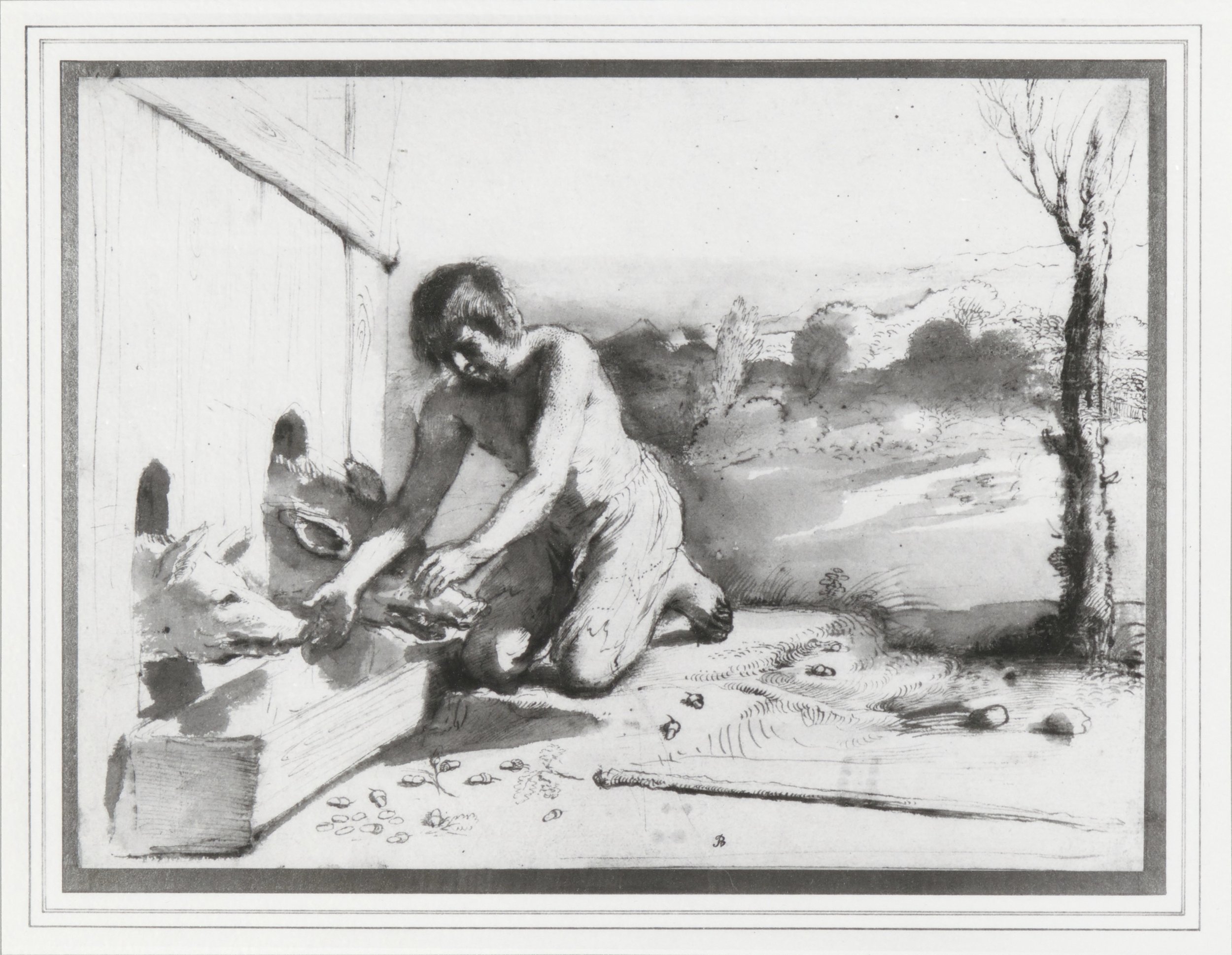
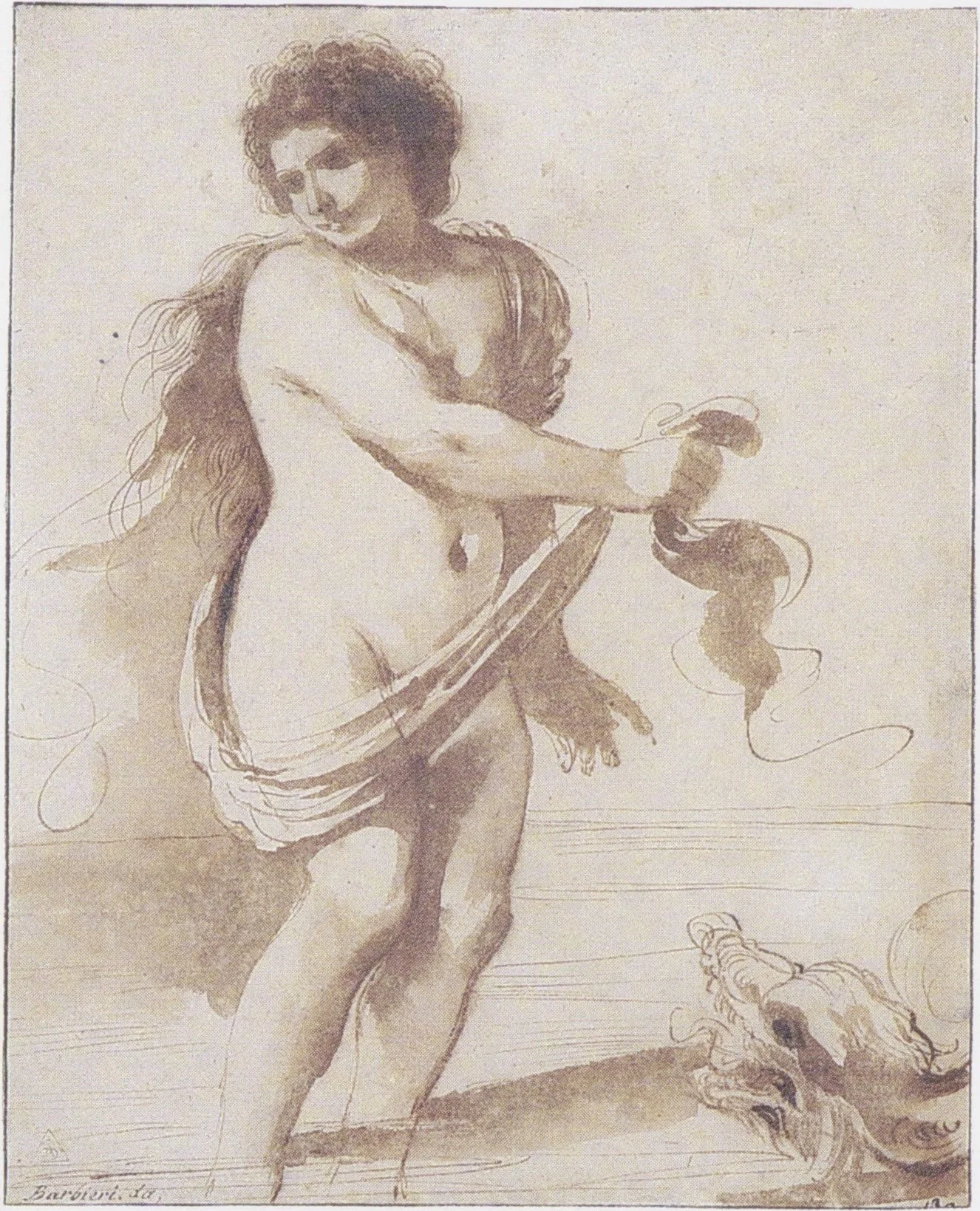
Guercino drawings sought for exhibition – The Saint Louis Art Museum in St. Louis, Missouri, is preparing an exhibition on Guercino’s approach to narrative subjects. The exhibition organisers are seeking assistance in locating the following drawings:
Absalom Ordering the Killing of Amnon (formerly in the collection of Valentina Latini, Jesi).
The Prodigal Son as a Swineherd (Sotheby’s, London, 23 March 1978, lot 159) [illustrated].
Andromeda Standing in the Sea (Sotheby’s, New York, 14 January 1989, lot 42) [illustrated].
Ahasuerus, Looking to the Left, Bust-Length (Christie’s, New York, 23 January 2002, lot 33).
The Return of the Prodigal Son (Bonhams, London, 7 July 2004, lot 60).
The organisers are most grateful for any information regarding the works. If you know of their location, please contact the exhibition curator, Judith Mann (judy.mann@slam.org).
Job opportunity – Curator of Drawings or Senior Curator of Drawings at the Courtauld Gallery (London). Application deadline: 13 September.
Funding opportunities – Autumn Round of Funding Opportunities at the Mellon Centre opens for applications on 3 August. Application deadline: 14 September.
Prize – Bourses Françoise Viatte pour l’étude du dessin européen (1400-1914), Comité français d’histoire de l’art. €1,000 for the study of European drawing (1400–1914), reserved for early-career researchers. Application deadline: 30 September.
Guercino, Andromeda Standing in the Sea, Sotheby’s, New York, 14 January 1989, lot 42
IN ACQUISITION NEWS
Girolamo Francesco Maria Mazzola, called Parmigianino (1503–1540), L’Enfant Jésus (recto); études pour la Vision de saint Jérôme (verso). Gift of the Amateurs de dessins des Beaux-Arts de Paris to the Beaux-Arts de Paris, Paris.
Amaro do Vale (c. 1584 – c. 1619), Franciscan Saint in Penance and The Holy Family. Acquired by The Hispanic Society of America, New York, from DELAMANO, Madrid.
Aert Cosijn (c. 1631 – c. 1675), Card Players. Acquired by the Teylers Museum, Haarlem, from Talabardon & Gautier, Paris (via La Tribune de l’Art).
Ciro Ferri (1634–1689), An Angel, bust-length (Cartoon for Saint Agnes, Rome). Acquired by the Fine Arts Museums of San Francisco, San Francisco, from Benjamin Peronnet Fine Art, Paris (via La Tribune de l’Art).
Jean-Marc Nattier (1685–1766), Madame Adélaïde as Diana. Acquired by the Staatliche Kunsthalle Karlsruhe, Karlsruhe, from Didier Aaron, Paris, London and New York (via La Tribune de l’Art).
Charles-Nicolas Cochin the Younger (1715–1790), An Elegant Woman Playing Chess. Acquired by The Museum of Fine Arts, Houston, from Sotheby’s, New York (sale: 3 February 2026).
Charles-Dominique-Joseph Eisen (1720–1778), Mythological Scene. Acquired by The Nationalmuseum, Stockholm, from Franck Baulme Fine Arts, Paris (via @fbaulmefinearts).
Jan Christian Sepp (1739–1811), A Moth from the Agrochola Family and its Host Plant. Acquired by the Rijksmuseum, Amsterdam, from Galerie Lowet de Wotrenge, Antwerp, in association with Den Otter Fine Art, Rotterdam.
Henri de Triqueti (1803–1874), Projet de décor pour la chapelle Wolsey au château de Windsor du prince Albert : Nathanaël sous le figuier. Acquired by the Beaux-Arts de Paris, Paris.
Henri Fantin-Latour (1836–1904), Académie d’homme. Gift of the Amateurs de dessins des Beaux-Arts de Paris to the Beaux-Arts de Paris, Paris.
Mary Cassatt (1844–1926), A Study of Mrs. Cassatt Without Her Glasses. Acquired by the Fine Arts Museums of San Francisco, San Francisco, from Millon, Paris (sale: 1 December 2025).
Anthon van Rappard (1858–1892), Three Blind Brushmakers and a Bookkeeper in the Institute for the Blind in Utrecht. Acquired by RISD Museum, Providence, from Gallery 19C, Westlake.
Charles Filiger (1863–1928), La Maison du Pen-Du. Acquired by the Musee d’Orsay, Paris (via @museeorsay)
The Seger Bequest at the National Gallery of Canada. Some fifty Netherlandish drawings from the sixteenth and seventeenth centuries have entered the national collection, including works by Maarten van Heemskerck, Karel van Mander and Hendrick Goltzius. Sonia Del Re describes the bequest and details its contents in the July edition of CODARTfeatures.
François Boucher (1703–1770)
A Female Nude Reclining on a Chaise-longue, c. 1752
Graphite, red and white chalk on brown paper, 222 × 362 mm, National Gallery of Ireland, Dublin, Purchased, 2007, inv. NGI.2007.3
François Boucher, A Female Nude Reclining on a Chaise-longue, c. 1752. National Gallery of Ireland Collection. Photo, National Gallery of Ireland.
Niamh MacNally, curator of Rembrandt to Matisse – A Celebration of European Works on Paper, has kindly chosen our drawing of the month.
The exhibition Rembrandt to Matisse – A Celebration of European Works on Paper, on view at the National Gallery of Ireland from 18 July to 6 December, marks Ireland’s Presidency of the Council of the European Union. It comprises both well-known highlights from the collection and new acquisitions by a host of European artists from the fifteenth century to the present day. One of the many prized drawings on show is François Boucher’s A Female Nude Reclining on A Chaise-Longue (c. 1752). This fine drawing relates to Boucher’s celebrated painting The Blonde Odalisque (L’Odalisque Blonde), of which two versions survive, one in the Wallraf–Richartz Museum in Cologne (1751) and the other in the Alte Pinakothek in Munich (1752), where it is also known as Resting Girl.
A major proponent of the Rococo style, Boucher was a prolific and pioneering draughtsman. He developed life drawing, previously considered to be an academic exercise, into a fully-fledged branch of drawing. He is regarded as one of the first artists to realise the marketable potential of drawings as artworks in their own right. He not only produced preparatory studies for his paintings, but also picked out details from his finished works, such as a figure or a head, to create autonomous drawings. Boucher’s patrons delighted in his depictions of the female nude. He often drew this subject specifically for collectors, who generally hung them in their cabinets, or intimate private rooms. This chalk study exudes a freshness and immediacy, which suggests it was drawn from life, however the identity of the young girl has long been the subject of debate. Traditionally, the model is thought to be Mademoiselle Marie-Louise O’Murphy (1737–1814), one of five sisters of Irish descent, who modelled for Boucher when she was around fifteen years old, and notoriously became a mistress of King Louis XV of France. Her father was Daniel O’Murphy, a Dublin soldier who emigrated to Rouen, where he worked as a shoemaker.Commonly known as Mlle O’Murphy, La Morphil or La Morphise, she resided for a couple of years at the Parc aux Cerfs, just steps away from the Palace of Versailles, and prior to her 17th birthday had a daughter named Agathe-Louise de Saint-Antoine (1754–1774).
Alastair Laing (1944–2024), an expert on Boucher’s art, confirmed the authenticity of this sheet when it was acquired by the National Gallery of Ireland from Christie’s, New York, in 2007. The drawing reflects his interpretation of Boucher’s nudes as flesh-and-blood women in a state of undress rather than classical nudes. In this lively drawing on buff paper, the adolescent girl lies prone on a chaise-longue, her limbs splayed out over soft cushions. Unperturbed by her own nakedness and oblivious to her audience, she raises her head, as if to look at something beyond the picture. The round, angelic face and innocent expression shown here also appear in the Munich painting. In contrast, Boucher conveys a more erotic and provocative image of the female nude in his painting titled, Dark-haired Odalisque, of which two versions exist, one in the Musée du Beaux-Arts, Reims (1743) and the other in the Musée du Louvre, Paris (1745). In this work, a half-naked courtesan is shown lying on a divan, gazing back at the viewer with a knowing glance. In both The Blonde Odalisque and Dark-haired Odalisque paintings, a perfume-burner is shown placed on a stool in the left foreground. However, that particular detail, which augments the sensual nature of the scene, does not feature in this delicate drawing.
In Boucher’s numerous drawings of the female nude, his mastery of the trois crayons technique is apparent. It allowed him to render the subtle tonal qualities of skin along with the volume, texture and folds of abundant drapery. In this drawing, the girl’s body has been carefully delineated with red chalk and sensitively modelled with diagonal hatch marks, using a combination of red chalk, graphite and white highlights. In addition, white chalk is skilfully used to capture the highlights across her face, while graphite is used to define details of her upswept hairstyle and sketch in aspects of the chaise-longue and cushions. The large cushions, heightened with broad areas of white chalk, enhance the picture’s overall sense of volume and provide stability for the figure within space. The artist’s virtuoso handling of subjects like the female form led to his drawings being enthusiastically collected during his lifetime and widely circulated as prints. Visitors to this exhibition will both appreciate Boucher’s exceptional draughtsmanship and be intrigued by the model’s Irish associations and colourful early life.
Rembrandt to Matisse – A Celebration of European Works on Paperis on view at The National Gallery of Ireland, Dublin, from 18 July – 6 December 2026.
Dealer Portraits: James Byam Shaw (1903–1992)
Tom Nevile, Editor
The archetype of the scholar-dealer, few figures better epitomise the English gentlemanly connoisseur of the mid-twentieth century than James “Jim” Byam Shaw (1903–1992). Straddling the worlds of commerce and scholarship, Byam Shaw served as director of the venerable gallery Colnaghi from 1937 to 1968. He was, however, equally distinguished as a scholar, publishing his first article in The Burlington Magazine in 1927 and reaching a climax with the publication of his catalogue of the drawings at his alma mater, Christ Church, Oxford, in 1976.

Lafayette, James Byam Shaw © National Portrait Gallery, London
With artist parents, a Westminster and Oxford education, and family connections to Colnaghi, Byam Shaw’s rise in the drawings world was perhaps as predictable as the inverse was true of his rival, the Hamburg-born former stockbroker Hans Calmann (see Calmann’s ‘Dealer Portrait’). His interest in works on paper was further encouraged by the print scholar Campbell Dodgson, the uncle of his first wife, Eveline Margaret Grose Dodgson. With a job at Colnaghi pre-agreed in his twenties, Byam Shaw was afforded the rare luxury of seven years in which to educate himself in the print rooms of Europe. Such a schooling was foundational to his expertise and, although not typical, similar exposure was afforded to some of his contemporaries and rivals in the field, namely Richard Day and John Baskett.
After a two-year spell working at the British Museum and teaching at the newly established Courtauld Institute, Byam Shaw finally joined Colnaghi in 1935. One of his first major assignments came in that same year, when he was sent to Vienna to value the prints and drawings collection of the Albertina. He knew the collection and staff well from his time in Europe and a contentious proposal to sell the museum’s entire collection of prints and drawings to the Museum of Fine Arts in Boston was under serious consideration at the time. This disaster for Austria was ultimately averted by a single City Council vote, allowing Byam Shaw to return to London with the Albertina's treasures – and his friendships – intact.
Prints and drawings formed a major component of Colnaghi’s business, and these were kept in solander boxes on the fourth floor at 14 Old Bond Street, Byam Shaw’s domain. Although his manner was patrician – as Francis Russell has noted, his affected pronunciation of names such as Guardi (pronounced ‘Gaardi’) and Bison (pronounced ‘Bis-own’) could surprise the uninitiated – an open-door policy encouraged both young and old to frequent the fourth floor, whether or not they bought anything. He was a teacher by nature, and perhaps because he had no children of his own, he was extremely generous to the young and to his friends. Profit was seemingly of lesser importance than nurturing enthusiasm, although this was in the full knowledge that many of the day’s students would become the morrow’s museum directors. He believed that these relationships were not only important to the health of the field but mutually beneficial and he promoted links between the museum world and the art trade.
Among his closest friends were Arthur Ewart Popham and Sir Karl T. Parker, the keepers of the prints and drawings departments at the British Museum and the Ashmolean, respectively. Nourished on regular lunches, followed by games of billiards at the Athenaeum, these friendships were enduring and symbiotic. Any drawing which Byam Shaw thought should be added to one or other of the collections was passed on with minimal or no profit. He was equally generous with his rare mistakes: when the Courtauld professor Michael Hirst found an overlooked Correggio drawing in a box of bargains and showed it to Byam Shaw, the latter simply congratulated him. Whether from absent-mindedness or gentlemanly reluctance, he was also notably slow at remembering to send invoices to his museum clients.
Though his own collection demonstrated wide-ranging artistic interests, and his expertise extended across all the principal European schools, he was internationally recognised as a specialist in Italian art, and in eighteenth-century Venice in particular. He produced landmark studies on Francesco Guardi (1951) and Domenico Tiepolo (1962). These were followed by catalogues of the Frits Lugt (1983) and Robert Lehman (1987) collections. He also returned to Christ Church as Assistant Curator of Pictures, producing a record of the college’s paintings (1967) and his two-volume magnum opus on its drawings (1976) which demonstrated the breadth of his knowledge in pithy and concise prose.
These scholarly credentials gave him the reputation as the soundest judge of a drawing’s quality and attribution. In time, he became aware that his bids were often followed by those with less knowledge or confidence in their own judgement, who saw his bidding as confirmation of an attribution. Known for his pragmatic bidding style, this allowed others with deeper pockets to exceed his bids with confidence and pip him in the saleroom. As a result, he famously did not bid directly on Pieter Bruegel the Elder’s The Calumny of Apelles, which was unrecognised by the auctioneers Sotheby’s but tentatively coveted by Byam Shaw’s rival, Calmann. Calmann became increasingly unnerved when he saw Byam Shaw motionless during the bidding, with the result that the drawing was knocked down for a relatively low price to an unknown bidder at the back of the room. The unknown bidder was, in fact, one of the porters from Colnaghi. With characteristic graciousness, instead of letting Calmann find out for himself what had happened, Byam Shaw went up to him at the end of sale and said that it was he who had bought it on behalf of the British Museum.
With an extensive “black book” of contacts, one of Byam Shaw’s most loyal clients was Count Antoine Seilern, whose old-fashioned attitude towards the trade meant that he would only deal directly through Byam Shaw. Seilern’s collection, which included perhaps the most remarkable of all acquisitions made through Byam Shaw: Michelangelo's The Dream (Il Sogno), was eventually bequeathed to the Courtauld Institute of Art. After the war, visitors from across the Atlantic arrived with increasing frequency, and Byam Shaw contributed to the development of several major institutional collections. Regular visitors included Jacob Bean, Curator of Drawings at the Metropolitan Museum of Art, and Felice Stampfle, Curator of Drawings at the Pierpont Morgan Library, as well as the banker Robert Lehman, whose transformational bequest of 750 drawings to the Metropolitan Museum included many acquisitions sourced through Byam Shaw.
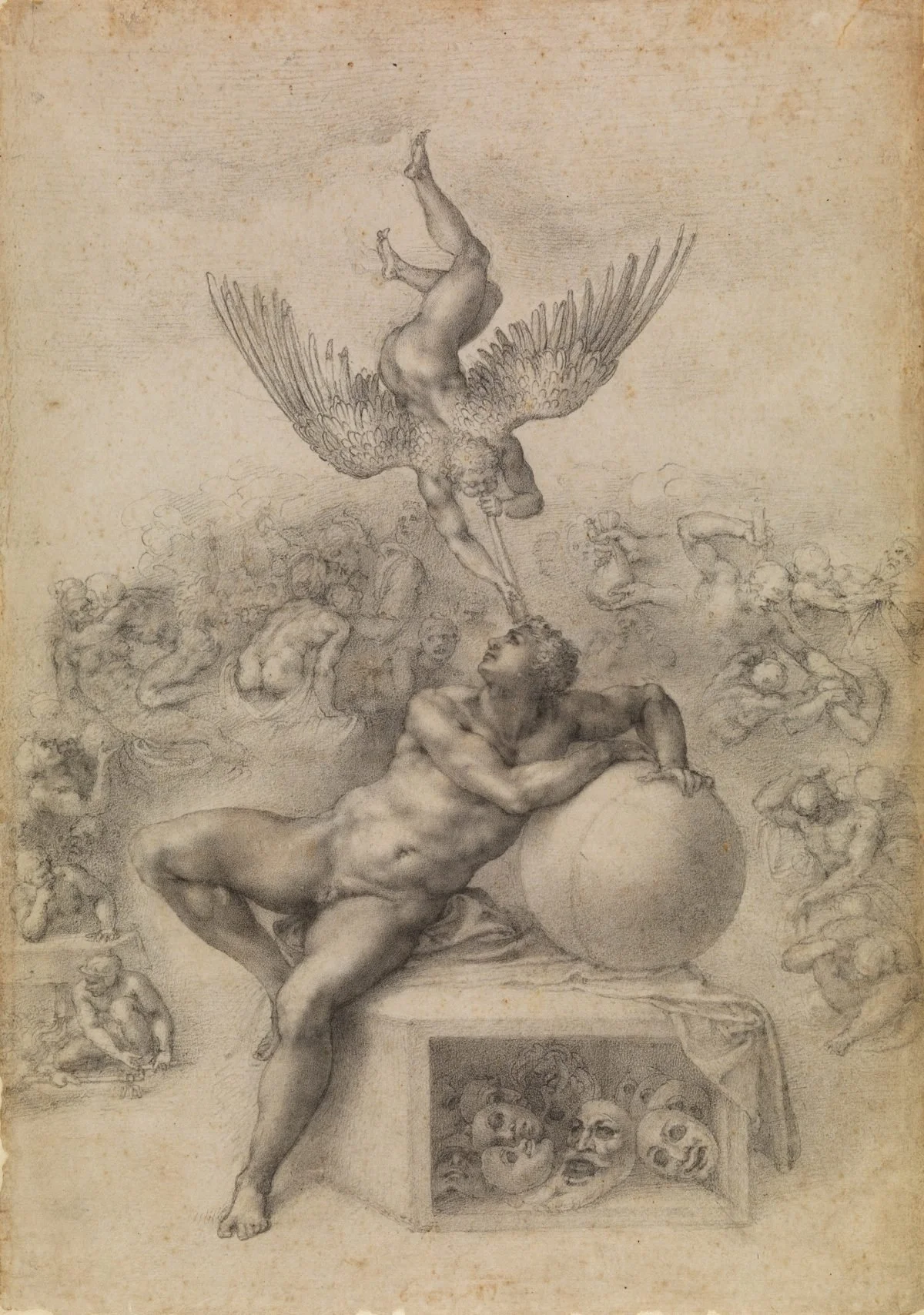
Michelangelo, The Dream (Il Sogno), c. 1533. Courtauld Gallery, London, Princes Gate Bequest, inv. D.1978.PG.252
Through his gentlemanly manner and his impeccable erudition, James Byam Shaw cemented himself as one of the most important dealers of the twentieth century. Beyond his foundational role in moulding the holdings of some of the world’s foremost public collections, he shaped the ideal of what an Old Master drawings dealer should be. Byam Shaw incarnated and codified a tradition of dealing that championed research and courtesy as a business strategy, where the dealer’s name was a near-assured sign of quality. His approach, which bridged academia and the market, is preserved by many purveyors of fine Old Master drawings to this day.
Jan Lievens, Man in a Turban Facing Left. Etching. Metropolitan Museum of Art, New York, Rogers Fund, inv. 1970.553
Picture: Christie’s
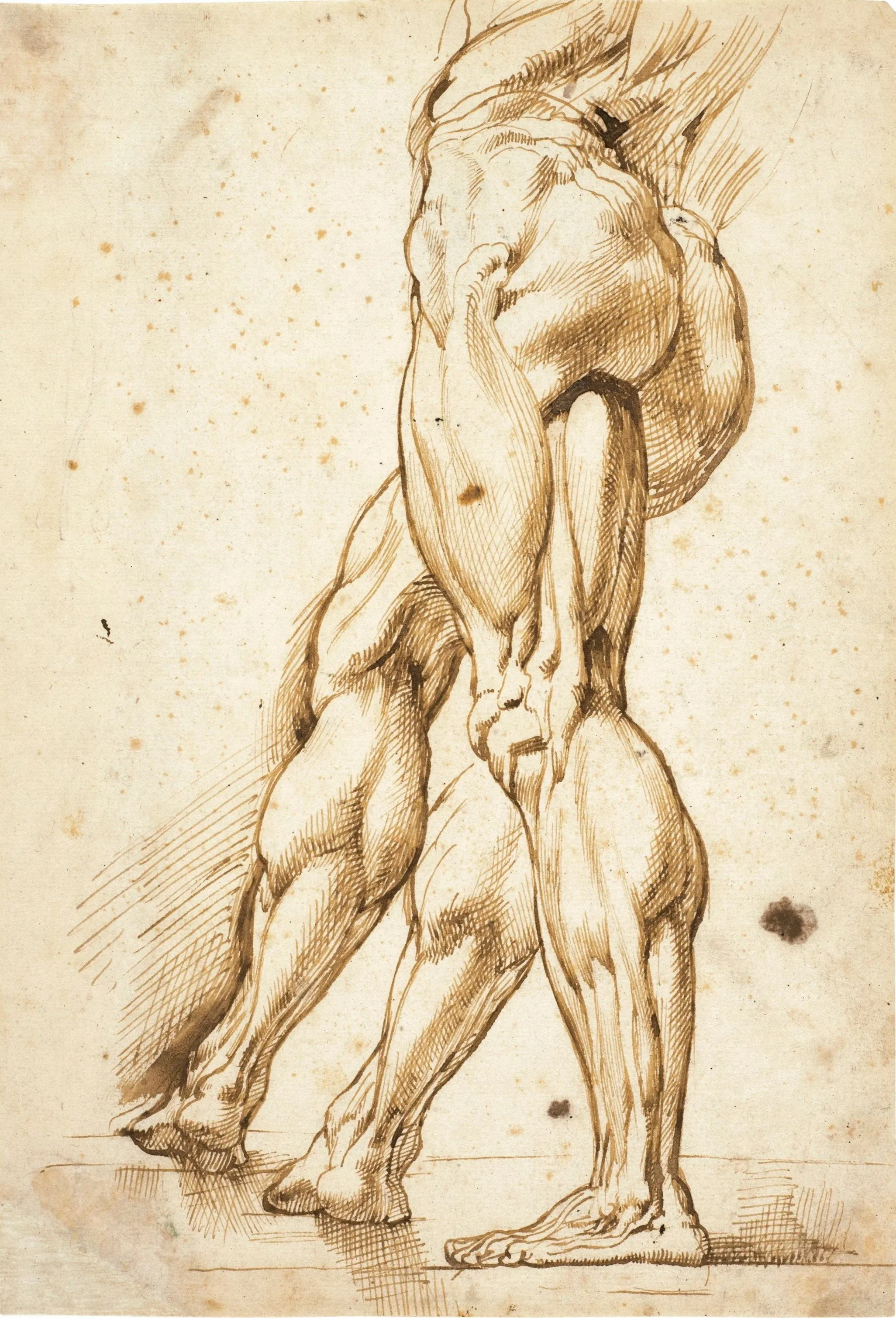
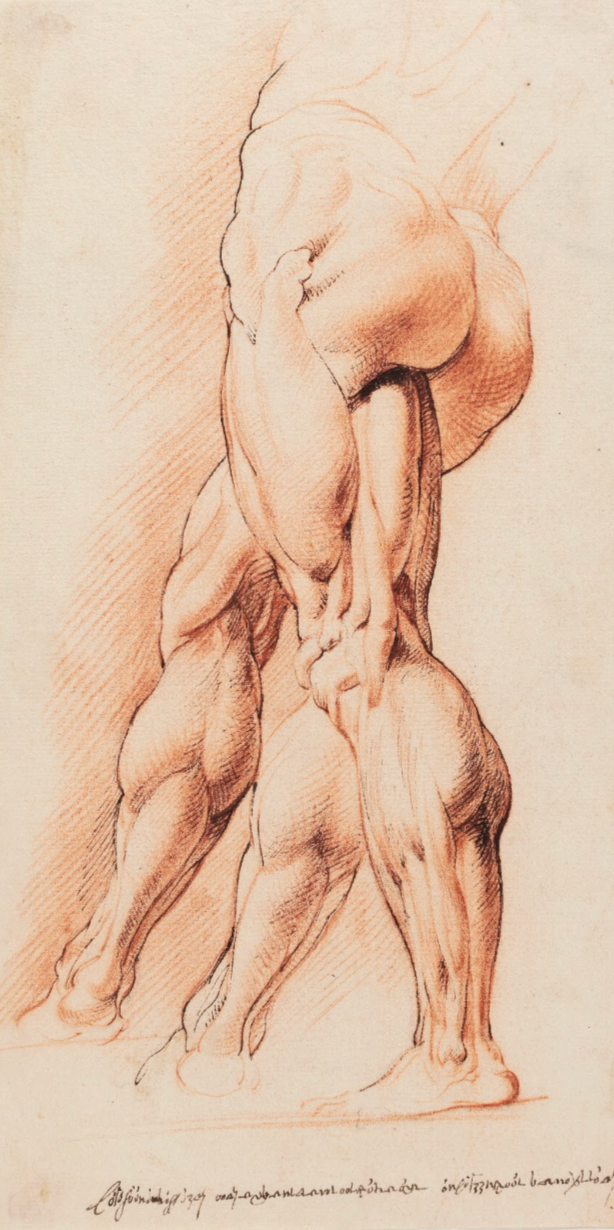
Male écorché (flayed) figures form a small but significant component of Peter Paul Rubens’ known corpus of drawings. They are typically drawn in pen and brown ink, some are embellished with brown wash, and several are drawn in red or black chalk. It has been suggested that Rubens intended to produce an engraved publication, and further research into the area is attested by a group seven engravings after Rubens’ écorchés by Paulus Pontius, as well as a group of nineteen drawn copies by Willem Panneels at the Statens Museum for Kunst in Copenhagen from the so-called “Rubens cantoor”. One of these drawings is Rubens’ original, while the other is a copy by Panneels.
-
The original is the upper (left) image.
Upper (left) Image: Peter Paul Rubens (1577–1640), An écorché study of the legs of a male nude, with a study of the right leg, Christie’s, New York, 14 October 2021, lot 9
Lower (right) Image: Willem Panneels (1600–1634), Anatomical study of a skinned man's left leg seen from the left and his right leg in two different positions (écorché), Statens Museum for Kunst, Copenhagen, inv. KKSgb16331
As Rubens’ leading studio assistant in the late 1620s, Panneels was afforded privileged access to his master’s cantoor, the private room in Rubens’ house where he kept his drawings, oil sketches, and valuable objects. This is how he came to produce the copies of Rubens’ drawings which have come to be known as the “Rubens cantoor”. These copies provide valuable evidence for Rubens’ own collection, for his system of organisation and for many of his original works which are now lost. Alongside the close relationship to known originals by Rubens, and Panneels’ characteristic use of red and black chalk, several material characteristics help to distinguish Panneels’ copies: encrypted inscriptions in brown ink, numerical sequences, traces of coloured residue along the margins, and irregularly trimmed edges.
In the lower image, Panneels closely relied on Rubens’ original, but he also added hatching around the outlines of the figure, omitted various details in the feet and the torso, and inscribed the lower edge of the sheet in his secret code. This code has since been decrypted and translated as: ‘these legs I have also taken from the cantoor, and the outlines are good’. The clandestine nature of the code initially fueled speculation that Panneels had copied Rubens’ works without permission. Although this makes for a compelling story of subterfuge, modern scholarship has largely rejected the hypothesis, regarding Panneels’ cantoor drawings as a rare survival of the kind of personal archive that was legitimately built up by the typical workshop apprentice.
Susan Dackerman, a specialist in Northern European print culture, joins Ann Shafer, an art historian and designer specialised in the arts of the ancient Near East and the Early Islamic world, for an episode of Platemark, the printmaking podcast. In the episode, Dackerman discusses her recent book, Dürer's Knots: Early European Print and the Islamic East, and examines Dürer’s relationship with the Islamic world, revealing insights about the intersection of early modern printmaking and contemporary history.
Scribe Accroupi visits the Musée de Picardie’s current exhibition, Poussin, Watteau, Fragonard, David: French Drawings from French Private Collections, charting the art of drawing in France from the end of the Renaissance to the beginning of the Revolution. Through a series of pieces to camera from the exhibition’s co-curator, Pierre Stépanoff, the video explores many of the highlights from the 170-drawing show. For those who cannot visit Amiens before the exhibition closes on 27 September, the video provides an excellent opportunity to see these drawings – which are rarely displayed in public – in their exhibition context before they return to their owners.
Drawing on the recent examination of the Morgan Library & Museum’s Visconti-Sforza tarot cards (c. 1456–58) and Yale’s Visconti di Modrone cards (c. 1447), Lydia Aikenhead looks at the ways in which conservation scientists use material analysis to tease out new information from works on paper. Through brief interviews with the project’s scientists, the article illustrates how damage can prove “a paradise for the scientist” and how high-powered microscopic inspection exposes the delicate, layered pigments hidden beneath the surface.