Francesco del Cossa (1435/6–1477/8)
Trois Crayons Magazine, March 2026
Can we fool you? The term “fake” may be slightly sensationalist when it comes to old drawings. Copying originals and prints has formed a key part of an artist’s education since the Renaissance and with the passing of time the distinction between the two can be innocently mistaken.
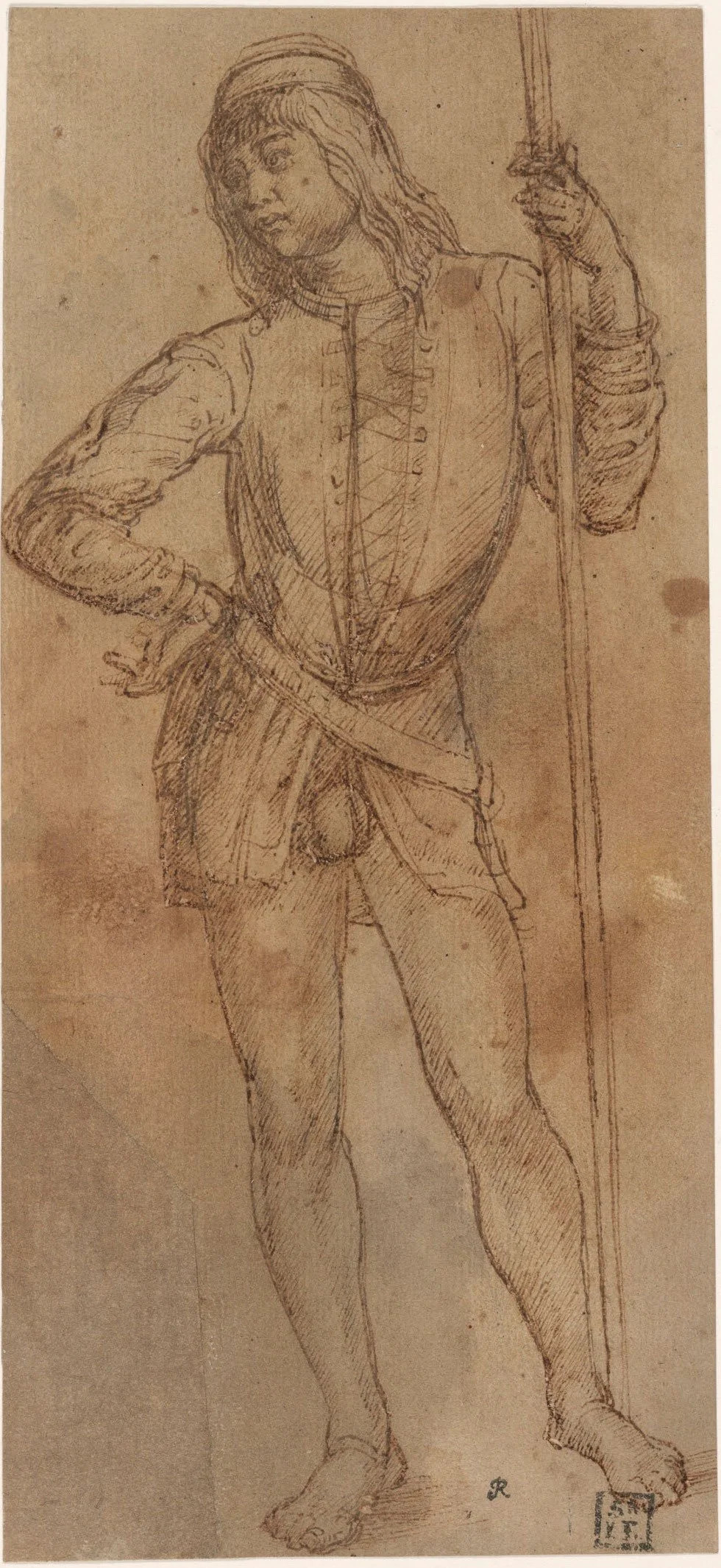
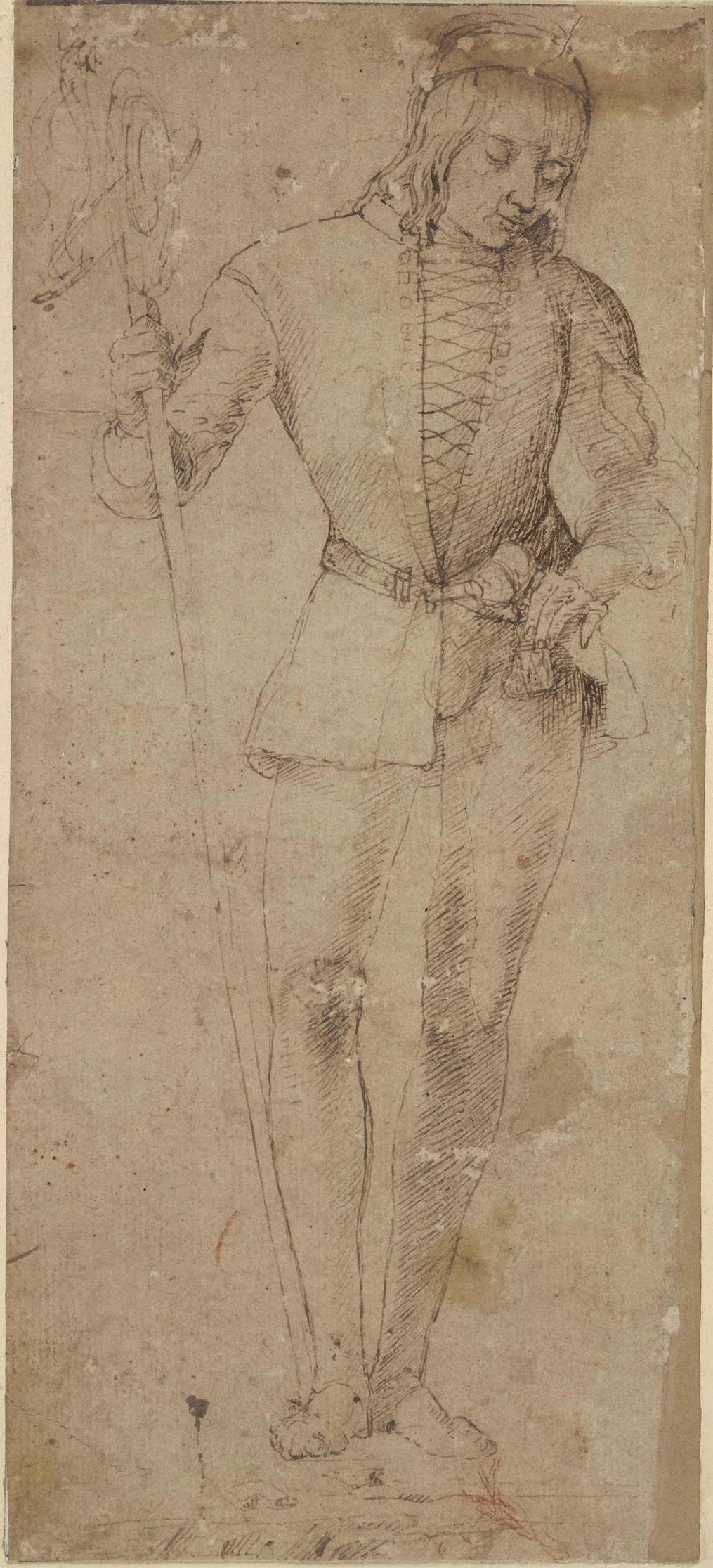
It is somewhat ironic that the authorship of this month’s ‘fake’ drawing is more secure than that of the ‘original’. While one of the drawings can be securely dated to the Renaissance, the other is a 20th century forgery, drawn both on and with Renaissance materials, but which is which?
-
The original is the right/lower image.
Upper Image: Eric Hebborn (1934–1996), Standing Youth Holding a Staff, 20th-century forgery in the manner of Francesco del Cossa, Morgan Library and Museum, New York, inv. no.: 1967.8
Lower Image: Attributed to Francesco del Cossa (1435/6–1477/8), A Young Man Standing to Front, Looking Down, holding a staff, British Museum, London, inv. no.: 1946,0713.212
The lower drawing is in held in the British Museum in London and is attributed to the fifteenth-century Ferrarese artist Francesco del Cossa, although it has historically been linked to other Quattrocento artists like Niccolò Alunno, Vincenzo Foppa and Ercole de' Roberti. The upper drawing is held in the Morgan Library & Museum in New York was originally attributed to del Cossa due to a favourable stylistic and compositional comparison between the two drawings, however it eventually proved to be fake and proved instrumental in unveiling the forgeries of its true maker, Eric Hebborn, in the late 1970s.
While studying a third drawing believed to by del Cossa and a fourth drawing by his contemporary Sperandio Savelli at the National Gallery of Art in Washington,the curator of drawings, Konrad Oberhuber, observed certain stylistic overlaps, a precise correspondence in the paper type and the deliberate simulation of age. He conferred with Felice Stampfle, curator at the Morgan Library & Museum in New York, to share his concerns and compare the two ‘del Cossas’. It had already been noted that two collectors' marks on the Morgan drawing were likely later imitations, and with Oberhuber’s latest revelation, Stampfle too began to doubt the authenticity of all three drawings.
It transpired that the three drawings had been acquired from the reputable London dealer Colnaghi around a decade earlier. When asked, Colnaghi named their own source as Eric Hebborn which confirmed certain suspicions of his fraudulent dealings. The game was up for Hebborn and on 10 March 1978, Colnaghi published a statement in the Times of London. Refunds were issued to those who had acquired Hebborn’s drawings, but he himself was not named in the announcement for fear of libel charges as the materials used by the artist were technically ‘of the period’ and connoisseurship alone was unlikely to be decisive in court.