Herman Saftleven (1609–1685)
Trois Crayons Magazine, July 2026
No Netherlandish seventeenth-century artist produced more drawings of a city's ramparts than Herman Saftleven (1609–1685) did of Utrecht. The artist regularly roamed the city walls and the Stadsbuitengracht to capture views of the city. Over a period of nearly thirty years – between 1645 and 1674 – his walks resulted in more than 175 views of, along, and from the city wall. One of the drawings illustrated here is by the artist himself, while the other is deemed to be a copy (not a fake). But which is which?
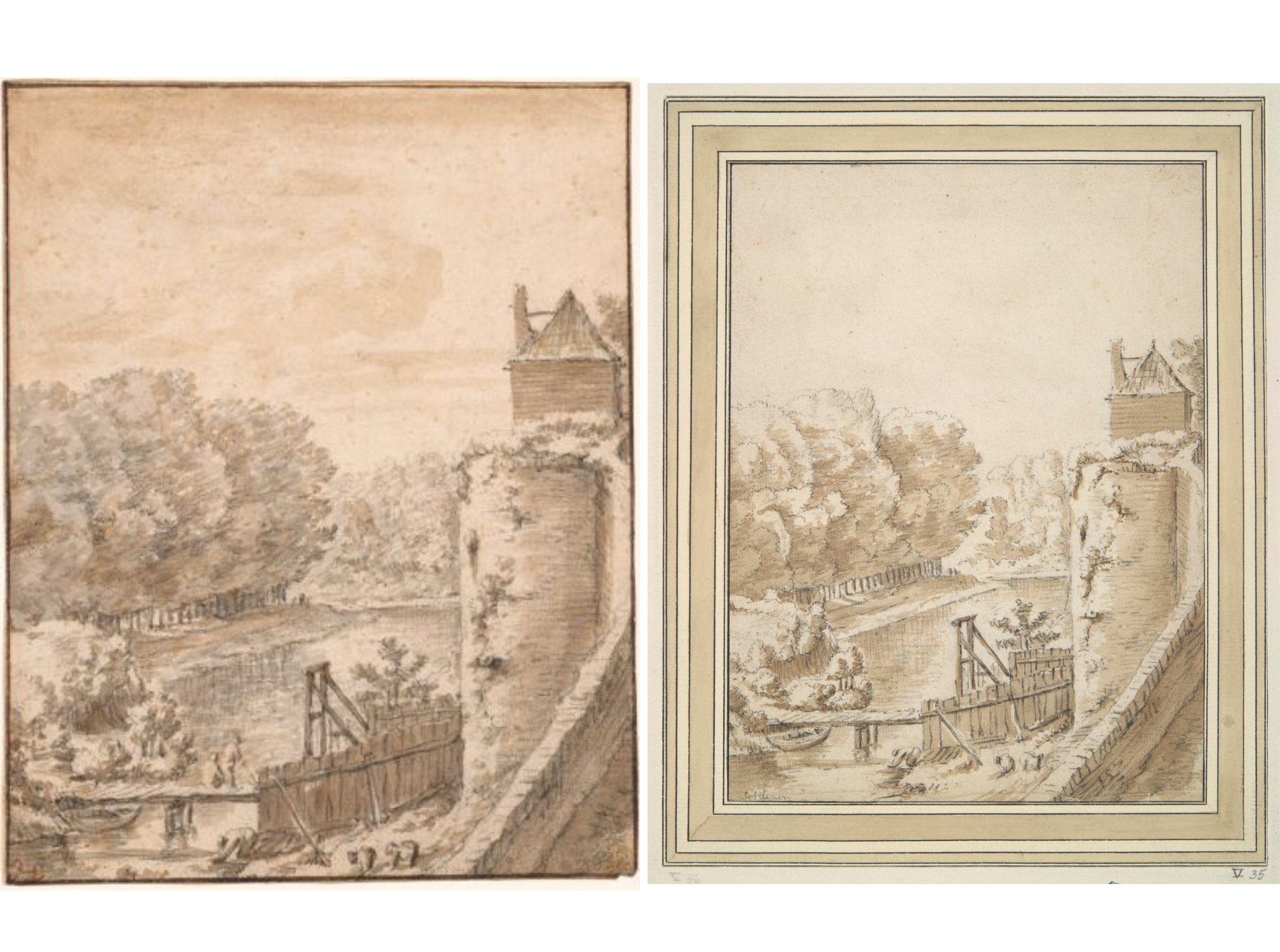
-
The original is the upper (left) image.
Saftleven depicted Utrecht’s Lucasbolwerk, an earthen defensive structure along the city walls, on several occasions. The earliest of these is the upper drawing, at the Museum Boijmans in Rotterdam, which can be dated to around 1645. In a 2024 RKD Study analysing Saftleven’s city wall drawings, Laurens Schoemaker argued that the lower drawing, at the Yale University Art Gallery in New Haven, is too weak to be by Saftleven himself and must be a copy.