
Real or Fake #27
Monday, 1 December 2025. Newsletter 27.
Can we fool you? The term “fake” may be slightly sensationalist when it comes to old drawings. Copying originals and prints has formed a key part of an artist’s education since the Renaissance and with the passing of time the distinction between the two can be innocently mistaken.
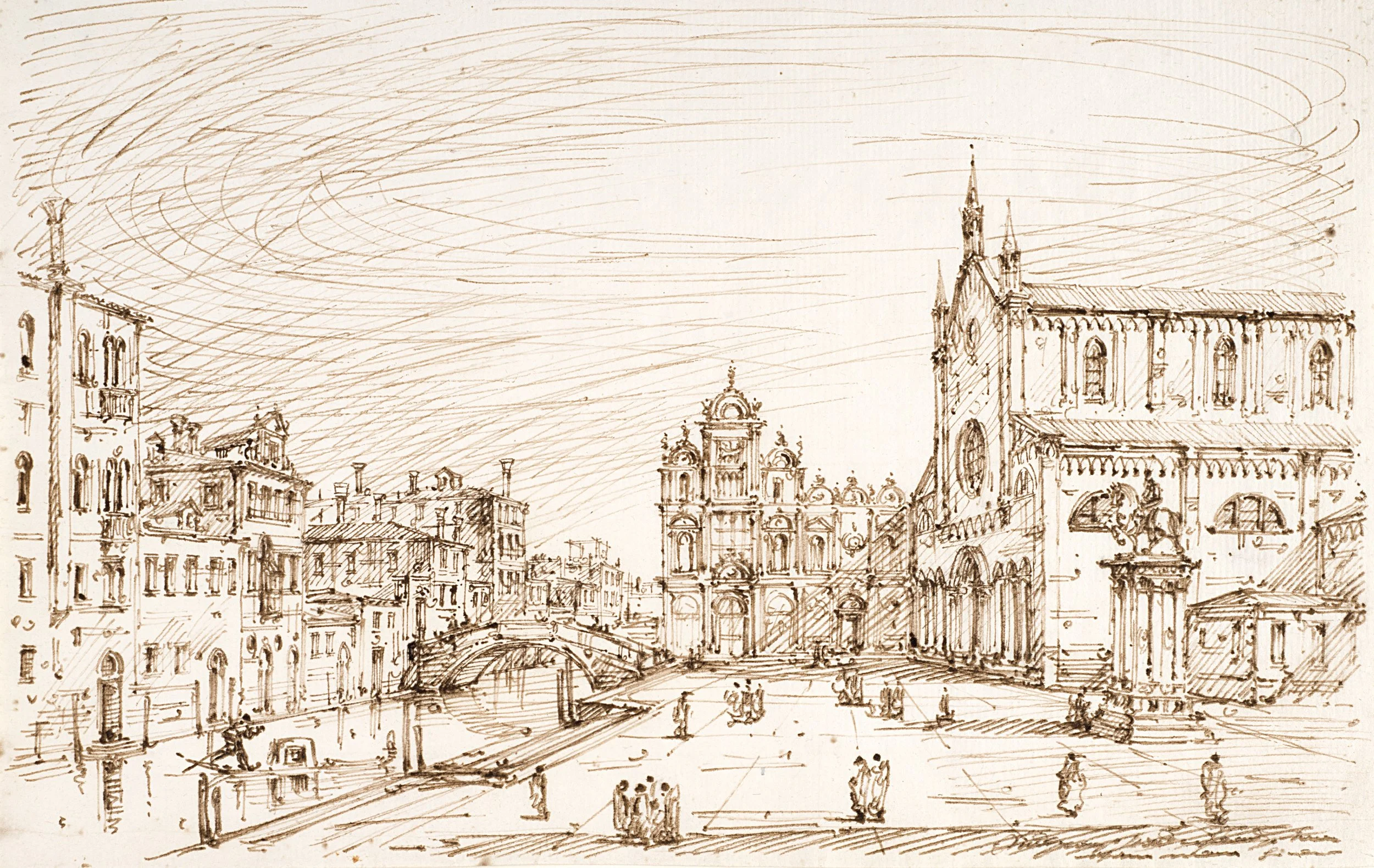
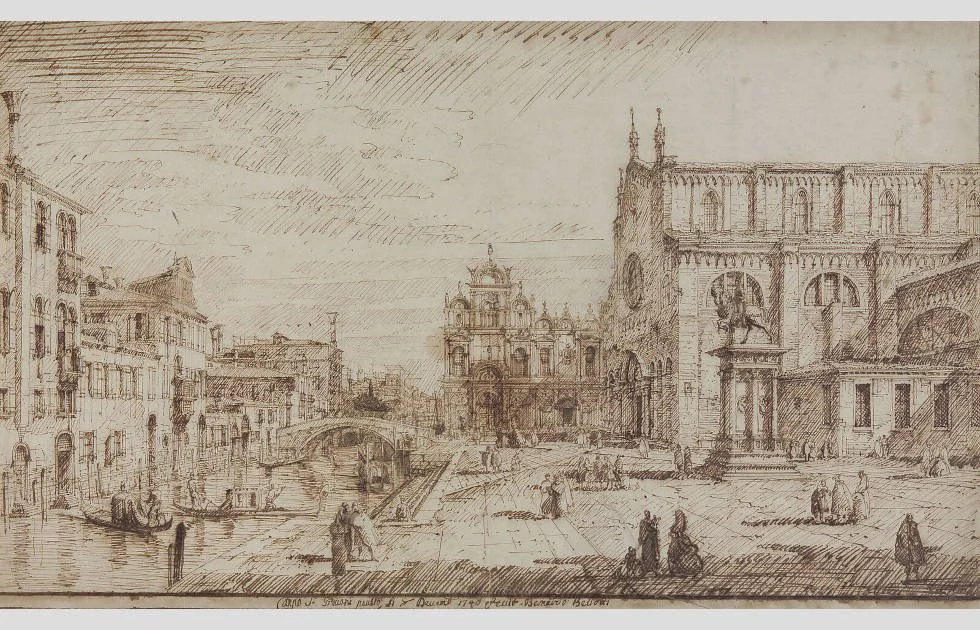
Venice has long been an epicentre of artistic productivity—rivalling Rome and Florence in the sixteenth century, and serving as the home of the view painting, or veduta, in the eighteenth. Throughout the 1700s, travellers flocked to the Italian provinces in pursuit of inspiration, enlightenment, discovery, and adventure. Aristocratic visitors and connoisseurs encouraged the production of landscapes and cityscapes: visual records and souvenirs of the sites encountered on their journeys. This appetite for vedute lives on, and one canny forger sought to capitalise on it. But which is the forgery, and which is the original?
Scroll for more information.
The original is, of course, the right/lower image.
Left/Upper Image: Giuseppe Latini, called Maestro del Ricciolo (1903–1972), Venetian view, Il Ponte Casa d’Aste, Milan: 23 October 2018, lot 203
Right/Lower Image: Bernardo Bellotto (1722-1780), Campo Santi Giovanni e Paolo, Hessisches Landesmuseum Darmstadt, Darmstadt
The name Giuseppe Latini may be less familiar than that of his moniker, the Maestro del Ricciolo, or “the master of the curl”, a pseudonym derived from the artist’s characteristically ornamental curved style of penmanship. Rumoured to have been a Roman priest living in Rome on the Via Margutta, or an Englishman resident in Italy, the maestro is known primarily for his drawn imitations of eighteenth-century the Venetian artists Antonio Canaletto, Francesco Guardi and Giambattista Tiepolo. Latini was prolific and his fakes and copies are amongst the most frequently seen on the art market under an array of different names. At times, his drawings have even found their way into institutional collections; The British Museum has two examples of his work in its holdings.
Latini’s fakes often depict the city of Venice, and are invariably drawn on old paper, often with a prominent watermark. Because the surface of the paper has been impaired by age, the modern ink lines often bleed at the edges and slightly through the paper. Spurious and indecipherable inscriptions in a tidy hand are also frequently found. His subjects were often original, drawings made “in the style of” another artist, however, he would also imitate their compositions. Here, in a drawing that surfaced on the art market in 2018, Latini directly copied a work by Bernardo Bellotto in the Hessisches Landesmuseum in Darmstadt, or a similar drawing by his uncle Antonio Canaletto in the Royal Collection in Windsor.
For further reading, see Giulio Zavatta, Antonio Morassi, 'Federico Zeri e un falsario di disegni guardeschi: Giuseppe Latini alias “il prete romano” alias il Maestro del Ricciolo', Storia dell’arte [150] Nuova Serie 2018|2; and Mark Jones, Fake? The Art of Deception, London, 1990.