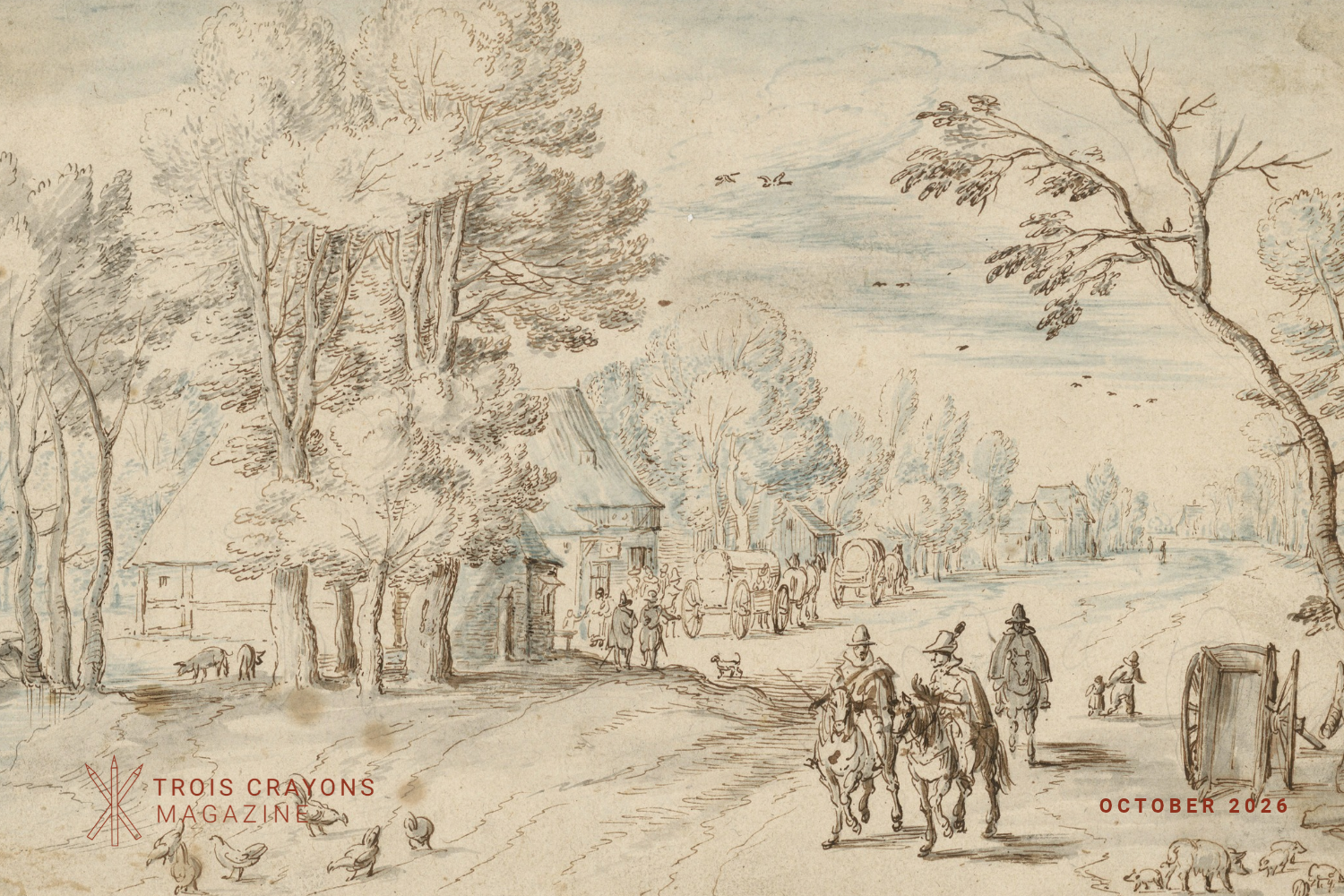
Next stop: Texas. For the first international edition of the Trois Crayons Drawings Hub, we will soon be heading to the United States. Our third annual selling exhibition, On Paper: Drawings from the Renaissance to the Modern Day, assembles some fifty drawings from fifteen leading galleries and travels to Josh Pazda Hiram Butler in Houston (9–13 October), to Gallery 19C in Westlake, Dallas-Fort Worth (22–29 October), and lastly, to Martha’s in Austin (4–8 November). With live events at the Museum of Fine Arts, Houston (8 October), the Dallas Museum of Art (21 October), and Martha’s, in partnership with the Blanton Museum of Art at The University of Texas at Austin (4 November), we hope you will be able to join us at some point along the journey.
Coming up this month in New York, the Morgan Library & Museum opens two shows: Rembrandt’s Lions: Art and Exile in the Dutch Republic (23 October – 31 January) and Fantasy and Reality: The Art of Johan Tobias Sergel (30 October – 31 January). Nearby, The Metropolitan Museum of Art presents Designing the Gilded Age: Drawings from the Studios of Louis C. Tiffany (22 October – 7 February). Also in New York, The Drawing Foundation hosts On Drawings 2026 (21–22 October), two days of discussions among curators, collectors, conservators, and artists, while the IFPDA’s events series, Prints & Drawings Month (2–30 October), runs throughout the month. In London, Frieze Masters (14–18 October) returns to The Regent’s Park, while Magic and Mess: The Artist's Studio Revealed (31 October – 21 March) opens at Leighton House. In Paris, the Fondation Custodia reopens following renovation with Mes Chers Amis: Drawings in the Collections of 19th-Century French Artists (17 October – 17 January). At the Bibliothèque nationale de France, Louise Bourgeois: Extreme Tension (Drawings and Engravings) (20 October – 21 February) gathers a major selection of graphic works, while Galerie Canesso hosts an exhibition and conference on Pietro Faccini to mark a new monograph on the Bolognese master's drawings. Across Southern and Central Europe, Rome’s Scuderie del Quirinale hosts a major retrospective, Pontormo (9 October – 7 February), and the Kupferstichkabinett in Berlin presents Rubens, Jordaens, van Dyck: Flemish Master Drawings (10 October – 31 January).
In this month’s magazine, we have news headlines, gallery listings, announcements, events and an overview of recent institutional acquisitions. For the Demystifying Drawings feature, we look ahead to On Paper: Drawings from the Renaissance to the Modern Day. For this month’s exhibition preview, Christien Melzer walks us through Rubens, Jordaens, van Dyck: Flemish Master Drawings. Concluding with our exhibition listings and the Real or Fake quiz, the issue closes with our customary trio of audio, video, and literary recommendations.
For next month’s edition, please direct any recommendations, news stories, feedback or event listings to tom@troiscrayons.art.
IN GALLERY, ART FAIR AND AUCTION NEWS
1–4 October – Fair: ArtonPaper at The Sheds, Tour & Taxis (Brussels).
Open until 4 October – Fair: BIAF at Palazzo Corsini (Florence).
5 October – 6 November 2026 – Exhibition: Beyond the Visible. Symbolism and its Legacies at Stuart Lochhead Sculpture (London).
7–23 October – Exhibition: British Pictures at The Maas Gallery (London).
Open until 10 October – Exhibition: Leonora Carrington at Almine Rech (Paris).
7–18 October – Exhibition: Livid Cosmoramas: The Art of John Banting at 12 Saint George Street (London). Organised by John Swarbrooke Fine Art.
14–18 October – Fair: Frieze Masters at The Regent’s Park (London).
15–18 October – Fair: HIGHLIGHTS International Art Fair Munich at Munich Residenz (Munich).
16–23 October – Exhibition: Pietro Faccini at Galerie Canesso (Paris). Organised with Nicolas Schwed.
20–26 October – Exhibition: Collecting in Paris (1880-1915): Drawings, Prints, Paintings, Sculptures and Decorative Arts at 14 bis rue Coëtlogon (Paris). Organised by Sabrier & Paunet.
23 October – 1 November – Exhibitions: Semaine des Galeries Parisiennes de l'estampe et du Dessin at various venues (Paris). Organised by CSEDT.
23 October – 14 November – Exhibitions: Peintures du XIXe Siècle at Galerie La Nouvelle Athènes (Paris).
27 October – 1 November – Fair: LAPADA at Berkeley Square (London).
29 October – 1 November – Fair: FLASHBACK at Flashback Habitat (Turin).
1–8 November – Fair: PAN Amsterdam at Rai Amsterdam (Amsterdam).
IN LECTURE AND EVENT NEWS
2 October – Symposium: New Directions in Early Modern European Art: The Aso O. Tavitian Collection Symposium at the Clark Art Institute (Williamstown). 10:20 EDT. Free; advance registration required.
2–30 October – Event series: IFPDA Prints & Drawings Month at various venues (New York). Advance registration required.
4 October – Talk: Seen/Unseen: A Closer Look at Odilon Redon Drawings at The Getty Center (Los Angeles and online). 14:00 PDT. Speakers: Danielle Canter, Michelle Sullivan. Free; advance registration required. Presented by The Getty in collaboration with The Drawing Foundation.
5 October – Round Table: Tintoretto Autrement at Galerie Colbert/INHA (Paris and online). 18:00 CEST. Speakers: Francesca Albert, Guillaume Cassegrain, Sefy Hendler, Michel Hochmann, Neville Rowley. Free; advance registration required. Organised by Collectif Renaissance.
5–11 October – Festival: Art History Festival 2026 at various venues (UK). Advance registration required.
9 October – Conversation: Book Presentation: Gaspar van Wittel: Il catalogo ragionato dei disegni di Carolina Trupiano Kowalczyk at Aula Magna S. Trentin, Ca' Dolfin (Venice). Speakers: Carolina Trupiano Kowalczyk, Giovanni Maria Fara, Sergio Marinelli. 11:00 CEST. Free
10 October – Lecture: Pre-Raphaelite! Showing and Telling 1848-2028 at the Birmingham and Midland Institute (Birmingham). 11:45 BST. Free; advance registration required.
12 October – Lecture: The Martyr and Distraction: Jacques Callot’s Etching of St Sebastian (ca. 1630) at The Courtauld Institute (London). Speaker: Marika Takanishi Knowles. 17:30 BST. Free; advance registration required.
14–15 October – Symposium: Symposium Chodowiecki 300 at Gemäldegalerie (Berlin). 13:30; 09:15 CEST. Free; advance registration required. Organised with the Academy of Arts, Berlin.
14–16 October – Symposium: Hogarth Symposium 2026: Hogarth’s Life, Art and Times at the Yale Center for British Art (New Haven). 16:30; 10:15; 10:15 EDT. Free; advance registration required. Organised by the Lewis Walpole Library in collaboration with the Yale Center for British Art, Yale Library, and the Beinecke Rare Book and Manuscript Library.
15 October – Round Table: Pietro Faccini at Galerie Canesso (Paris). 18:00 CEST. Free; RSVP required before 8 October: contact@canesso.com.
16–17 October – Symposium: Drawn and printed – New approaches to the graphic work of Lucas Cranach at Technische Hochschule Köln (Cologne). 09:00 CEST. Free. Organised by TH Köln.
21–22 October – Events: On Drawings 2026 at various venues (New York). Advance registration required. Organised by The Drawing Foundation.
23 October – Lecture: Rembrandt’s Lions: Make Art, Not War at The Morgan Library & Museum (New York). Speaker: Sarah Mallory. 18:00 EDT. Free; advance registration required.
23 October – Study day: Constellations and Connections: Gwen John and her Transnational Networks in Paris (1903-1939) at Potager du Dauphin (Meudon and online). 09:30 CEST. Free. Organised by The Meudon Museum of Art and History, Helena Anderson (National Museum of Wales & University of Bristol), Anna Falcini (artist and independent researcher), and Cassandra Levasseur (University of Rennes 2).
23 October – Symposium: NIKI Symposium: Italy and the Low Countries – Artistic Relations: New Research at Museum Catharijneconvent (Utrecht). 10:00 CEST. Free with museum admission. Organised by the NIKI.
24 October – Study day: New Research on Venetian Art (Online). Time: TBC. Organised by the Venetian Art History Research Group (VAHRG).
Call for papers: Jean-Étienne Liotard : une approche interdisciplinaire. Identifications, découvertes récentes et chantiers en cours at Genève, Musée d’Art et d’Histoire (Geneva). Application deadline: 23 October. Conference dates: 3–5 February 2027. Organised by the Musée d’art et d’histoire de Genève (MAH) and the University of Oxford, in collaboration with l’École des sciences criminelles de l’Université de Lausanne and l’Institut de recherche Idiap at Martigny.
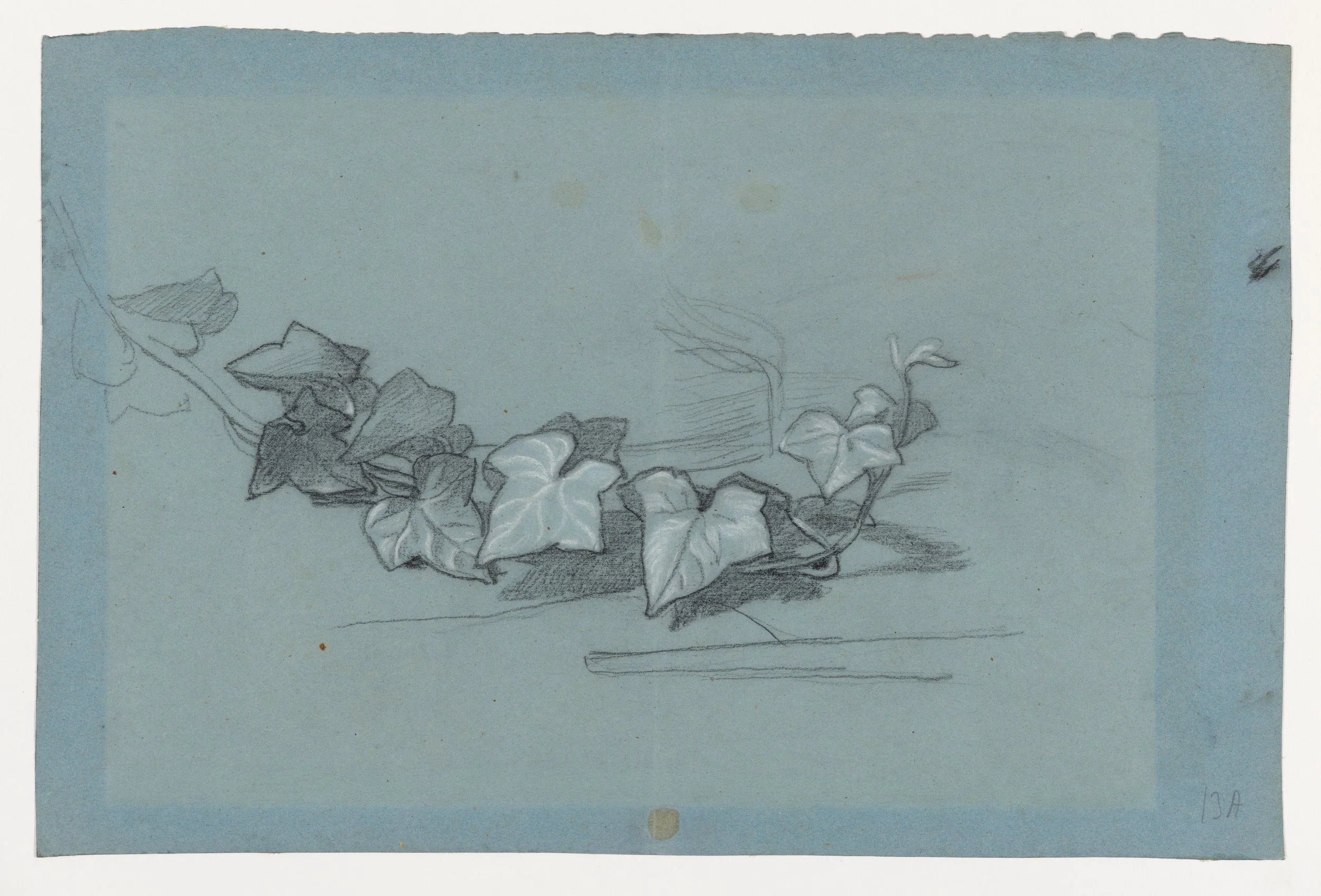
Thomas Couture (1815–1879), Branch of Ivy (recto), The Metropolitan Museum of Art, New York
IN LITERARY, MUSEUM AND ACADEMIC NEWS
In memoriam: Peter Schatborn. Emeritus head of the Rijksprentenkabinet at the Rijksmuseum in Amsterdam, Schatborn passed away on 8 September. He was a leading specialist in seventeenth-century Dutch drawings and prints, whose research focused primarily on Rembrandt van Rijn, his studio and his pupils.
Nicolaes Berchem drawings sought for catalogue raisonné: Dr Annemarie Stefes, Jacoba Lugt-Klever Fellow, is preparing to publish the catalogue raisonné of drawings by Nicolaes Berchem (1621/22–1683). She would be most grateful if owners of Berchem drawings in private or public collections would contact her directly at annemariestefes@aol.de or stefes@rkd.nl.
New publication: On Location: Drawing the Outdoors edited by Joachim Homann. Harvard Art Museums. Distributed by Yale University Press. $45.
New publication: The Portrait Miniature: A New History by Adriana Concin, Damiët Schneeweisz and Rosalind McKever. Thames & Hudson, V&A. Distributed by W.W. Norton. £35.
New publication: Landscape Drawing in Europe: 1500–1800. The Experience of Place by Camilla Pietrabissa and Elisa Spataro. Paul Holberton Publishing. Distributed by Yale University Press. £60.
New publication: Mes Chers Amis: Drawings in the Collections of 19th-Century French Artists edited by Laurence Lhinares. Paul Holberton Publishing. Distributed by Yale University Press. £40.
New publication: The Burlington Magazine. October 2026, No. 1483. Works on Paper Special Issue. £25.
Fellowship opportunity: 2027-2028 David and Julie Tobey Fellowship at Villa I Tatti, The Harvard University Center for Italian Renaissance Studies (Florence). Application deadline: 16 November.
Fellowship opportunity: Center for Netherlandish Art, MFA Boston Research Fellowships 2027-2028 at the MFA Boston (Boston). Application deadline: 1 December.
Prize: Haboldt-Mutters Prize, Simiolus. €2,000 will be awarded for the best original contribution on European art prior to 1950. Entrants should be younger than 35 at the time of submission. Application deadline: 31 December.
IN ACQUISITION NEWS
Master of Mühldorf (fl. 1510s), Adoration of the Magi. Acquired by the Frits Lugt Collection, Fondation Custodia, Paris, from Rossini, Paris (sale: 6 December 2024) (via @fondationcustodia).
Hans Bol (1534–1593), Landscape with a Road near a Pond. Gifted to the Harvard Art Museums, Harvard, from The Maida and George Abrams Collection.
Adriaen Hendriksz Verboom (c. 1628 – c. 1670), Panoramic View of a Village in the Woods. Gifted to the Harvard Art Museums, Harvard, from The Maida and George Abrams Collection.
Domenico Maria Servidori (c. 1724–1790), Portrait of Honore Charlotte Peret de Marie Laboulay, Wife of Musician François Courcelle, also known as Francesco Corselli. Acquired by the Biblioteca Nacional de España, Madrid, from DELAMANO, Madrid.
Philipp Otto Runge (1777–1810), Portrait of his Brother Jakob (study for "The Return of the Sons"), 1801, Hamburger Kunsthalle, Kupferstichkabinett, Hamburg.
Thomas Couture (1815–1879), Branch of Ivy (recto); Study of an Urn for "Damocles" (verso). Gift of Jill Newhouse Gallery and Didier Aaron Inc. to the Metropolitan Museum of Art, New York.
Siebe Johannes ten Cate (1858–1908), View of Lucerne. Acquired by Museum Boijmans van Beuningen, Rotterdam, from Ubbens Art (via @ubbensart).
NEW AUTUMN/WINTER MERCHANDISE



On Paper: Drawings from the Renaissance to the Modern Day
Trois Crayons Drawings Hub
Texas, October - November 2026
Calcar (Enrico Frascione), Degas (Stephen Ongpin Fine Art), Burne-Jones (Patrick Bourne & Co.)
Trois Crayons is pleased to announce the list of exhibitors taking part in On Paper: Drawings from the Renaissance to the Modern Day, the first multi-city edition of the Drawings Hub kicking off in Houston on 9 October.
Returning exhibitors include Abbott and Holder, Toby Campbell Fine Art, Clase Fine Art, Thomas Deprez Fine Art, Enrico Frascione, Stephen Ongpin Fine Art, Rosenberg & Co. and Wildenstein & Co.
Amongst the exhibitors from London are Stephen Ongpin Fine Art, a gallery specialising in Master drawings, watercolours and oil sketches from the 16th to 20th centuries, and Abbott and Holder, who specialise in British art from the 18th to 20th centuries.
Likewise based in the United Kingdom are Clase Fine Art, who specialise in European and Scandinavian paintings and drawings spanning the 16th to 21st centuries, and Toby Campbell Fine Art. Toby Campbell is a fine art dealer specialising in 17th to 20th century paintings and works on paper.
Joining from Europe are Thomas Deprez Fine Arts, a gallery in Brussels, Belgium that specialises in Belgian paintings, drawings, sculptures and decorative arts of the fin-de-siècle, and Enrico Frascione. Specialising in Old master paintings and drawings from the 14th to 19th centuries, Enrico Frascione is located in Florence, Italy.
From the United States are two Manhattan based exhibitors, Wildenstein & Co., an art dealership with an emphasis on Old Masters and Impressionists, and Rosenberg & Co., who present an international roster of works by prominent Impressionist and Modern artists, alongside their work with contemporary artists.
New exhibitors include Patrick Bourne & Co., Jonathan Cooper, Découvert Fine Art, Mireille Mosler, Jill Newhouse Gallery, Perspective Fine Art and Gallery 19C (for the Dallas-Fort Worth stop).
From London are Jonathan Cooper, a gallery that promotes contemporary artists specialising in representational drawing, painting and sculpture, and Patrick Bourne & Co. A private gallery, Patrick Bourne & Co. specialises in British Art from the 18th century through to the mid-20th Century.
Perspective Fine Art is a European art dealership based in Amsterdam and Vienna that specialises in European paintings and drawings from the 16th century to the mid-20th century.
Among the new US exhibitors are Jill Newhouse Gallery, based in Manhattan, who specialises in 19th and 20th century European and American Art, and Mireille Mosler Ltd. Likewise based in Manhattan, Mireille Mosler Ltd specialises in European works of art from the 17th century through the early 20th century. Also from the US is Découvert Fine Art, a gallery based in Rockport, MA, that specialises in European Drawings from the 16th to 20th centuries.
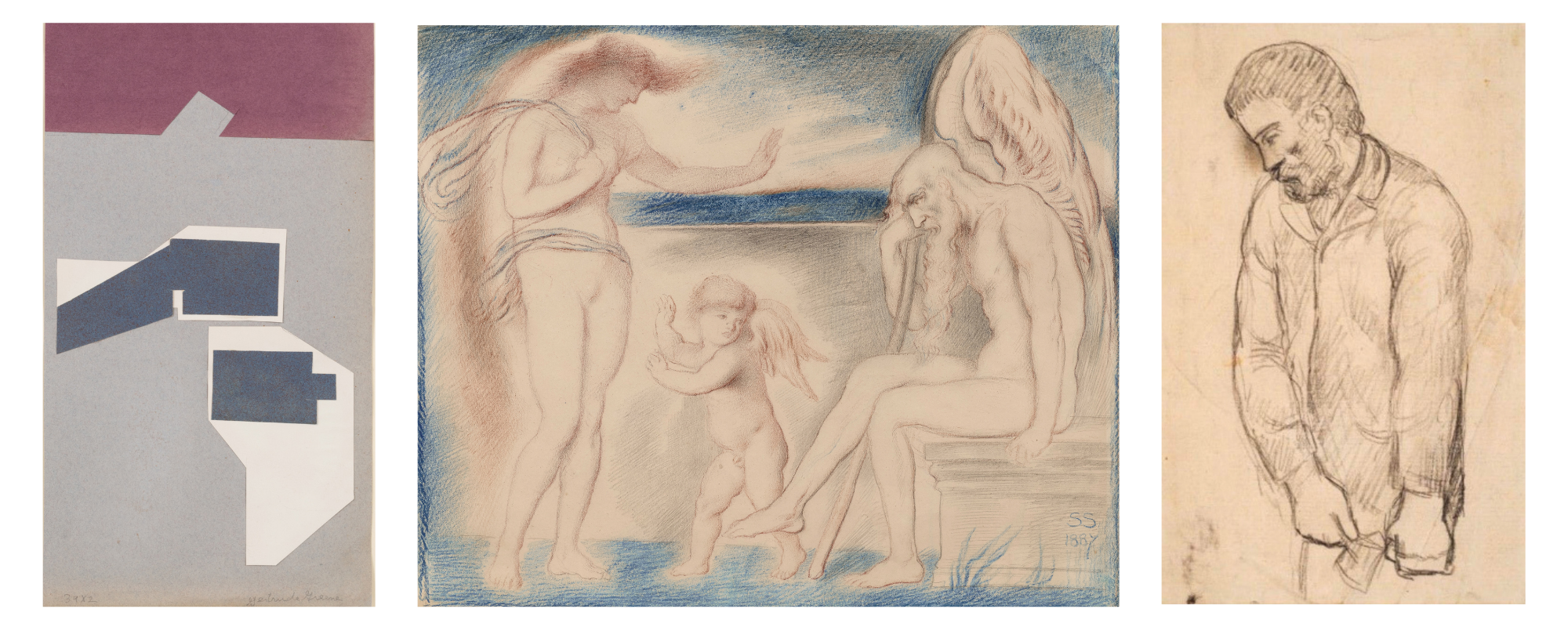
Calcar (Enrico Frascione), Degas (Stephen Ongpin Fine Art), Burne-Jones (Patrick Bourne & Co.)
Joining as part of our collaboration in Dallas-Fort Worth is Gallery19C, an international gallery with an exclusive focus on 19th century European paintings.
On Paper: Drawings from the Renaissance to the Modern Day will present master works on paper by artists such as Edward Burne-Jones, Edgar Degas, Jean-Auguste-Dominique Ingres, Henry Moore, Pablo Picasso, Rosie Sanders, Charles R. Sheeler, Jan Toorop, J.M.W. Turner, Jan van Calcar and many others.
On Paper: Drawings from the Renaissance to the Modern Day will open in Houston at Josh Pazda Hiram Butler from 9 October to 13 October. In collaboration with Trois Crayons, the first talk of the programme will take place at the Museum of Fine Arts, Houston on Thursday, 8 October. Open to the public, the panel discussion will focus on collecting drawings in the 21st century from the view of a collector, a gallerist and an auction house specialist. Moderated by Dr. Dena Woodall, Curator of Prints & Drawings at the Museum of Fine Arts, Houston, the panel will include collector and Trois Crayons Co-Founder Sebastien Paraskevas, Managing Director of Abbott and Holder Tom Edwards and Associate Vice President, Specialist, Old Master Drawings at Christie’s Dr. Giada Damen.
The selling exhibition will then move onto Dallas-Fort Worth, held in collaboration with Gallery 19C in Westlake from 22 October to 29 October. Paired with the second stop on the tour will be an educational lecture on 18th century drawings at the Dallas Museum of Art on Wednesday 21 October. Open to the public, speakers will include Dr. Emily Friedman, the Allen and Kelli Questrom Assistant Curator of Prints and Drawings at the Dallas Museum of Art, Dr. Amy Freund, Associate Professor and The Kleinheinz Family Endowment for the Arts and Education Endowed Chair in Art History at Southern Methodist University and Dr. Veronica Muñoz-Najar, Associate Curator, Art of the Spanish Americas, at the Thoma Foundation.
The multi-city event will have its final showcase in Austin at Martha’s from 4 November to 8 November. The concluding talk will take place at the gallery on Wednesday 4 November in partnership with the Blanton Museum of Art at The University of Texas at Austin. A conversation on drawings with Dr. Holly Borham, Curator of Prints, Drawings and European Art at the Blanton Museum of Art, this event will be by invitation only.
The Trois Crayons model endeavours to refresh the market for drawings, breaking from the traditions of conventional art fairs. The Drawings Hub includes no gallery booths, with all artworks instead being thoughtfully curated by the Trois Crayons team to create an exciting and innovative selling exhibition of the highest standard.
Rubens, Jordaens, van Dyck:
Flemish Master Drawings
Kupferstichkabinett – Staatliche Museen zu Berlin, Berlin
10 October 2026 – 31 January 2027
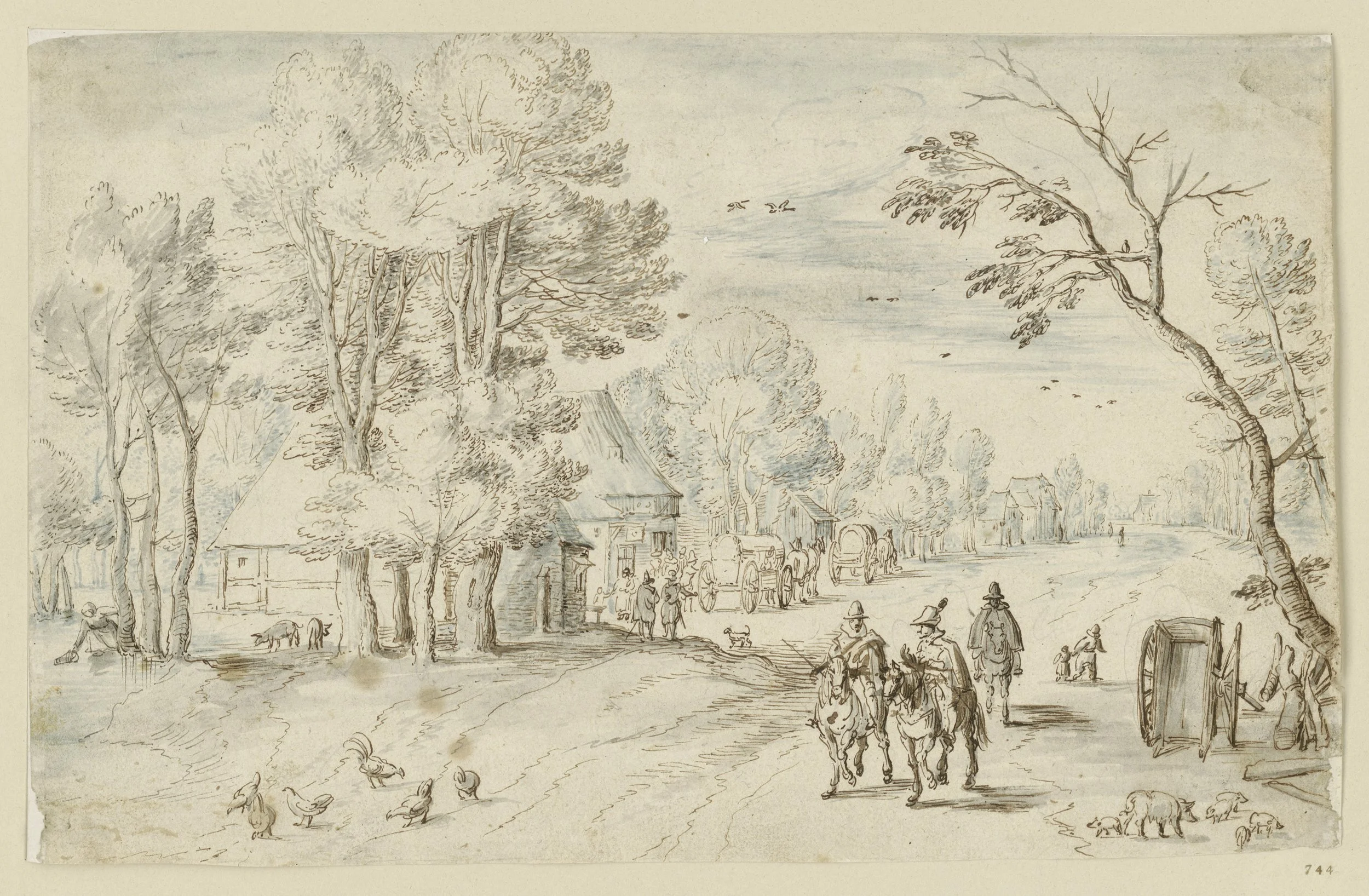
Jan Brueghel the Elder (1568–1625), Busy Village Street, Three Horsemen on the Right, an Inn Behind the Trees, Kupferstichkabinett, Staatliche Museen zu Berlin, Berlin, inv. KdZ 744. Credit: Staatliche Museen zu Berlin, Kupferstichkabinett / Dietmar Katz Public Domain Mark 1.0
Christian Melzer, Curator at the Kupferstichkabinett – Staatliche Museen zu Berlin, Berlin in conversation with Editor Tom Nevile
Opening on 10 October, the Kupferstichkabinett in Berlin is hosting its first major exhibition of Flemish drawings in fifty years. Featuring more than 100 drawings by twenty-eight artists, the exhibition focuses on the period 1570–1650 and explores the origins of the Flemish Baroque, showcasing works by Antwerp’s celebrated trio Peter Paul Rubens, Jacob Jordaens and Anthony van Dyck, as well as many lesser-known names.
Christian Melzer reflects on the show’s goals, discoveries and the drawing she’d most like to take home with her.
Could you begin by describing the structure and layout of the exhibition? What curatorial story does it seek to tell and which narrative, thematic, or didactic threads have determined the arrangement?
The exhibition draws on the Kupferstichkabinett’s own holdings and includes only two loans: a painting by David Teniers the Younger from the Gemäldegalerie, which is presented alongside a preparatory sketch for the figures, and a book from the Kunstbibliothek of the Staatliche Museen zu Berlin.
Visitors are welcomed by a small selection of masterpieces by the three main protagonists: a few carefully chosen drawings by Rubens, Jordaens and van Dyck set the scene, before providing information on geography, history and the artistic context. The tour then features three further sections, each dedicated separately to one of the three great masters, showcasing ten to twenty drawings by each of them. From Rubens, for example, I have selected just about half of our holdings. These three main sections are complemented by further chapters: a short introductory section features drawings by precursors and pioneers, including drawings by two of Rubens’s teachers, Tobias Verhaecht and Otto van Veen. Other sections interspersed throughout contain smaller selections of works by contemporaries: Jan Brueghel the Elder, David Teniers the Younger, Sebastian Vrancx, Adriaen Brouwer and others, as well as pupils and collaborators of Rubens such as Abraham van Diepenbeeck and Erasmus Quellinus. The exhibition concludes with a chapter featuring landscapes, some of which were produced for the open market, including works by David Vinckboons, Daniël Seghers, Lucas van Uden, Lodewyck de Vadder and Jacques d’Arthois. These can be linked back to Verhaecht, Brueghel and Teniers, so that one can trace the development of the landscape as one sub-theme of the exhibition. I am also highlighting how the artists were connected to one another, how they collaborated and – not only within a small urban area, but in a wider regional context – contributed to a vibrant art scene.
Also important are the functions of the drawings and their role in the creative process leading up to the completion of a work, as explained in the accompanying individual texts: preparatory sketches for paintings and engravings, designs for tapestries; figure studies; compositional sketches; and copies of sculptures or paintings, as in the case of Rubens, for example. The fact that these drawings were (mostly) working materials is also evident from a number of sheets displayed on both sides. For example, the recto and verso of three of Rubens’s studies were created for completely different paintings and contexts.
The organisation of the exhibition is not strictly chronological as many of the artists were active at the same time; there is a great deal of freedom within the space, and visitors can walk back and forth between the sections. The exhibition features warm wall colours that are inspired by some of Jordaens’s tempera drawings. There are also large-scale close-ups that reveal just how much energy and visual impact is contained within these drawings.
My aim, above all, is to give the general public an idea of the diversity and vitality of Flemish – or rather South Netherlandish – drawing. The exhibition is less about questions of attribution than it is about aesthetic enjoyment, the spirit of collaboration and the fact that drawing was an essential part of the creative process. For children (and adults) who fancy having a go at drawing themselves, there’s also a free drawing and puzzle sheet with some ideas.
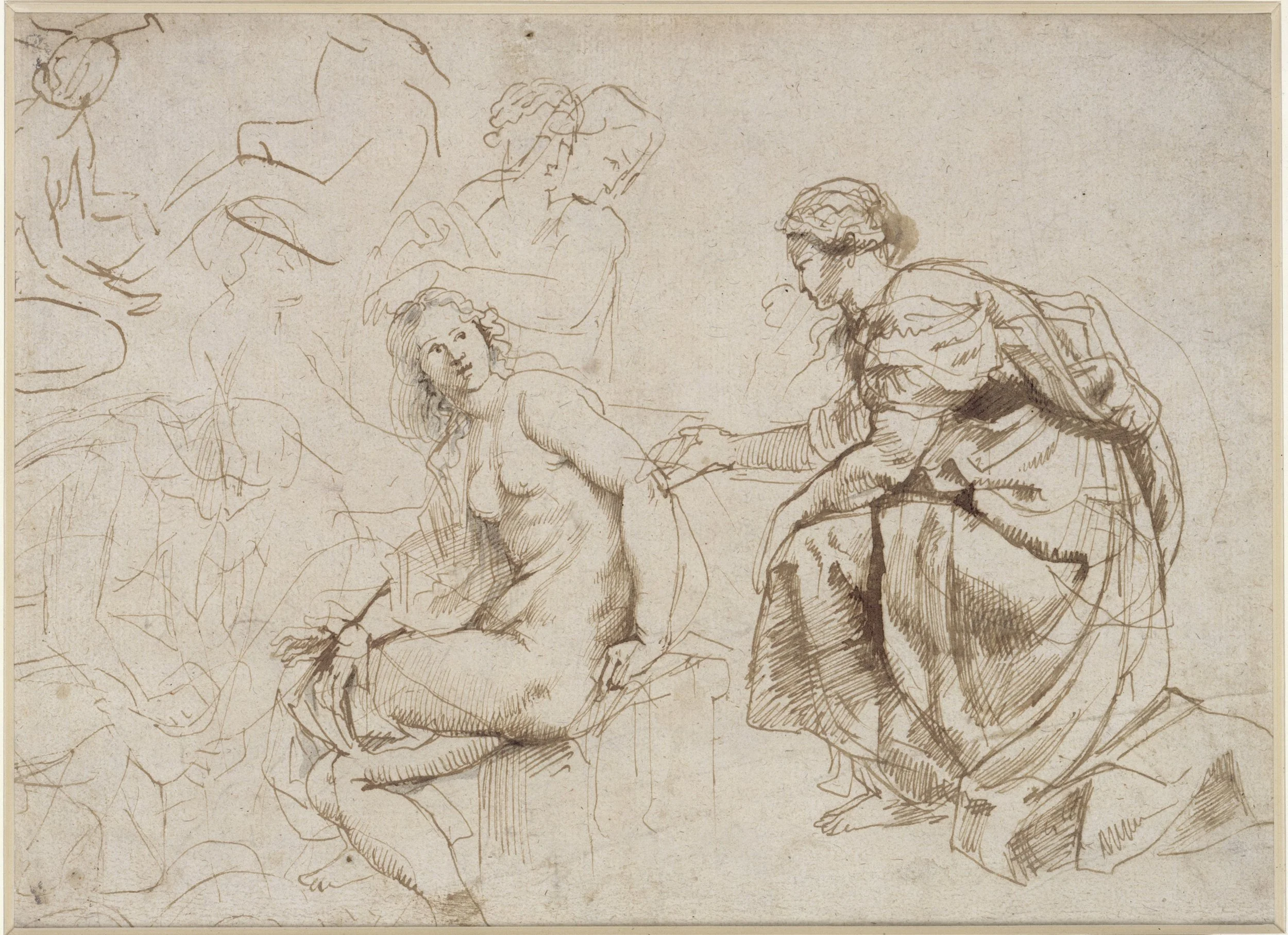
Peter Paul Rubens (1577–1640), Bathsheba Receives David's letter, Kupferstichkabinett, Staatliche Museen zu Berlin, Berlin, inv. KdZ 5397. Credit: Staatliche Museen zu Berlin, Kupferstichkabinett / Dietmar Katz Public Domain Mark 1.0
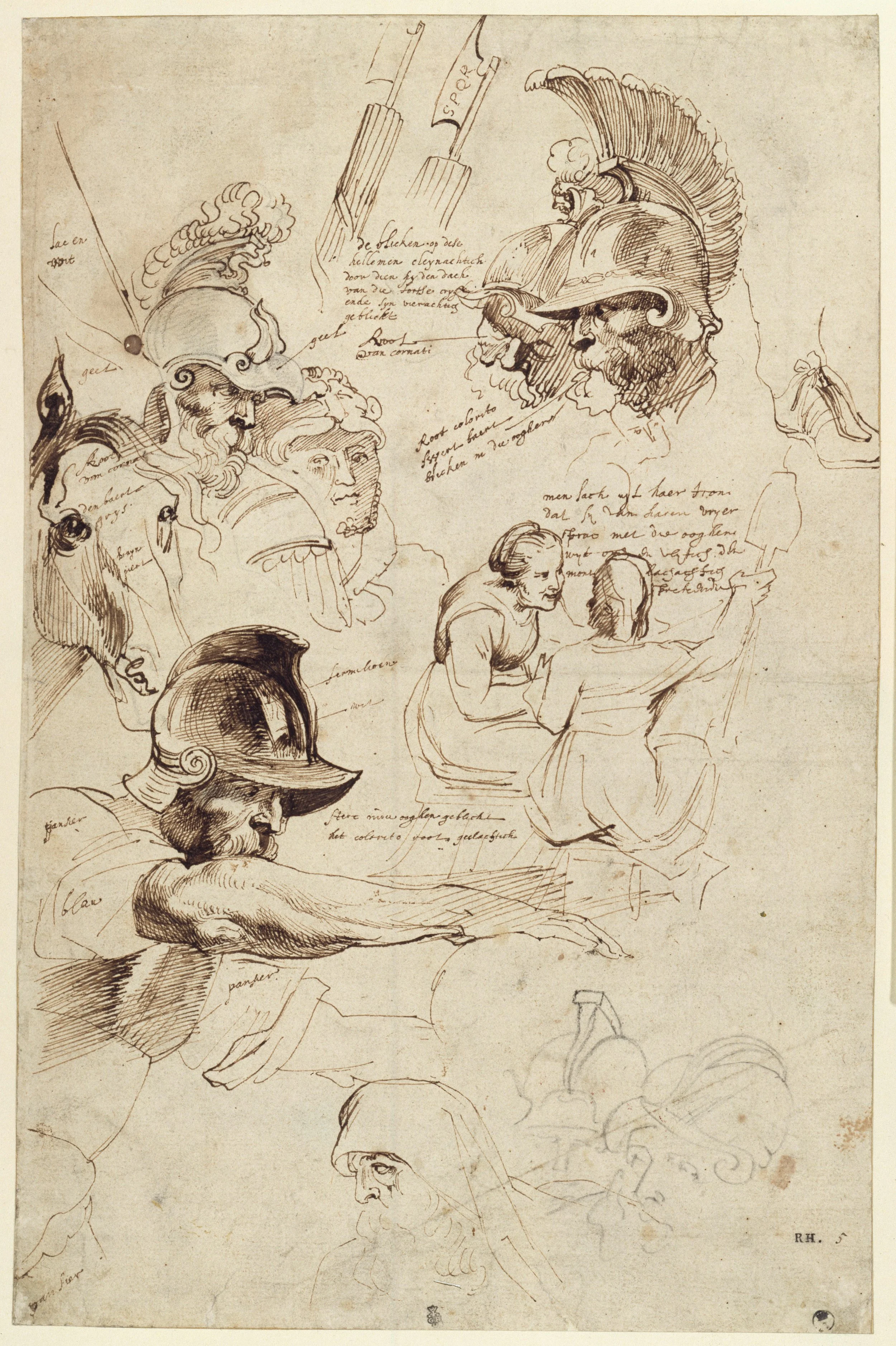
Anthony van Dyck (1599–1641), Sketch after Rubens' Painting in Munich: The Martyrdom of St. Lawrence, Staatliche Museen zu Berlin, Kupferstichkabinett, inv. KdZ 5686. Credit: Staatliche Museen zu Berlin, Kupferstichkabinett / Jörg P. Anders Public Domain Mark 1.0
In recent years, there have been several major Flemish drawing exhibitions across institutions like the Ashmolean, the British Museum, and the upcoming shows at the Courtauld Gallery and Rijksmuseum. What prompted the Kupferstichkabinett to return to the collection after fifty years? How has this revived interest affected your own research and exhibition presentation; and how have art historical perspectives evolved since the Kupferstichkabinett’s last exhibition in the 1970s.
For many years, the focus in Berlin has been on Dutch drawings, which is why I felt it was time for me to turn my attention to our Flemish drawings, make them available online and bring the documentation up to date with the latest research. Matthias Winner and Hans Mielke’s 1977 catalogue raisonné of Rubens’ drawings in Berlin by is, of course, excellent and continues to serve as an important reference work, but research into Rubens has advanced considerably with the Corpus Rubenianum, the most recent catalogues raisonné by Anne-Marie Logan and Kristin Lohse Belkin and several exhibition catalogues. There is a wealth of knowledge about Rubens’s drawings and many of ours have been loaned to various museums for major exhibitions. I would now like to finally display them here on site again. The same is true for Jan Brueghel the Elder and Anthony van Dyck. I am also very pleased that we are able to exhibit most of our Jordaens drawings. He is a fantastic draughtsman and a rediscovery for me too. Apart from two or three isolated exceptions, his drawings have never been exhibited in Berlin on such a scale before. There is certainly something surprising about seeing so much colour in old master drawings.
In times of tight budgets, we too are encouraged to organise exhibitions that attract a broad lay audience; big names such as Rubens, Jordaens and van Dyck are well known and can help to encourage people to visit the museum. Next year marks Rubens’s anniversary, so we’re getting a head start – and perhaps rightly so, given that Nils Büttner has suggested 1576 as a possible year of birth for Rubens in his research. This is not an exhibition based on many years of research for a collection catalogue or devoted to a specific research question – and in this respect, it differs from projects such as those at the Courtauld Gallery or the British Museum which are based on many years of thorough research – but rather an exhibition aimed at the general public which seeks to showcase our treasures. For this reason, the catalogue of just 100 pages is intended to accompany a walk through the exhibition rather than serve as a scholarly publication.
Although questions of attribution remain important (the 1977 exhibition catalogue was entitled ‘Originals, Circle, Copies’), they are by no means the only questions. Other aspects, such as workshop contexts, collaboration or the functions of drawings now play a more important role. To give an example: The portrait study of a lady, which was previously attributed to van Dyck, was rejected by Stijn Alsteens in his catalogue The Anatomy of Portraiture (2016) and classified as a copy after a painting by van Dyck. However, the drawing is of such quality that I decided to display it, despite its anonymity, alongside a portrait sketch of King Charles I of England on horseback by the artist’s own hand. In addition, an early sketch by van Dyck is on display in which he himself copies figures from a painting by Rubens and adds notes about colour, lighting and poses. This illustrates how artists mutually influence and inspire one another, how they experiment and adapt ideas to suit their own purposes. These drawings illustrate the creative process.
Last year, as part of the collaboration between the Prussian Cultural Heritage Foundation (Stiftung Preußischer Kulturbesitz) and the Gardens, Libraries and Museums of the University of Oxford, I was able to explore the drawing collections at the Ashmolean Museum and the Kupferstichkabinett in Berlin together with An van Camp. I saw and learnt a lot in the process; it was a real pleasure to look at the drawings together and we also discussed the selection for this exhibition. Nils Büttner also visits the Kupferstichkabinett regularly. In my view, working on the permanent collection has become much more collaborative; today it’s all about working together, looking at things together, discussing, exchanging ideas and, ultimately, inspiring the audience. Remarkably, this is reflected in the concept of the artists’ network, which features in the exhibition.
Did the research process yield any surprises, or lead to any discoveries that are being presented to the public for the first time?
It was great fun exploring the Flemish holdings of the Kupferstichkabinett. In the end, however, I unfortunately had to limit myself to between 100 and 110 works, as the exhibition space simply cannot accommodate more. In the so-called ‘Zweite Garnitur’, for example, I found a study of a dog that can be attributed to Frans Snyders, but which did not make it into the exhibition.
I made a wonderful discovery in the album (Stammbuch) of the Braunschweig publisher Gottfried Müller. He travelled several times to the Netherlands between 1616 and 1618 and had various artists fill the pages of his album. Some entries are dated, some are signed, sometimes Müller added the names himself which makes it possible to determine the cities he visited. Whilst leafing through the book, I came across a page that partially reproduces a drawing by Jan Brueghel the Elder depicting a bustling village street, from the collection of the Kupferstichkabinett. The Brueghel drawing can now be dated to before 1618, by that time Müller had returned from the Netherlands at the latest. The drawing in the album is a fine copy in brown pen and blue wash, perhaps by a workshop assistant. He (or she) must definitely have had our Brueghel drawing at hand. The landscape format was adapted to the almost square page size of the book, a few details such as the pecking hens were adjusted, other minor elements such as a dog wagging its tail were omitted. Two seated figures in the left margin were added to balance the slightly modified composition. It is certainly interesting to imagine Müller asking for a drawing for his album in Brueghel’s Antwerp workshop, and perhaps even choosing a subject himself, which an assistant would then execute as closely as possible to the original. Both the page of the book with the copy and the original drawing are now on display together.
Further connections have emerged within the collection, such as between a study of a nude woman by Jordaens and his composition sketch depicting Venus mourning the dead Adonis. The goddess of beauty has almost the same pose and body proportions as the figure study. Both are displayed side by side now.
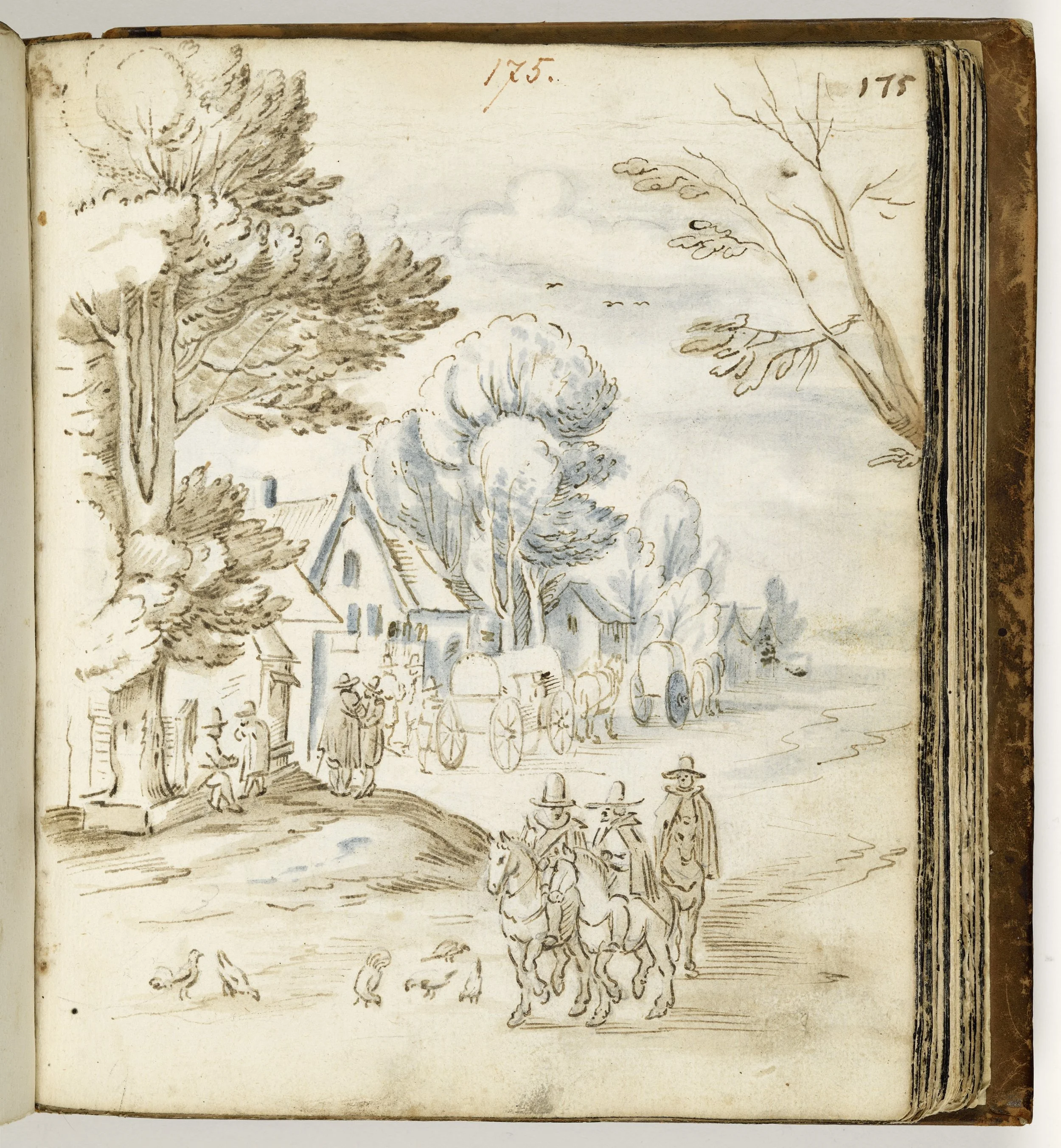
after Jan Brueghel the Elder (1568–1625), Busy Village Street. From the Stammbuch of Gottfried Müller, Kupferstichkabinett, Staatliche Museen zu Berlin, Berlin, inv. 79 A 8, fol. 175. Credit: Staatliche Museen zu Berlin, Kupferstichkabinett / Dietmar Katz Public Domain Mark 1.0
Was there a conservation campaign that formed part of the exhibition preparation? If so, what were the most significant or unusual discoveries to emerge from the process?
In the preparation for the exhibition only the usual measures were taken by my colleague, conservator Antje Penz, to make the drawings suitable for display; no in-depth material analyses were carried out. However, some sheets were removed from their old passe-partouts, all the watermarks were documented – including two different elephants, featuring in a drawing by Verhaecht and Rubens and a curious cuttlefish watermark in a sheet by Teniers. Some of the fragile van Dyck drawings in iron gall ink required stabilisation. However, whilst removing the drawings from their old mounts, we did make two discoveries that have not been documented so far: on the reverse of Jacob Jordaens’ The Feast of the Bean King, a sketch in black chalk depicting figures bathing came to light. On the reverse of another drawing by Jordaens, depicting a kneeling apostle for his Assumption of the Virgin (Museum of Fine Arts, Ghent), we found a rough sketch in chalk and purple brushstrokes showing (cropped) figures.
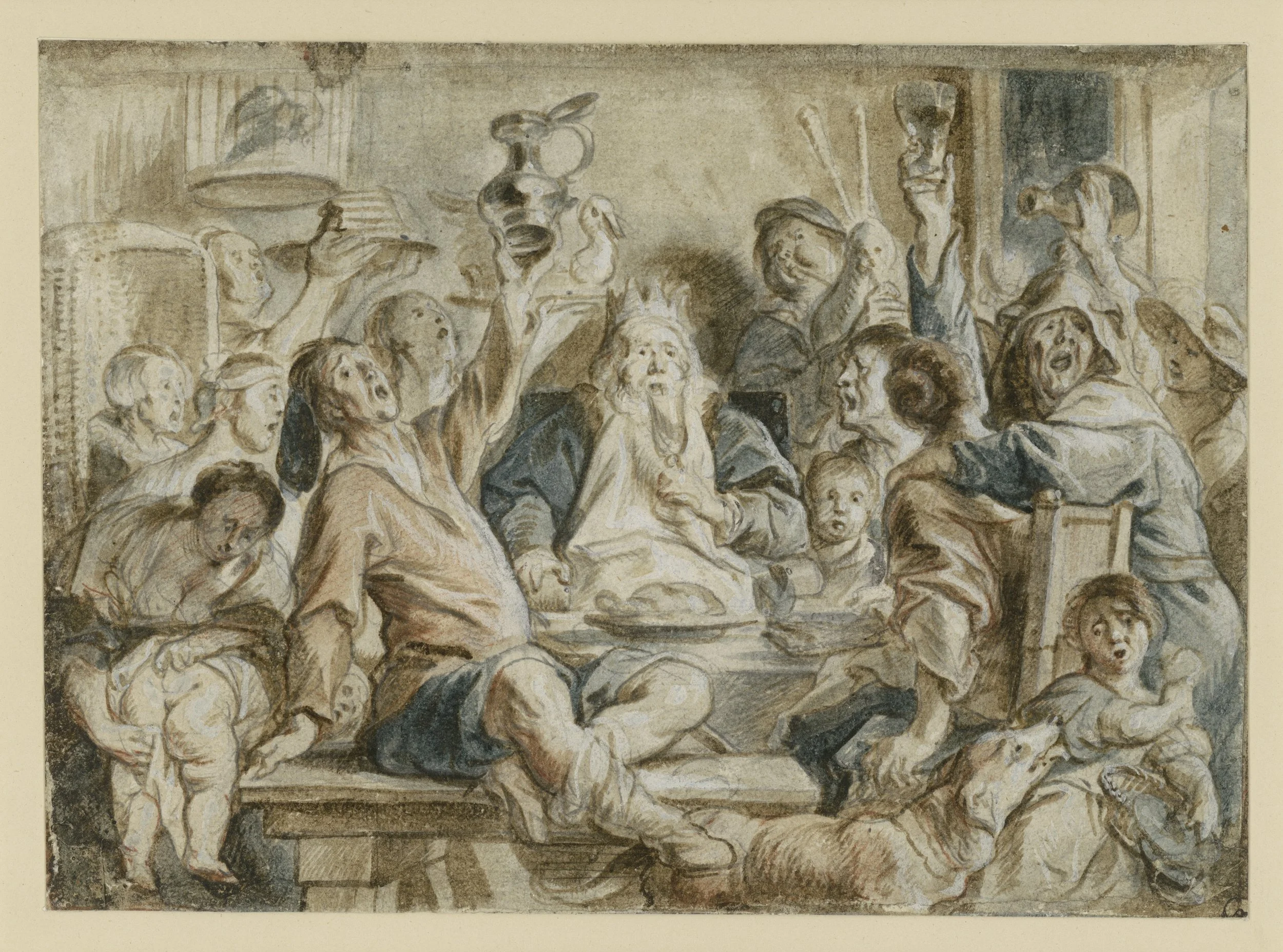
Jacob Jordaens (1593–1678), The Feast of the Bean King, Staatliche Museen zu Berlin, Berlin, inv. Kdz 2821. Credit: Staatliche Museen zu Berlin, Kupferstichkabinett / Dietmar Katz Public Domain Mark 1.0
The exhibition places Rubens alongside his teachers, pupils, rivals, and engravers, such as van Dyck and Jordaens. How does the selection of drawings illustrate the collaborative and at times competitive nature of the seventeenth-century Antwerp workshop system? Which other artists emerge as stars in their own right in this show?
The collections in Berlin are outstanding, which is a real privilege for me. Their wealth has enabled me to select several drawings from a larger corpus of works by many artists, so that one really gets a sense of the diversity even within a single artist’s oeuvre. Whilst Rubens is undoubtedly the dominant artistic figure, it nonetheless becomes clear that many of the draughtsmen have a very distinctive style of their own. Jordaens and Teniers have an unmistakable style, whilst Theodor Rombouts is far more influenced by his time in Italy than by Rubens. The Brussels landscape painters drew inspiration from Brueghel, Vinckboons and Coninxloo – besides Rubens. It is important to me that, alongside the great, well-known masters, lesser-known artists are also represented in the exhibition with a couple of works each: Abraham van Diepenbeeck with his characteristic drawings heightened with opaque white and figures, which are very reminiscent of Rubens, Pieter de Jode with his detailed preparatory drawings for engravings, Adriaen Brouwer with his quickly sketched, witty figure studies, Lucas van Uden, whose work has been overlooked by researchers, with his calm, idealised watercolour landscapes that seem to stretch far into the distance and certainly met a demand – the exhibition really does offer a wide range of themes, techniques and approaches to drawing.
Furthermore, the exhibition texts and labels repeatedly refer to collaborations between different artists. In addition, our design team has created a wall graphic that illustrates the relationships between the artists through a complex network: apprenticeship, collaboration and kinship. As already mentioned, the spatial design is open, allowing views through, forward and backward to other sections which establish connections between the individuals and the works. It is not easy to bring this complex structure to life in an exhibition that visitors walk through from start to finish – especially as the drawings rarely show direct collaboration, such as a painting created jointly by Rubens and Brueghel. Much of it has to be simplified and condensed, but I think we can still convey an impression of this incredibly productive cultural space.
The Counter-Reformation, globalisation and political turmoil of the Eighty Years’ War (1568–1648) are linked with the rise of a prosperous, bourgeois class in Antwerp and the growth of the Flemish Baroque. How did this blend of expanding commercial wealth and geopolitical conflict shape the art of the period – and how is that reflected in the specialised genres on display?
Times were indeed difficult, and the lines of conflict are, in some cases, directly reflected in the works on display. We are exhibiting a map in the shape of a lion (Leo Belgicus) by Frans Hogenberg, bound into a book on the history and topography of the Netherlands. The book, written by the Austrian scholar Michael II. Freiherr von Aitzing – nobleman, devout Catholic and loyal supporter of the Spanish Crown – documents the Dutch revolt against Spanish rule. Dated 1583, the map is the oldest image of its kind. The coastline of the North Sea forms the contour of the animal’s back, while Antwerp lies at shoulder height. At the beginning of the Eighty Years’ War, the map represented the unity of the northern and southern provinces but it was patriotically reinterpreted over the course of the war and in its various editions.
Two drawings by Sebastian Vrancx, who served as an officer in the Antwerp militia and who is considered the founder of Flemish military painting, show the brutality of war. Against the backdrop of ongoing conflict with Spain, scenes of plundering were especially marketable: One scene depicts the looting of a village, with gruesome details, a composition that has survived in five other versions and was probably produced serially, as well as a study sheet with musketeers handling their weapons.
In other works, the political unrest is present on a subconscious level: A drawing of a sumptuous still life is derived from one of Frans Snyders’ brightly coloured renderings of a pantry, a motif the artist first developed during the peaceful, optimistic period of the Twelve Years’ Truce (1609–21). For seventeenth-century viewers, such an arrangement conveyed not only prosperity and the pleasures of country life, but also the transience of all earthly existence. It shows the abundance of creation and corresponds to poems that glorify peaceful country life.
The rise of the wealthy middle classes is, of course, reflected in works such as Jan Brueghel’s gouache depicting a river landscape, an autograph replica based on a painting of the same size on copper (now in the Galleria Sabauda, Turin). The realistic composition, full of luxuriant vegetation and lively figures, captures the character of his homeland. Brueghel ran a successful workshop that served the growing demand from the bourgeois middle class for small-scale cabinet pictures characterised by a wealth of detail and painterly refinement. The gouache depicts an elegantly dressed couple on the riverbank in the centre – possibly the couple who commissioned the work.
At the same time, preparatory sketches by Rubens are on display, created at the height of his diplomatic career for the Spanish king. The children’s heads on the verso of a study sheet were drawn after the children of his friend Baltahazar Gerbier, a diplomat, painter, and art collector in the service of the duke of Buckingham. They are preparatory studies for two children in the painting Minerva protects Pax from Mars (Peace and War, now in the National Gallery, London), which Rubens gave to King Charles I of England on behalf of Spain to further peace negotiations. These few examples show just how much contemporary history can be reflected even in drawings.
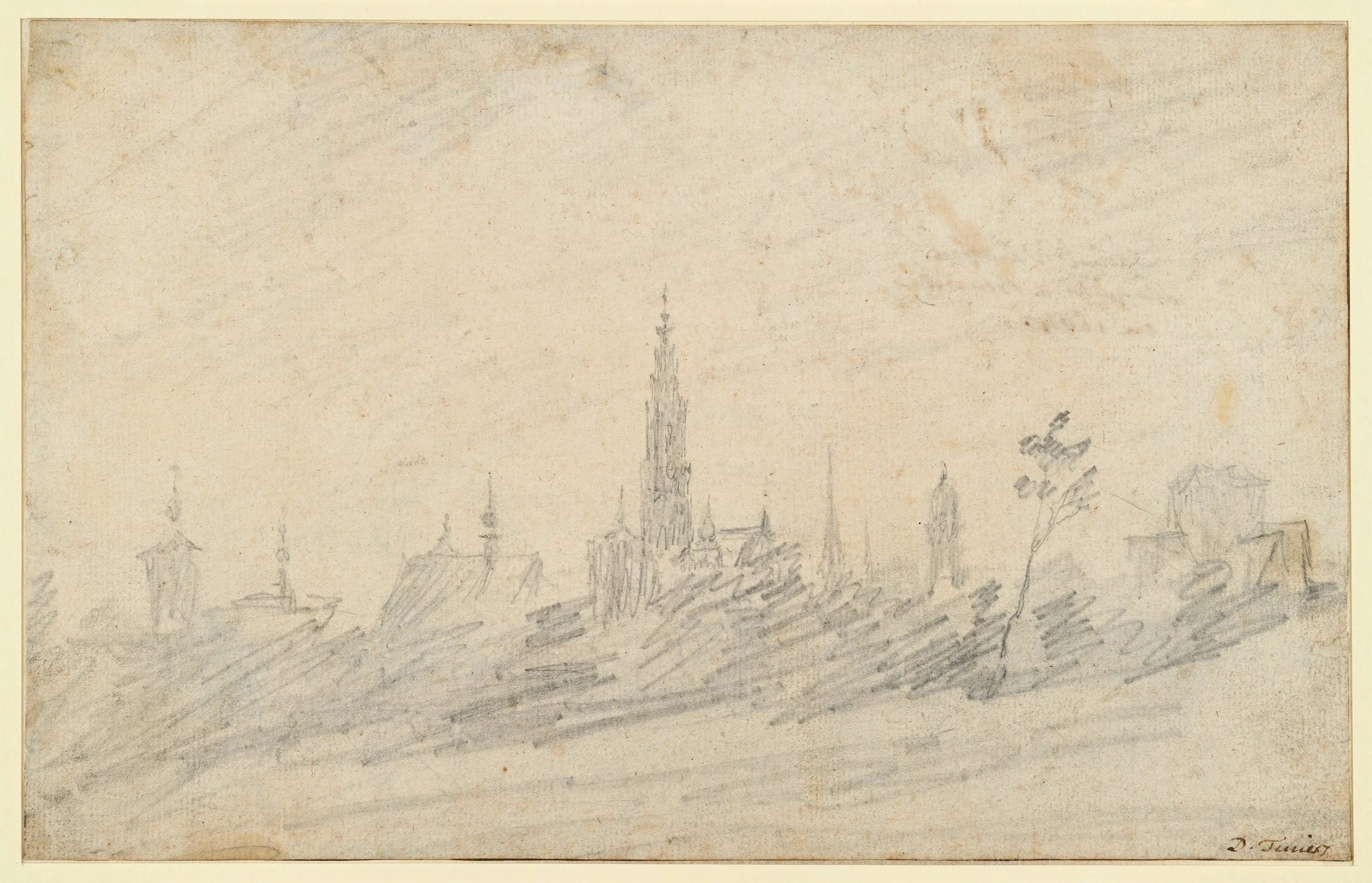
David Teniers the Elder (1610–1690), View of Antwerp, Staatliche Museen zu Berlin, Berlin, inv. Kdz 6414. Credit: Staatliche Museen zu Berlin, Kupferstichkabinett / Dietmar Katz Public Domain Mark 1.0
If you could choose one drawing from the exhibition to take home with you, what would it be and why?
That’s a difficult question, because the more knowledge you acquire, the more interesting even seemingly marginal drawings become. If I could, I’d probably choose several. Jordaens’ coloured designs for tapestries are very tempting, but ultimately, I might just go for Teniers’ View of Antwerp executed in graphite. At the centre of the urban silhouette is the late Gothic north tower of the Cathedral of Our Lady. Despite the rapid, seemingly cursory style of drawing, Teniers’s characterisation of the roofs and towers is marked by accuracy and confidence. It is a marvellous drawing, incredibly fresh and almost impressionistic; the only view of Antwerp by Teniers we know, which he later used as a background for several paintings.
Rubens, Jordaens, van Dyck: Flemish Master Drawings is open at the Kupferstichkabinett – Staatliche Museen zu Berlin, from 10 October – 31 January 2027. The accompanying catalogue is available now.
OCTOBER HIGHLIGHTS
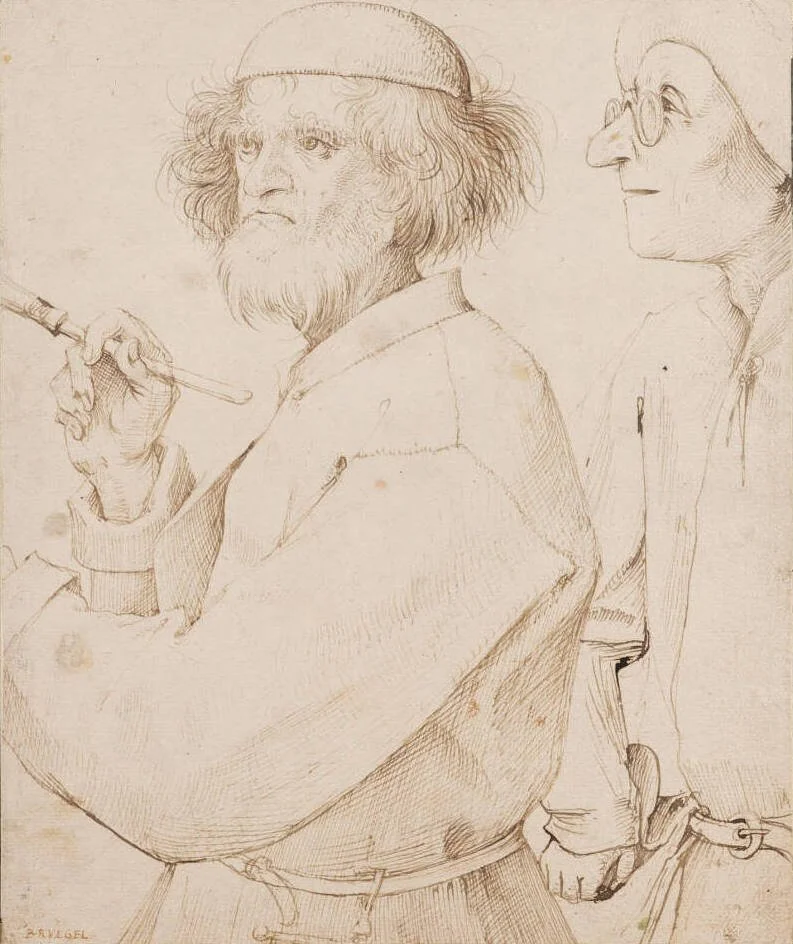
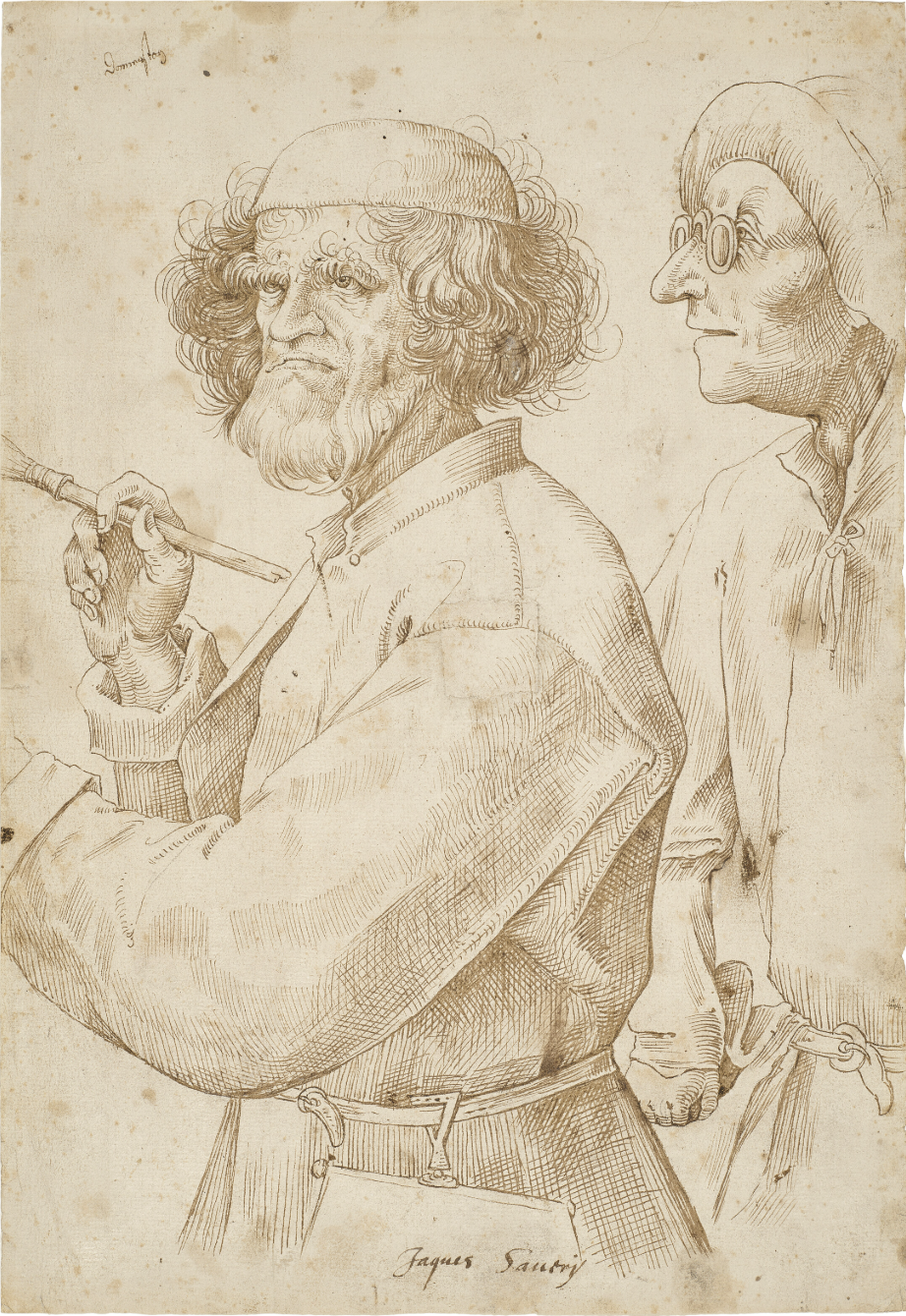
Pieter Bruegel’s The Painter and the Connoisseur is arguably one of the most famous Netherlandish drawings. It depicts a meeting between a ‘modern Apelles’ and a ‘bespectacled pedant’, represented in the satirical vein so beloved in Bruegel’s art. The image was popular and at least four early copies are known. But which of these two drawings is the original and which is the copy?
-
The original is the upper image.
Upper (left) Image: Pieter Bruegel the Elder (1526/27–1569), The Painter and the Connoisseur, c. 1566, Albertina, Vienna, inv. 7500
Lower (right) Image: Netherlandish School, 16th century, The Painter and the Connoisseur, after Pieter Bruegel, Christie’s, New York, 1 February 2024, lot 70Drawn around 1566, towards the end of Bruegel’s career, The Painter and the Connoisseur swiftly became a popular image and at least four early copies are known. The original is now held at the Albertina in Vienna, while the copy illustrated here was offered at Christie’s in 2024. The copy is an extremely faithful reproduction, showing little personal style. It is inscribed with the name of the Flemish artist Jacob Savery (1565/67–1603), to whom the drawing has been attributed. Savery was a landscapist who produced small landscape drawings in the style of Bruegel, some of which have been identified as forgeries on account of their false Bruegel signatures.
A further copy in the Stichting P. and N. de Boer in Amsterdam is believed to be by Jacob Hoefnagel (1575–1630). Additional copies are at the British Museum in London, and in a private collection.
In this episode of the Albertina’s podcast Long Ears, Felix von Boehm joins art historian and curator Michael Peppiatt to discuss Francis Bacon’s lifelong fascination with Pablo Picasso. Drawing on his thirty-year friendship with Bacon, Peppiatt explores how Picasso inspired the artist to radically reshape the human figure. The conversation reveals the desire, vulnerability, and surprising warmth behind Bacon’s intensely visceral art, taking the exhibition PICASSO – BACON as their starting point
Tom Richards, Director of the Florence Academy of Art, gives an artist’s view of what makes a drawing in this 2022 lecture. Through frequent reference to historical drawings, from Leonardo to Sargent, the talk provides an overview of the terms, materials, functions, techniques and formats frequently encountered in the Old Master drawings field.
Writing for British Art Studies (April 2017), Martin Myrone examines the British Museum’s opening of the Townley Gallery to art students from 1808. Based on an analysis of the 1809–17 student attendance register, presented alongside a full transcription and directory, Myrone argues that while this access was framed as a victory for liberal public education, it ultimately served to further entrench the middle-class dominance of art training.