The divine Raphael has arrived at the Metropolitan Museum in New York and Spring is in the air. The advent of La Primavera is accompanied by a hive of activity across the museum world, including the opening of the British Museum’s much-anticipated exhibition on fifteenth- and sixteenth-century Netherlandish drawings on 16 April, the National Gallery of Ireland’s exhibition on William Blake, which opens the same day, and the Staatsgalerie Stuttgart’s exhibition on drawing at the Royal Academy in Paris around 1700, opening on 17 April. Coinciding with the Raphael exhibition, the Met will also present a second show, Gothic by Design: The Dawn of Architectural Draftsmanship, which offers a fitting counterpoint to the British Museum’s display, and the Musée du Louvre’s exhibition on Martin Schongauer, one of the most popular Germanic artists of the late Middle Ages, which opens on 8 April. Academic circles are equally active in April, with significant symposia taking place in Geneva, focusing on fifteenth- and sixteenth-century French drawings, and in New York, centred on Raphael. By contrast, the drawings market draws its breath after a long month which included the major fairs of TEFAF Maastricht and the Salon du Dessin. Many thanks to all who joined us in Paris for an evening of conviviality and community, and to our kind collaborators for the event, Bella Maniera.
Keen-eyed readers will have noticed that we have launched a revitalised website in recent days. The update includes an ‘Archive’ of all back-issues and features from the newsletter and magazine, a ‘Drawings Hub’ dedicated to Trois Crayons’ programming, a ‘What’s On’ section for the global drawings calendar, and a ‘Submission Form’ for readers’ news and forthcoming events.
Turning to this month’s magazine, we have news headlines, gallery listings, announcements, events and an overview of recent institutional acquisitions. For our Drawing of the Month, Jane Simpkiss, curator of Bruegel to Rembrandt: Drawing Life, Sketching Wonder, shares a personal highlight from the exhibition at Compton Verney. In the Review section, Emma P. Holter visits Drawn to Venice at the Legion of Honor, San Francisco. After the month’s exhibition listings and the Real or Fake quiz, the issue concludes with a trio of audio, video and literary recommendations.
For next month’s edition, please direct any recommendations, news stories, feedback or event listings to tom@troiscrayons.art.
IN GALLERY, ART FAIR AND AUCTION NEWS
Until 2 April: 'Pose': Artists and Models at Philip Mould & Company (London).
Until 4 April: Léonard Sarluis – Singulier Symboliste presented by Caroline Thieffry – Artwins & Mathieu Néouze at Galerie Ambroise Duchemin (Paris).
Until 9 April: François Edouard Bertin 1797-1871. Le “Poussin Voyager” - Dessins at Galerie Christian Le Serbon (Paris).
9 April – 6 June: The Nabi Shock at Waddington Custot (Paris).
10–12 April: IFPDA Print Fair at Park Avenue Armory (New York).
11 April – 6 June: Giuseppe Varotti - Paintings, Drawings, and Oils on Paper at Galleria de’ Fusari (Bologna).
15 April: Old Master & 19th Century Paintings Online at Sotheby’s (London). 12:00.
15 April: Radical Genius: Works on Paper from A Distinguished Private Collection at Christie’s (Paris). 16:00.
16 April – 23 June: Drawing Biennial 2026 at The Drawing Room (London).
Until 25 April: Édouard Vuillard: Early Interiors at Skarstedt (New York).
Until 29 May: Tableaux & Dessins du XVIe au XXe Siècle at Galerie Alexis Bordes (Paris).
IN LECTURE AND EVENT NEWS
8–10 April – Conference: For Art History 2026 Annual Conference at the University of Cambridge (Cambridge). 08:30. £115–£430.
17–18 April – Conference: Peindre en France: trente ans de recherche sur le dessin des XV°-XVIe siècles at the Musée d'art et d'histoire (Geneva), 13:30 (day one); 09:00 (day two). Free entry.
18 April – Symposium: Raphael Up Close: Perspectives on Research at the Metropolitan Museum of Art (New York). 10:30. Free with museum admission. Advance registration required.
18 April – Talk: The Drawings of Edward Burne-Jones: Form and Function Lecture at Birmingham and Midland Institute (Birmingham). 11:30. Organised by the Pre-Raphaelite Society. £11 (general public); £9 (members).
23 April – Talk: Early Netherlandish drawings: materials and techniques at the British Museum (London). Speakers: Olenka Horbatsch, Charlotte Wytema. 13:30. Free. Advance registration required.
24 April – Talk: Michaelina Wautier at the Royal Academy of Arts (London). Speaker: Julien Domercq. 11:00. £15.
25 April – Study Event: Seurat’s Seascapes: Dr Karen Serres and Dr Anne Puetz in Conversation at the Courtauld, Vernon Square (London). Speakers: Dr Karen Serres, Dr Anne Puetz. 10:30. £65 (in-person); £10 (online).
29 April – Lecture: French Ornament in the Nineteenth Century; A lecture duet by Ralph Ghoche and Estelle Thibaultat Bard Graduate Center Gallery (New York). Speakers: Ralph Ghoche, Estelle Thibault. 18:00. Organised by The Drawing Foundation. $15 (general public); free for members.
IN LITERARY, MUSEUM AND ACADEMIC NEWS
Call for Papers: La taille et le trait. Dialogues entre dessin et estampe (XVe-XVIIIe siècle) at Bibliothèque nationale de France, Paris. Application deadline: 3 April. Conference dates: 18–19 November.
Conference Announcement: Location, Location, Location: Artistic Procedures, Knowledge, and Place in Early Modern Netherlandish Art, the Center for Netherlandish Art Annual Colloquium 2026 at MFA Boston. Conference date: 15 May. In-person and online.
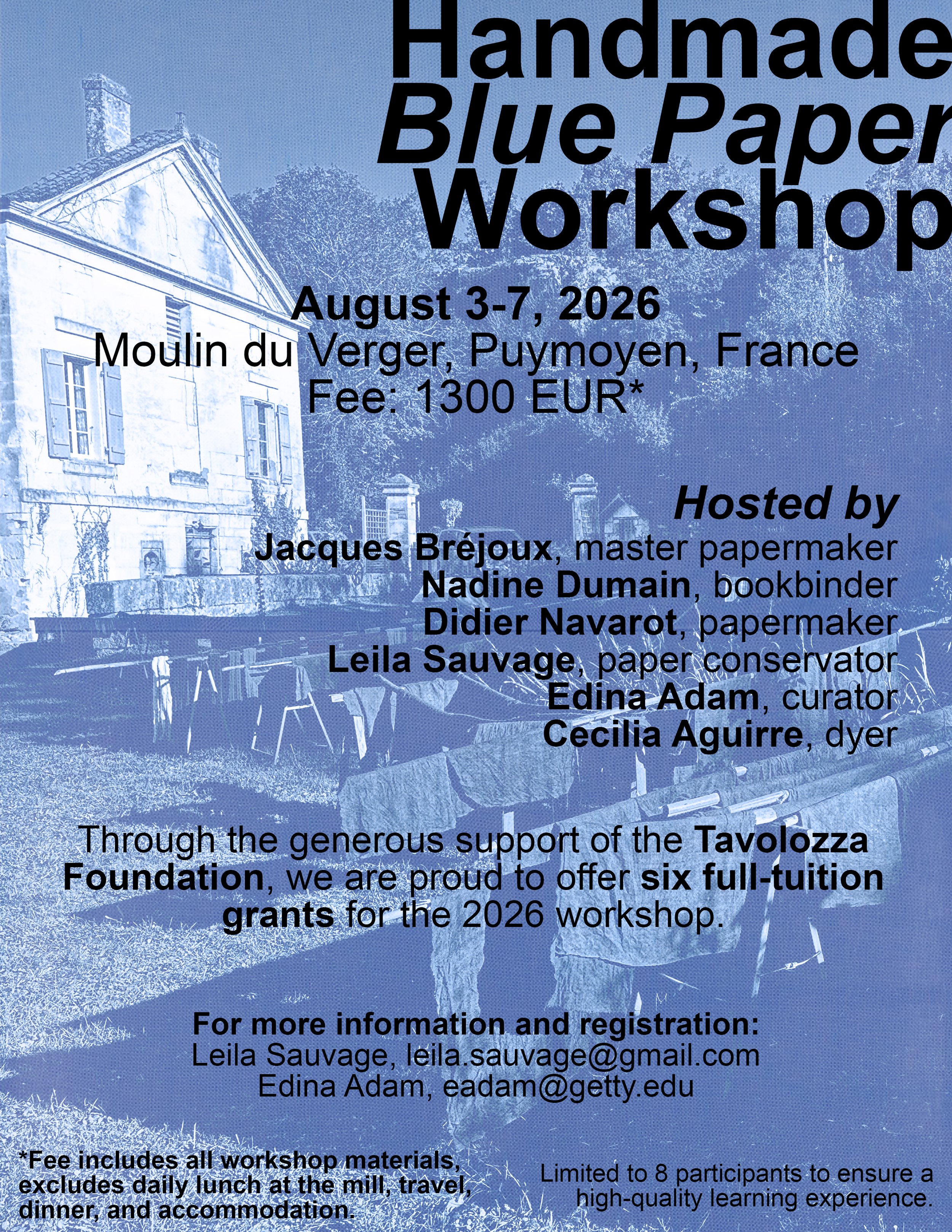
Call for Applications: Handmade Blue Paper Workshop. The Blue Paper Research Consortium invites applications for their summer workshop in traditional blue paper making methods at the Moulin de Verger, Puymoyen, France. Cost: €1300. Six full-tuition grants are also made possible thanks to the Tavolozza Foundation. To apply, please send a CV and motivation letter to: Leila Sauvage (leila.sauvage@gmail.com) and Edina Adam (eadam@getty.edu) with the subject line “Blue Paper Workshop Grant Application”. Workshop dates: 3–7 August.
Prize: Prix JRC. Organised by Bella Maniera. Prize: €4000. For the support of a research project on French or Italian drawings, from the 15th to the 19th century. Application deadline: 11 May.
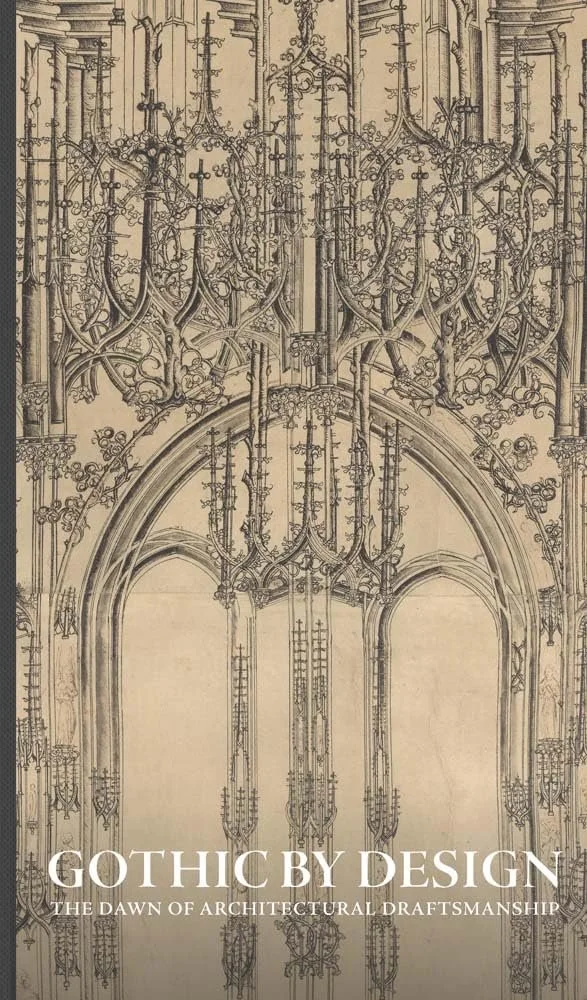
New Publication: Gothic by Design: The Dawn of Architectural Draftsmanship by Femke Speelberg. Published 14 April by the Metropolitan Museum of Art, distributed by Yale University Press. £30.
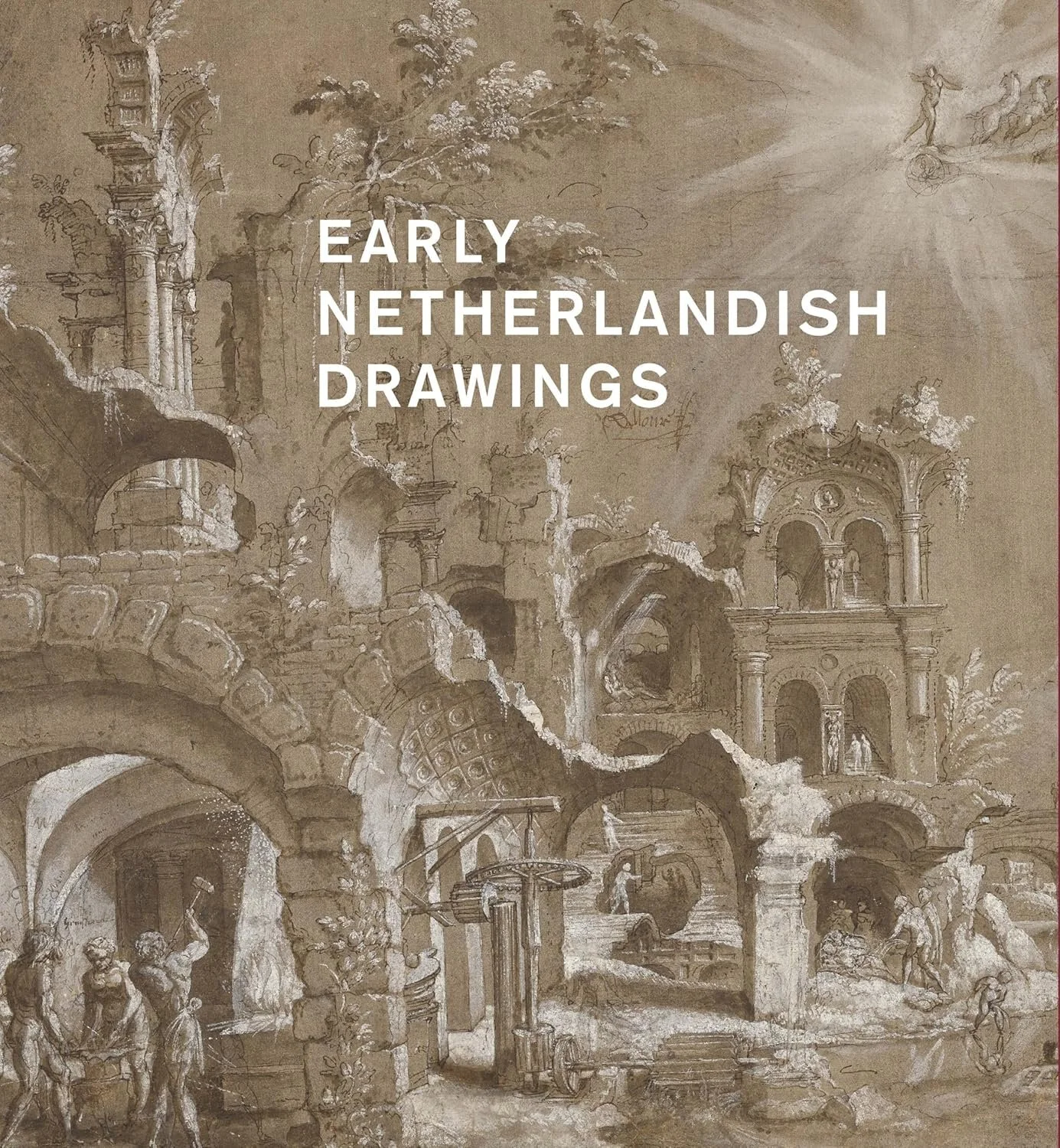
New Publication: Early Netherlandish drawings, 1400–1600 by Olenka Horbatsch and Charlotte Wytema. Published by British Museum Press. £40.
New Publication: Félix Vallotton illustrateur: Catalogue raisonné by Katia Poletti, Sarah Burkhalter and Nadine Franci. Freely accessible on the Fondation Felix Valotton website.
Job Opportunity: Restorer at the Kupferstichkabinett, Berlin. Application deadline: 7 April.

Anna Waser (1678–1714), Half length portrait of a Young Black Man, 1704. Photo: National Gallery of Art, Ailsa Mellon Bruce Fund and Courtesy of Raccard 6, 2025.52.1
IN ACQUISITION NEWS
Hans Baldung Grien (1484–1545), Portrait of Susanna Pfeffinger. The drawing has been declared a national treasure by the French Ministry of Culture and its scheduled sale at the auctioneers Beaussant Lefèvre & Associés in Paris has been postponed. A temporary export ban of 30-months will allow the sellers to seek a domestic buyer.
Annibale Carracci (1560–1609), Putto ailé, préparatoire pour la voûte du Palais Farnèse à Rome. Acquired by the Fondation Custodia, Paris, from Christie’s, Paris (sale: 25 March 2026).
Studio of Peter Paul Rubens (1577–1640), Study for the Mystic Marriage of St Catherine. Acquired by the Museum de Reede, Antwerp, from Galerie Lowet de Wotrenge, Antwerp.
Jean-Michel Moreau, le Jeune (1741–1814), Le Festin Royal ; et Le Bal masqué. Pre-empted by the Musée national du Château de Versailles, Versailles, from the Veil-Picard sale at Christie’s, Paris (sale: 25 March 2026).
Jean-Michel Moreau, le Jeune (1741–1814), L'Arrivée de la reine à l'Hôtel de Ville ; et Le Feu d'artifice. Pre-empted by the Musée national du Château de Versailles, Versailles, from the Veil-Picard sale at Christie’s, Paris (sale: 25 March 2026).
The Morgan Library & Museum, New York, has announced its recent acquisitions honouring the institution’s centennial in a supplement to the March issue of The Burlington Magazine. The article features several drawings, including:
Parmigianino (1503–1540), Study of the dead Christ, for a Pietà. Promised gift of Roberta J.M. Olson and Alexander B.V. Johnson in honor of the Morgan’s centennial.
Hendrick Goltzius (1558–1617), Callisto’s pregnancy revealed to Diana. Promised gift of Clement C. and Elizabeth Y. Moore.
Guercino (1591–1666), Two female saints in prayer. Promised gift of Alyce Williams Toonk in honor of the Morgan’s centennial.
Rembrandt (1606–1669), Study for Judas returning the thirty pieces of silver. Promised gift of Elizabeth and Jean-Marie Eveillard.
Charles-Antoine Coypel (1694–1752), Self-portrait as an abbé. Promised gift of Colin B. Bailey and Alan P. Wintermute in honor of the Morgan’s centennial.
The National Gallery of Art, Washington, has published its recent acquisitions. The announcement features several drawings, including:
Teresa del Pò (1649–1716), Penitent Magdalene, 1675.
Anna Waser (1678–1714), Half-Length Portrait of a Young Black Man, 1704.
Carl Frederick von Saltza (1858–1905), Portrait Study of Pierre Louis Alexandre, c. 1890.
The Rijksmuseum, Amsterdam, has added several recent acquisitions and gifts to its online collection catalogue, including:
Anonymous c. 1560 – c. 1600, Design for the back of a breastplate, with helmeted female figures with palm branches and shields. Gift from Jaap and Marianne Kraaijenhagen-Jaski on the occasion of Reinier Baarsen's retirement.
Attributed to Johannes Nutges (1717–1777), Image of an interior. Donation by Mr. W. Vroom.
Studio of Luigi Valadier (1726–1785), Design for an Andiron. Donation from Marc Broch and Geert Post, Gouda.
Dutch School c. 1730, Design for a Buffet Cupboard. Donation from Christina van Marle.
Van Blarenberghe family (18th–19th century French school), An album including 52 pages of works on paper: decor projects, character studies and copies after the masters?. Pre-empted by the Musée du Louvre, Paris, from Wattebled & Portay (sale: 31 March 2026).
TEFAF has published a press release, following the conclusion of the Maastricht edition of the fair, which notes several institutional acquisitions. More to follow as additional details are announced.
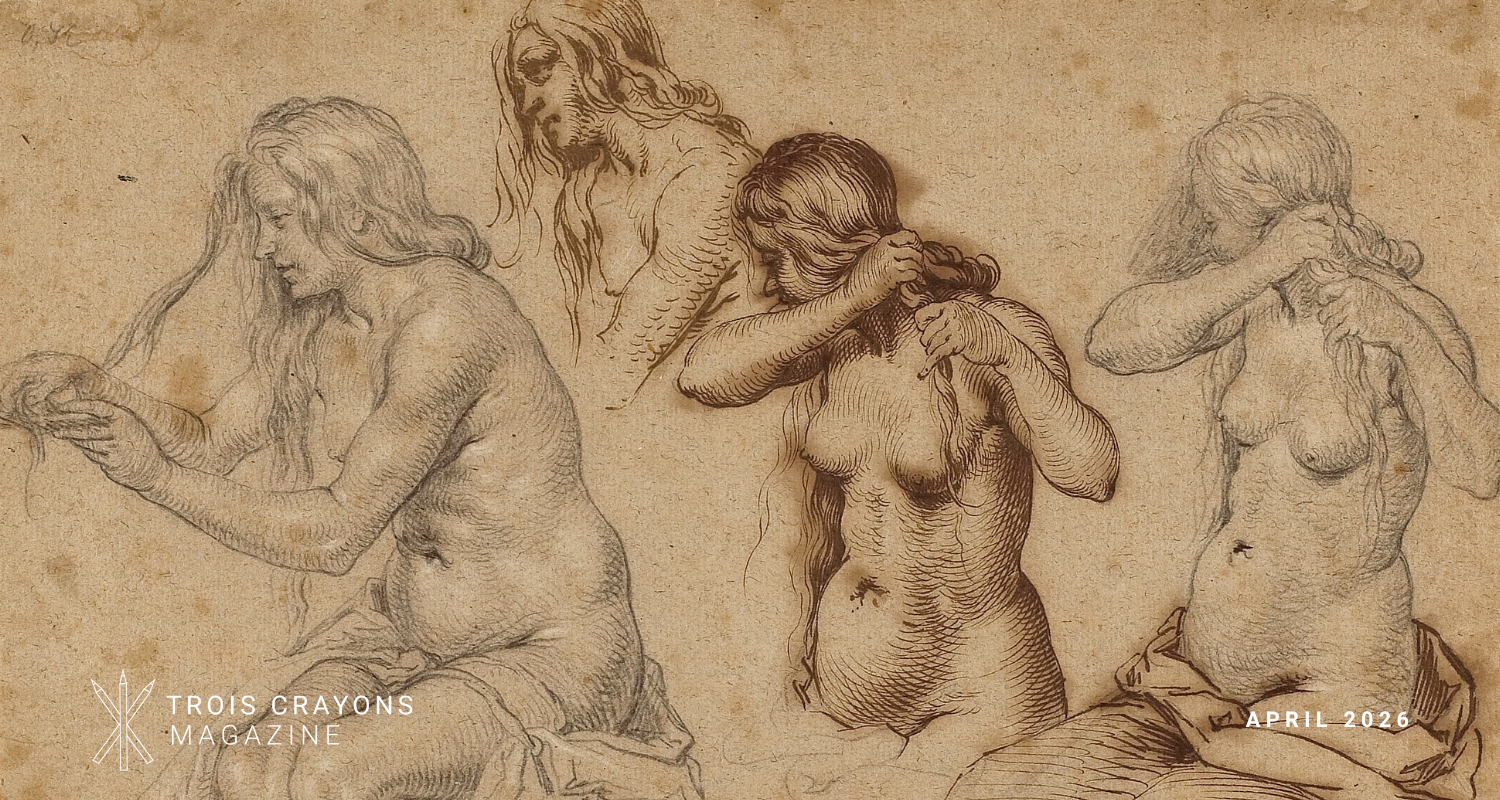
Jacques de Gheyn II (1565–1629)
Four studies of a nude woman combing her hair, 1602–1603
Black chalk, pen and iron gall ink, partly over a first sketch in black chalk, heightened with white chalk on beige-grey coarse-grained paper, 259/263 × 330/335 mm (irregular edges), Royal Museums of Fine Arts of Belgium, Brussels, Inv. 4060/1346
Jacques de Gheyn II (1565–1629), Four studies of a nude woman combing her hair, 1602–1603. Royal Museums of Fine Arts of Belgium, Brussels, inv. no.: 4060/1346
Jane Simpkiss, curator at Compton Verney, Warwickshire, has chosen our drawing of the month.
Time seems to fall away when I look at Jacques de Gheyn II’s (1565–1629) studies of a nude woman combing her hair. It is currently on display in Compton Verney’s latest exhibition Bruegel to Rembrandt: Drawing Life, Sketching Wonder, one of over 65 drawings on loan from the Royal Museum of Fine Arts in Brussels, most of which are in the UK for the first time ever. Whilst these drawings offer visitors a glimpse into the creativity of artists working in the 16th- and 17th-century Netherlands, De Gheyn’s sheet has a universal and timeless quality. Many of us can relate to the intense focus needed when detangling or braiding our hair – this could easily be a woman from today, who has just hopped out of the shower.
Of course, the subject of De Gheyn’s study is not a woman he has stumbled upon during a quiet moment of self-care, but most likely a model who has been staged to allow him to practice sketching from life. Having imbibed the importance of direct observation from his master Hendrick Goltzius (1558–1617), De Gheyn moved away from his earlier decorative, mannerist style and began depicting more realistic figures. The woman here does not appear obviously posed but instead exudes a warmth and simplicity that seems relatable, and her limbs are not elongated or overly muscled and shaped. The model sits naked except for a sheet draped over her lap - the studies are intimate but not eroticised and whilst the artist captures his subject’s quiet focus, he is not a voyeur.
De Gheyn was the first artist in the Northern Netherlands to produce studies of naturalistic nudes, of which this is one, working in this vein from the 1600s onwards. It seems highly probable that the drawings on furthest left and furthest right of this sheet were drawn from life, whilst the two innermost drawings are copies after them respectively, something suggested by the spacing of the drawings on the page.
De Gheyn likely drew the sketch on the furthest left first, then the bust copy, followed by the sketch to the furthest right, finally squeezing in the drawing second from the right. The cross hatching, particularly on the belly and legs, highlights De Gheyn’s familiarity and skill with the techniques of engraving, where cross hatching was often used. De Gheyn experiments with rendering the model’s curves with different materials, starting with softer strokes of black chalk (with white for highlights) and then considering how to evoke the same volume, for both flesh and fabric, with pen and ink, in one instance combining the two in one sketch.
To date, we do not know of any paintings or engravings that these drawings relate to and, therefore, the drawing may have been made for its own sake, as a study or exercise. De Gheyn made several nude studies, some of which undoubtedly represent the same model seen here. This realistic and detailed representation of a domestic scene links back to the art of Albrecht Dürer (1471–1528) and Pieter Bruegel the Elder (c. 1527–1569) as well as prefiguring the naturalism of Rembrandt (1606–1669). Within the exhibition, we have been able to draw an interesting connection between De Gheyn’s work and later depictions by Rembrandt’s followers, including Ferdinand Bol (1616–1680), who were also captivated by intimate scenes of women – one looks in the mirror whilst adjusting an earring, the other stretches amongst a tangle of sheets in bed.
One of the recurring threads running through Bruegel to Rembrandt is the tension that exists between the real and the imagined and how draughtsmen in this period combined their experiences and sketches of the real world with their wide-ranging imagination. De Gheyn’s drawing here feels like the perfect combination of hand, mind and eye. Looking at the drawing, we can easily suspend our disbelief and imagine that rather than a study after an artificial set-up, we are, in fact, catching a rare snapshot of life over 400 years ago, which is testament to the continuity of human nature and experience.
Bruegel to Rembrandt: Drawing Life, Sketching Wonder continues at Compton Verney until 28 June.
THE EARLY NETHERLANDISH DRAWINGS OF THE BRITISH MUSEUM
CURATORS OLENKA HORBATSCH AND CHARLOTTE WYTEMA IN CONVERSATION WITH EDITOR TOM NEVILE
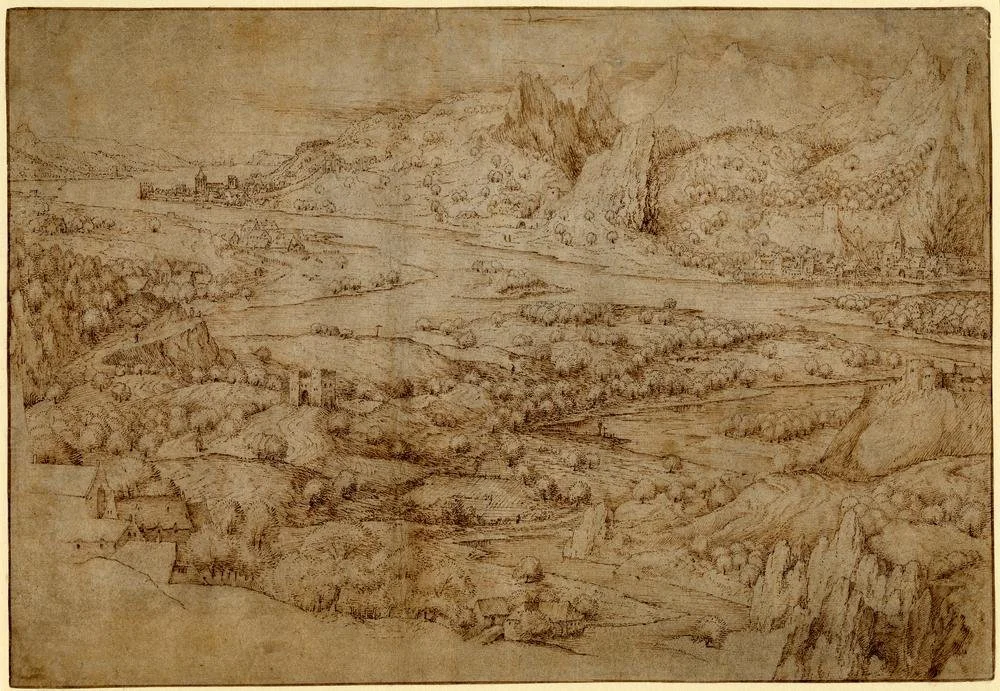
Master of the Mountain Landscapes, Solicitudo Rustica, Alpine landscape with a winding river, study for a print, c.1575–1600. British Museum, London
From 16 April, some 110 drawings from the British Museum’s outstanding collection of early works on paper from the Low Countries go on free public display for the exhibition Early Netherlandish Drawings. The culmination of a five-year research project, the exhibition and its accompanying catalogue chart the development of drawing in the Low Countries before 1600, brilliantly illuminating this still lesser seen area of the Northern Renaissance.
Curators Olenka Horbatsch and Charlotte Wytema join the editor to discuss the history of the collection, the aims of the project and their favourite drawings in the show.
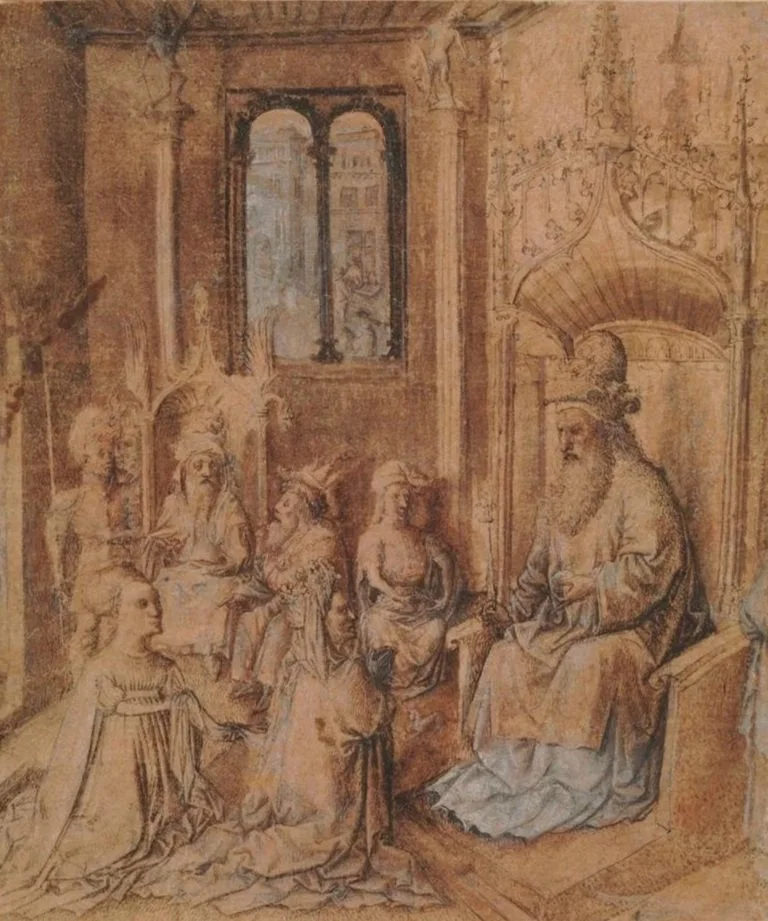
Circle of Barthélemy d’Eyck, Queen Esther before King Ahasuerus, c. 1435–1440. British Museum, London
Could you begin by outlining the scale and scope of the museum’s holdings of fifteenth and sixteenth-century Northern drawings, and explain how these works entered the collection?
This exhibition examines Netherlandish drawings from around 1400 to 1600 from the British Museum. The Museum holds one of the greatest collections of works on paper in the world, which includes around 5,000 Dutch and Flemish drawings, and around 1,200 of these are made before 1600. Highlights include drawings by Rogier van der Weyden and his workshop, as well as Lucas van Leyden, Maarten van Heemskerck, Pieter Bruegel the elder and Hendrick Goltzius. The seventeenth-century collection is much better known, and the drawings of Rembrandt and Rubens are rightly celebrated. By contrast, the pre-1600 drawings have received little attention and have not been systematically researched or catalogued since A.E. Popham’s collection catalogue of 1932. Of course, certain drawings are known individually and have been exhibited more recently, but the material hasn’t been studied collectively until now.
The foundation of the Museum’s rich holdings of Netherlandish drawings goes all the way back to Sir Hans Sloane’s founding bequest of 1753. In addition to an important album of drawings by Albrecht Dürer, this included Netherlandish drawings by Jan Gossart, Jan van Scorel, Jan van der Straet, and Bartholomeus Spranger. Since then, the Museum’s collection has been expanded through gifts, bequests and acquisitions. Richard Payne Knight’s bequest of Old Master drawings in 1824 included landscapes by Pieter Bruegel, Gillis van Valckenborch and Joos de Momper. Historic collections purchased by the Museum further strengthened the Netherlandish holdings: Samuel Woodburn’s in the mid-1800s and Colonel John Wingfield Malcolm’s in 1895 were particularly important in this regard.
From the twentieth century to present day, individual drawings have a been acquired through gifts and purchases. Recent important additions include an early drawing connected to Barthélemy d’Eyck (1420–after 1470) in 1978 and an oil sketch by Joachim van Beuckelaer in 1990. We continue to add to the collection when possible: we acquired a beautiful late landscape drawing by Paul Bril in 2021 (supported by the Ottley Group).

Joachim Beuckelaer, Battle scene (Joshua's battle against the five kings to rescue Gideon). British Museum, London
The collection has not been systematically researched or catalogued since A.E. Popham’s collection catalogue in 1932. What did your own research project involve and what were its wider aims?
We selected a representative group of 180 drawings from the collection of Netherlandish drawings comprising over 1,200 sheets. To write a complete collection catalogue would take several decades! The project aims were to establish the materials and techniques of each drawing, to present the artistic and historic context of each drawing in a catalogue entry, and to address broader questions in thematic essays in the book.
The project was a close collaboration with paper conservation from the outset. We began in the conservation studio, and the group of 180 drawings were examined and evaluated by conservators. They provided up-to-date descriptions of the materials and techniques, watermarks (where present) and condition of each sheet. Where possible, drawings stuck down on historic mounts were lifted. Together, we looked at the sheets in transmitted light, raking light, and under low magnification. Any drawings that showed signs of underdrawing were closely examined under higher magnification, and in some cases, when questions remained unanswered, drawings were put forward for further non-invasive scientific analysis. We co-authored an essay in the book about these approaches to the study of drawings.
The group of 180 drawings is incredibly wide-ranging and required different research approaches. Some have an extensive bibliography, while others are virtually unknown. Examining related drawings in other collections was an important component of our research, alongside traditional art history and picture research. We also investigated related media and unearthed connections with manuscripts, tapestry, sculpture and the decorative and applied arts. Additionally, we invited a handful of scholars to examine the drawings with us and to consult on questions of attribution, dating and function. The catalogue entries incorporate the most up-to-date literature, comparative images and ideas.
The exhibition includes some 110 drawings. What curatorial story does it seek to tell? Around which narrative, thematic, or methodological threads has the display been structured?
The exhibition charts the remarkable development of Netherlandish drawing between 1400 and 1600, from preparatory studies in workshops to works of art in their own right. The early history of Netherlandish drawings can be a somewhat fragmented narrative. Fifteenth-century drawings from the region are extremely rare, for they were not collected in this period and were not typically retained beyond the workshop. The situation changed drastically by the mid-sixteenth century, when almost every artist left behind a considerable group of hundreds if not thousands of sheets. Drawings from this period are also more likely to be signed and dated. We adopted two approaches to exhibiting the drawings to account for this change: first chronological, then thematic.
The drawings from the fifteenth and early sixteenth centuries are exhibited chronologically and contextualised within their function in the workshop. Early drawings were made as part of artistic training in the workshop, to record motifs and compositions, and to design works in other media. A few artists are featured for whom a relatively large number of drawings survive, which allows for an in-depth exploration of their workshop: Rogier van der Weyden in Brussels, Jan de Beer in Antwerp, Lucas van Leyden in Leiden and Bernard van Orley in Brussels.
Thematic sections display new subjects and genres which appear in sixteenth-century Netherlandish drawings. The most typically ‘Netherlandish’ subjects derive from the vernacular tradition of proverbs, folk wisdom and festivals, and artists like Hieronymus Bosch and Pieter Bruegel drew from such themes to amuse and inspire moral reflection from their audiences. Landscape drawings can provide vital records of artists’ movements, from northern Europe to further afield. Italy was an important impetus for Netherlandish artists, and artists who travelled to Rome absorbed Italian artistic methods and fused them with local traditions in innovative ways.
The exhibition also examines drawings made as independent works of art and the rising status of the artist in the Low Countries. Artists like Hendrick Goltzius and Jacques de Gheyn II began to use more luxurious materials in their drawings, such as vellum and gold leaf.
From the earliest drawings made around 1410 in the context of manuscript illumination, to large virtuoso ‘pen works’ made as works of art around 1600, the exhibition explores the full range of drawing in the Low Countries throughout these two transformative centuries.
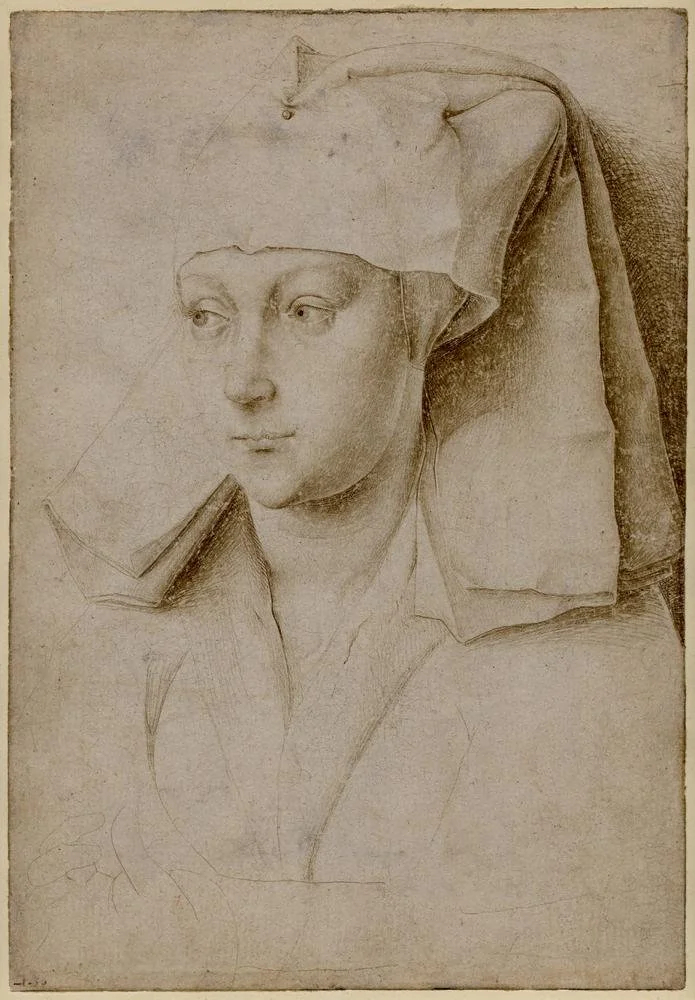
Rogier van der Weyden, Portrait of an unknown young woman, c. 1435–1440. British Museum, London
The conservation campaign was evidently a significant component of the project, uncovering historic mounts, investigating inscriptions, and scanning watermarks. What were the most intriguing discoveries to emerge from this scientific process and how did they help to refine both provenance and attribution?
Scientific analysis has enabled us to place an important group of drawings directly in the workshop of Rogier van der Weyden. One of the highlights in the collection is a dazzling silverpoint portrait of a woman of exceptionally high quality. It is the only drawing accepted as by the hand of Rogier himself. There are six further silverpoint drawings associated with Rogier in the collection. Based on quality, one had been attributed to his workshop, four to his circle, and one to a late fifteenth-century follower. Scientific analysis of the drawings (which was carried out in 2017) confirmed that the application of media and composition of papers are nearly identical for all six drawings. This means they were most likely made by different hands in Rogier’s workshop.
Another remarkable discovery emerged through the analysis of the Alpine landscape with a winding river, related to a print designed by Pieter Bruegel. The drawing had been previously attributed to a later imitator of Bruegel, the Master of the Mountain Landscapes, but technical analysis has revealed traces of transfer on the sheet that are consistent with a preparatory print design. The drawing is indented for transfer, and when it was lifted from the old mount, a blackened verso was revealed. Reflectance Transformation Imaging (RTI) showed that the drawing is not only indented along the ink lines, but also with details that only appear in the related print. XRF analysis identified traces of graphite in these lines, most likely from the tool which transferred the drawing. The drawing has now been reattributed to Pieter Bruegel.
Our catalogue includes accurate material descriptions, including watermarks, as well as provenance details. It is our hope that it will lead to further discoveries as more collections undergo technical imaging.
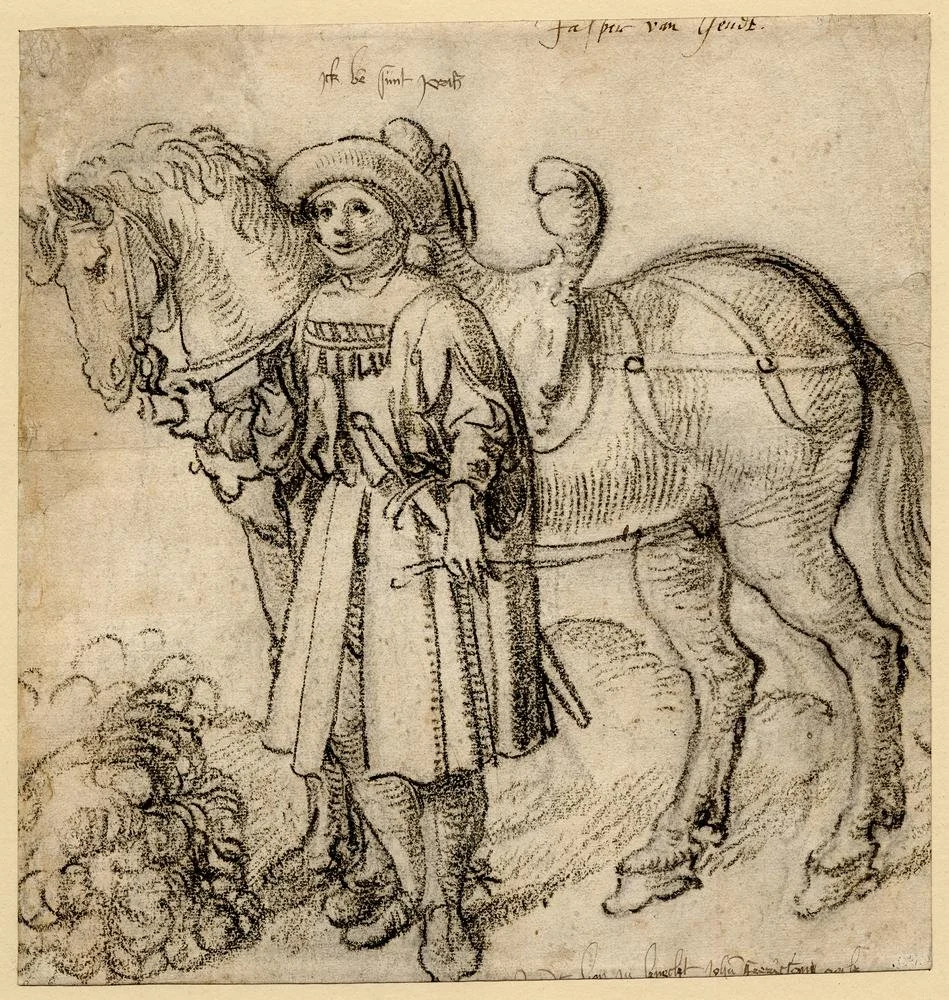
Netherlandish, A squire holding a horse, c.1520. British Museum, London
Beyond the scientific approach, was a more traditional ‘connoisseurial’ methodology utilised and did this process yield any unexpected findings or generate new attributions that are being presented to the public for the first time?
This drawing of a squire standing beside his horse was previously placed in the German school and assigned to Hans Burgkmair. Popham moved it to the Netherlandish school, based on two early sixteenth-century Dutch inscriptions on the sheet, and attributed it to the northern Netherlandish ‘Master of the Miracles of the Apostle.’ It is a remarkably accomplished drawing and has been largely overlooked until now. We discussed the drawing with several scholars and curators, and although we do not have a new name to offer, it seems to have originated in Leiden in the 1520s.
Two remarkable portrait drawings in red chalk have now been reattributed to Jan Cornelisz. Vermeyen. One is particularly striking and seems to have been drawn from life. Red chalk was still a relatively uncommon drawing medium in the Low Countries, and it was only used by artists who had knowledge of Italian artistic traditions. Ilja Veldman helped us to attribute the two portraits to Vermeyen, who is known to have made similar portrait etchings, and who likely picked up the use of red chalk during his trip to Rome with Charles V in April 1536.
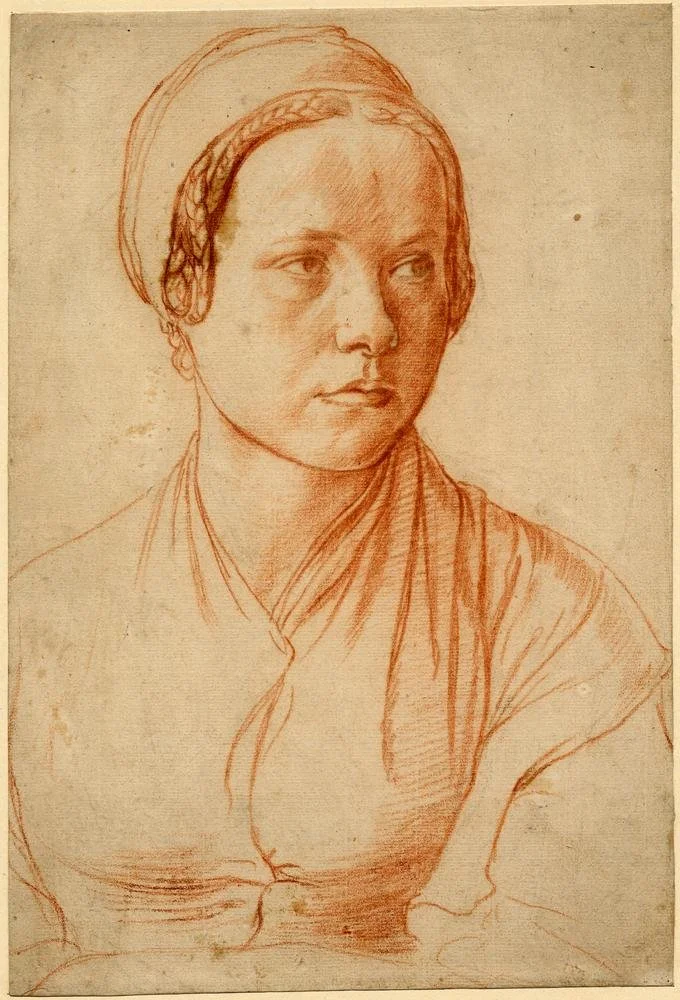
Jan Cornelisz. Vermeyen, Portrait of an unknown girl. British Museum, London
Over the last generation, there have been relatively few exhibitions devoted specifically to fifteenth-century Northern drawings. Do you see that relative scarcity as a challenge or an opportunity? Has there been a strong scholarly community around this material?
Fifteenth-century northern drawings are rare and scattered so exhibitions are few. This is an exciting opportunity to display fifteenth- and sixteenth-century drawings together, to show how the tradition developed and transformed. We hope it will instigate interest in this area, and we’ve put together a public programme of talks, workshops and a scholarly symposium to appeal to a wide range of audiences.
Fifteenth-century Netherlandish drawings are the domain of a selected few specialists, who have kindly offered their expertise during our project. Since fifteenth- and early sixteenth-century Netherlandish drawings were made in the workshop, the relationship with other media is particularly important. We’ve had to branch out and engage a wider scholarly community of experts in paintings, sculpture, manuscripts, tapestry and painted and stained glass, who have patiently answered our many queries.
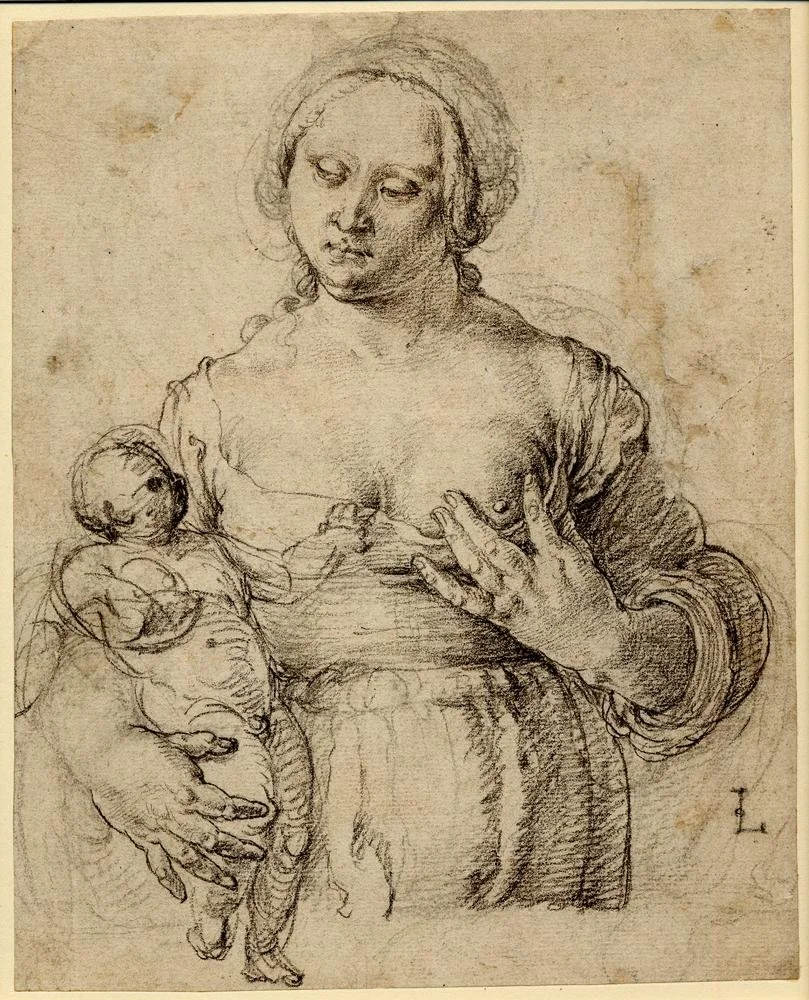
Lucas van Leyden, The Virgin, c. 1528. British Museum, London
Finally, if you had to choose a favourite drawing from the exhibition, which would it be, and why?
Charlotte: Rogier van der Weyden’s exquisite silverpoint drawing of a young woman has been one of my favourite works in the British Museum’s collection since I was a student. However, it now has serious competition with Jan Cornelisz. Vermeyen’s striking red-chalk portrait of a young woman, which I have grown to love while working on this project. It is sensitively observed and so tenderly put to paper.
Olenka: Lucas van Leyden is my favourite artist, and I hope this exhibition will make him a household name. We had a lot of fun trying to determine whether this figure is writing or drawing. But my absolute favourite is his preparatory drawing of the Virgin and Child for a painting – the exquisite shading on the Virgin’s hand in contrast to the quickly and energetically drawn child is divine.
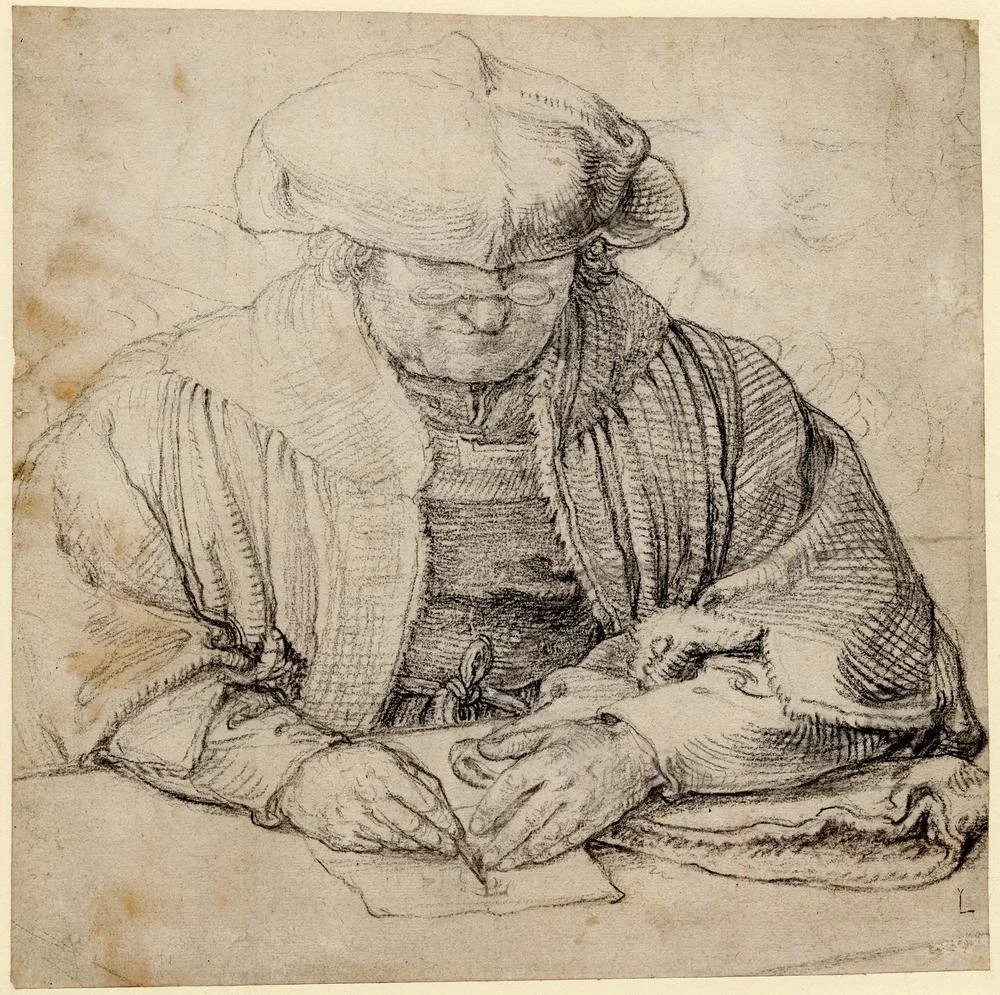
Lucas van Leyden, An old man drawing, c. 1512. British Museum, London
Early Netherlandish drawings is open until 20 September 2026 at The British Museum, Room 90. Free Entry.
All images: courtesy of The British Museum
© The Trustees of The British Museum. Shared under a Creative Commons Attribution-NonCommercial-ShareAlike 4.0 International (CC BY-NC-SA 4.0) licence.
Drawn to Venice
24 January 2026 – 2 August 2026
Legion of Honor, Fine Art Museums of San Francisco, San Francisco
Reviewed by Emma P. Holter, PhD candidate

Giovanni Domenico Tiepolo (1727–1804), Punchinello's Children Begging for Sweets. Photograph by Randy Dodson, courtesy of the Fine Arts Museums of San Francisco
On view at the Legion of Honor from 24 January through 2 August, Drawn to Venice showcases early modern Venetian draughtsmanship with examples selected from the permanent collection of the Achenbach Foundation for Graphic Arts at the Fine Art Museums of San Francisco (FAMSF). Curated by Furio Rinaldi, the exhibition brings into focus over thirty drawings and prints dating from the sixteenth through eighteenth centuries.
Divided into four sections and spread across a single white-cube gallery, the exhibition is organised into a chronological presentation. It presents many of the protagonists of the Venetian canon, strategically supplemented with loans from local public and private collections in the Bay area—especially in the Renaissance section. Notably, this included a black chalk study on blue paper of A Fallen Warrior Holding a Sword and Shield attributed to Titian, and loaned from the collection of Rosemary Baker. Displayed nearby is a double-sided drawing by Jacopo Tintoretto featuring studies after Michelangelo’s sculptureof Samson and the Philistines and an antique bust of Vitellius, loaned from the Cantor Art Center at Stanford University.
A thread running through the exhibition labels emphasises the oft-repeated qualities that distinguish Venetian draughtsmanship from other artistic centres on the Italian peninsula, particularly a preoccupation with capturing the effects of light and colour. Likewise, autonomous drawings are showcased throughout the display. The title wall of the exhibition brings together an impressive array of four large-scale drawings from Domenico Tiepolo’s Divertimento per li ragazzi (Entertainment for Children), a series that chronicles the misadventures of Punchinello, a character from the Neapolitan commedia dell’arte. Tiepolo conceived of these drawings as finished works of art, signing his name in the lower margin of Punchinello’s Children Begging for Sweets, which is numbered as 17 in the series of 104 drawings.
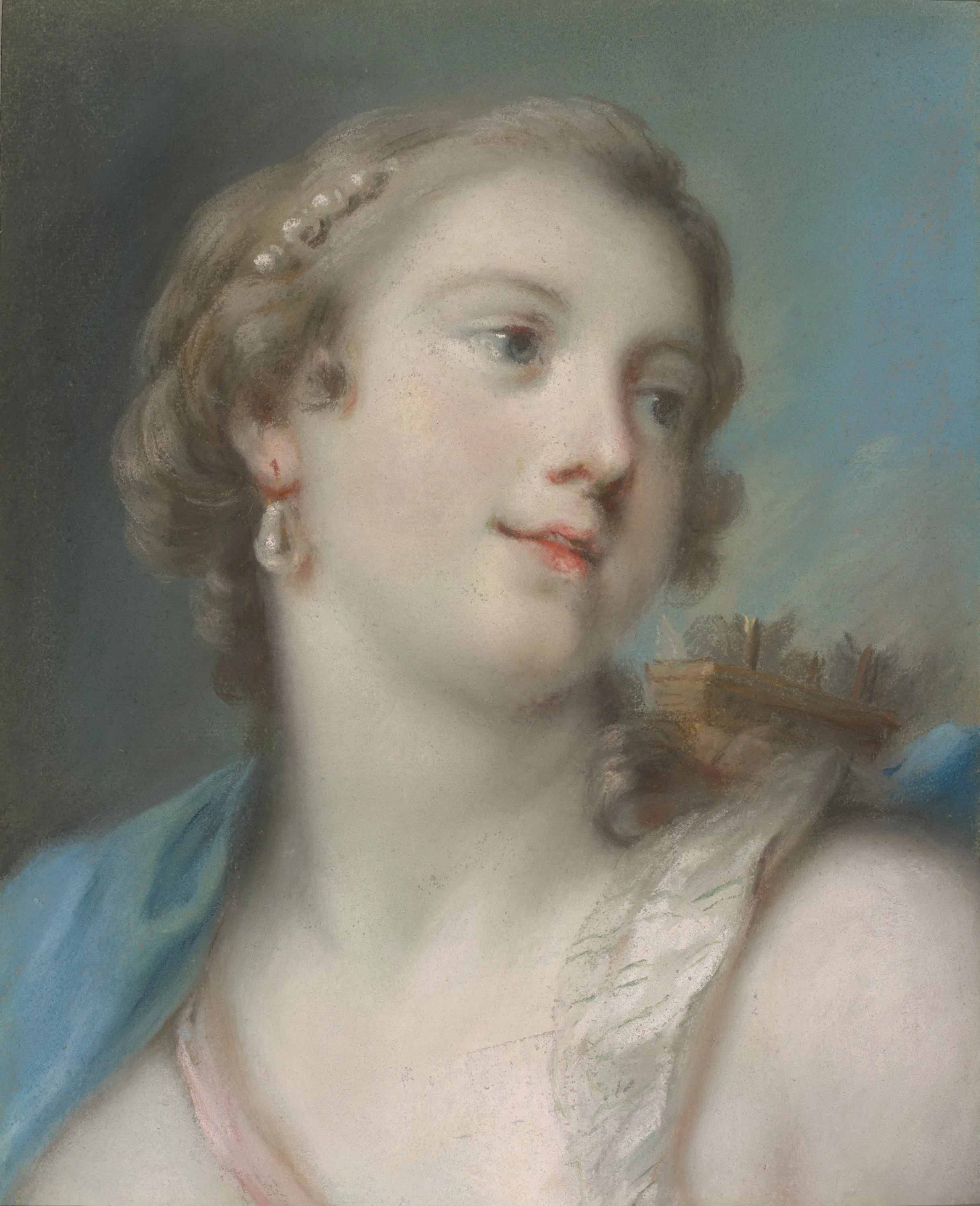
Rosalba Carriera (1673–1757), Portrait of a Lady as Diana. Photograph by Randy Dodson, courtesy of the Fine Arts Museums of San Francisco
Independent portrait drawings emerge as a recurring theme across each section of the display. Some marvellous examples included a pastel Portrait of a Lady as Diana by Rosalba Carriera (the most famous and successful Venetian portraitist of the eighteenth century), a trois crayons portrait of a gentleman by Carlo Caliari, and two sheets by Giovanni Battista Piazzetta of A Boy Playing a Guitar and Bust of a Girl Holding an Apple. Drawings on blue paper, a support quite typical of Venetian draughtsmanship, were also featured; the most striking were two exquisite red chalk studies of male heads by Giambattista Tiepolo.

Carlo Caliari (1570–1596), Bearded Man Wearing a Ruff. Photograph by Randy Dodson, courtesy of the Fine Arts Museums of San Francisco
Rounding out the survey of Venetian preparatory practices, the display included a grisaille oil sketch on canvas for Giovanni Battista Pittoni’s Descent from the Cross (ca. 1753), lent by the Legion of Honor’s Department of Paintings. While Venetian painting is often associated with rich colour, this monochromatic bozzetto for a monumental altarpiece also acknowledged the long-standing practice of painting in a limited palette of black, grey, and white.
The permanent collection rotation coincides with the loan exhibition Monet in Venice, which opened on 26 March and is co-organised by the FAMSF with the Brooklyn Museum in New York. Drawn to Venice gives local audiences an opportunity to appreciate the region’s rich holdings of Venetian drawings by some of the most notable artists active in the lagoon across three centuries. From the vedute drawing by Guardi to the prints after designs by Canaletto, these works act as evocative precedents for Claude Monet’s luminous Venetian seascapes on view in the adjacent galleries of the museum.
Drawn to Venice continues at Legion of Honor until 2 August.
William Blake, The Night of Enitharmon’s Joy (formerly called ‘Hecate’), c. 1795. Tate, Presented by W. Graham Robertson 1939. Photo: Tate.
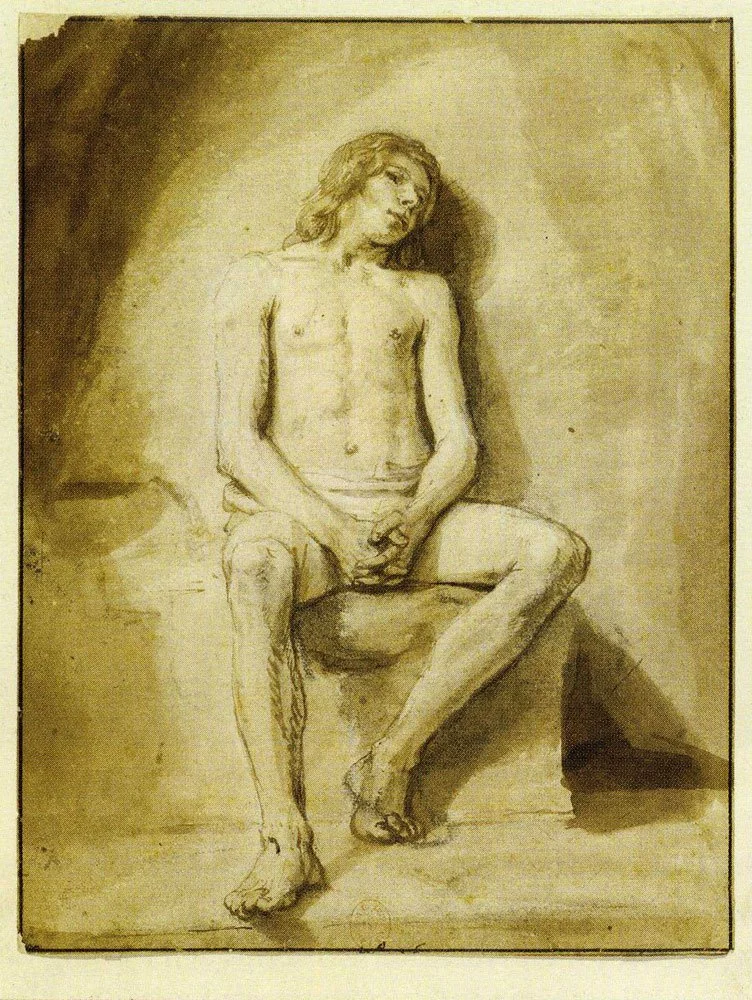
One of these drawings is by a pupil and close follower of Rembrandt, produced in 1646, while the other is a copy by an eighteenth century French artist, Charles Coypel. Which drawing is the model and which is the copy? For a bonus point, can you name the Rembrandt pupil?
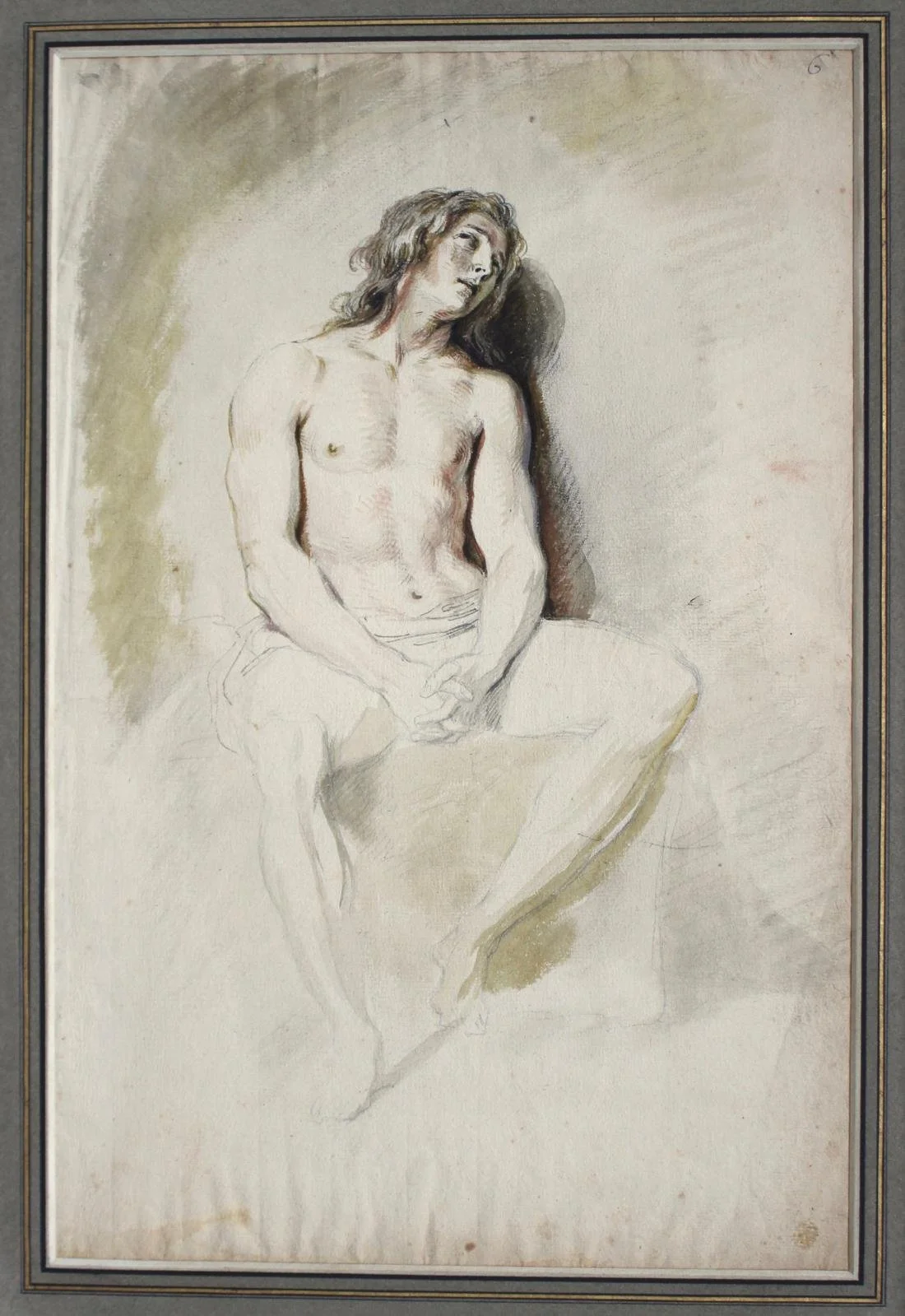
-
The original is the right image.Right Image: attributed to Samuel van Hoogstraten (1627–1678), Sitting Male Nude, Bibliothèque Nationale de France, Paris, inv. no.: FL 251
Left Image: Charles-Antoine Coypel (1694–1752) after Samuel Van Hoogstraten (1627–1678), Étude d’homme assis, École Nationale Supérieure des Beaux-Arts, Paris, inv. no.: 10995
The right drawing, which is presumed to be Rembrandt’s pupil van Hoogstraten, belongs to a group of stylistically comparable figure studies from the artist’s student days. The drawing can be dated to around 1646 as the model and his position are drawn from a print rendered by Rembrandt earlier that year.
Over half a century later, the drawing entered the collection of one of Charles-Antoine Coypel’s patrons, the Marquis de Paulmy, and arrived in Paris, where it was copied by Coypel. Coypel’s copy is an example of how collecting tastes have affected training and the history of art, and testifies to the influence of Dutch painters of the seventeenth century on the French painters of the eighteenth.
To celebrate the opening of the Royal Academy’s exhibition on Michaelina Wautier, Katy Hessel joins Katlijne Van der Stighelen, whose decades-long research into Michaelina has led to what some critics have labelled the “greatest artistic discovery of the 21st century”. The interview explores Michaelina’s life, reputation and rediscovery, and is followed by a tour of the Royal Academy’s exhibition with senior curator Julien Domercq.
Jacopo Tintoretto (1518/19–1594) changed the face of Venetian painting. His loose, fast and furious brushwork was compared to a thunderbolt. Combining the rich colours of Titian with the dramatic muscularity of Michelangelo’s human figures, Tintoretto covered the walls of his native city with pictures that astounded his contemporaries; one critic declared him “the most extraordinary brain that the art of painting has ever produced.” This documentary narrated by Stanley Tucci includes original footage of Tintoretto’s works in the churches and palaces of Venice and interviews with curators and scholars.
Carole Blumenfeld interviews George Goldner, one of the most influential names in the recent history of premodern drawings, for La Gazette Drouot. Goldner, Curator of Drawings and Paintings at the J. Paul Getty Museum from 1982 to 1993 and then chairman of the Department of Drawings and Prints at the Metropolitan Museum from 1993 to 2015, is currently an art advisor to Leon Black and president of the Art for Animals Foundation.
TROIS CRAYONS RECOMMENDS
*As an Amazon Associate we earn from qualifying purchases